

HomeOpinionWhy the Insurance Industry...

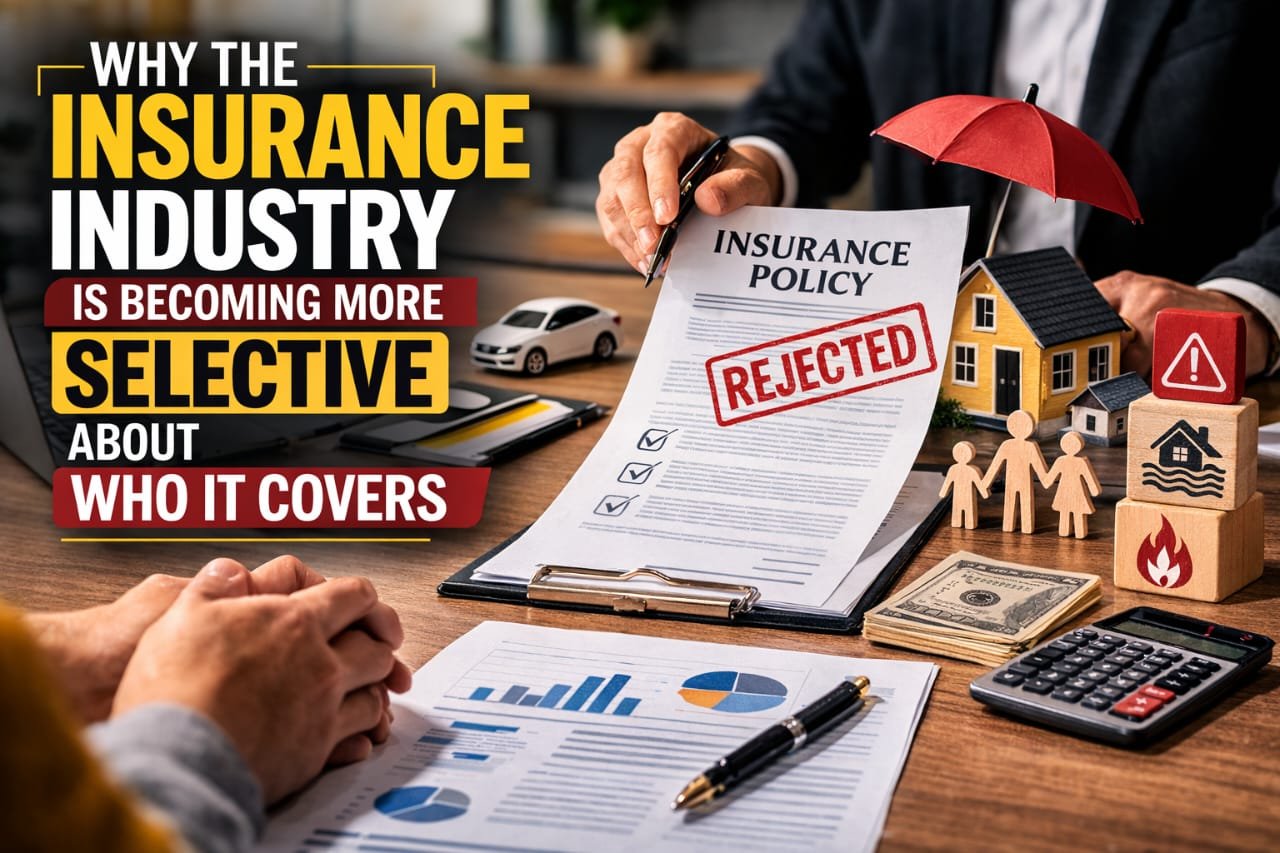
Why the Insurance Industry Is Becoming More Selective About Who It Covers

Insurance has always been about managing risk, but recent trends show that insurers are becoming increasingly selective about who they cover. Rising claims, climate risks, cyber threats, and economic pressures are reshaping underwriting strategies, leaving some consumers and businesses with fewer options than ever before.

Escalating Risk and Rising Losses

Natural disasters, such as hurricanes, wildfires, and floods, have increased both in frequency and severity. According to the Insurance Information Institute, insured losses from U.S. catastrophes alone exceeded $100 billion in 2024. For insurers, this creates a delicate balancing act: cover high risk policyholders and face potential financial strain, or limit coverage to manage exposure.

Similarly, cyberattacks and data breaches are driving a new wave of selective underwriting in commercial insurance. Companies with outdated security measures or high risk operations are increasingly facing restricted access to cyber coverage or elevated premiums.

Economic Pressures and Profitability

Rising inflation and interest rate fluctuations are also putting pressure on insurers. Maintaining profitability while paying out large claims forces companies to carefully assess risk profiles. Moody’s Investors Service reports that insurers are adjusting pricing models and underwriting guidelines to protect their financial stability, which can result in stricter acceptance criteria for new clients.

The Role of Data and Technology

Advances in data analytics and predictive modeling have made it easier for insurers to identify high-risk individuals or businesses. Insurers are now able to assess risk with greater precision, leading to more targeted coverage decisions. For example, in property insurance, location-based risk scoring allows companies to avoid insuring homes in areas prone to repeated flooding or wildfire exposure.

Implications for Policyholders

For consumers and businesses, this selectivity means greater due diligence is required when shopping for insurance. Policies may be harder to obtain, premiums may be higher, and some coverage options may no longer be available in high-risk areas. However, these changes also drive the development of more tailored, risk-aware policies that reward mitigation efforts, such as improved building codes, safety measures, and cybersecurity investments.

Looking Ahead

The trend toward selective underwriting reflects a broader industry shift toward sustainability and risk management. Insurers that embrace precision, technology, and proactive risk assessment will remain competitive, while policyholders will need to understand their own risk profiles and plan accordingly. In an era of rising uncertainty, knowing your coverage options and the risks insurers are willing to assume has never been more critical.

- Advertisement -

spot_img

Most Popular

LEAVE A REPLY

Please enter your comment!
Please enter your name here

More from MT

The Illusion of Financial Progress: Why Higher Income Doesn’t Always Mean Less Debt

Getting a raise is supposed to change everything. More income should mean...

Are Consumers Becoming Too Dependent on Credit to Maintain Lifestyle Stability?

It doesn’t always look like a problem. Bills are paid.Groceries are stocked.Subscriptions...

Why More Homeowners Are Sitting on Equity Instead of Using It

On paper, it looks like an obvious opportunity. Home values have risen.Equity...

- Advertisement -

Related News

The Illusion of Financial Progress: Why Higher Income Doesn’t Always Mean Less Debt

Getting a raise is supposed to change everything. More income should mean more savings, less debt, and greater financial security. But for many people, the opposite happens. Income rises… and so do expenses.Debt doesn’t shrink, it evolves. What looks like progress on the surface can quietly become a different kind of...

What Happens When Debt Becomes “Normal”? A Look at Changing Financial Baselines

There was a time when debt felt like a problem to solve. You borrowed, you paid it off and you moved on. Today for many households, debt doesn’t feel temporary anymore. It feels… constant. Not necessarily overwhelming. Not always urgent.Just always there part of the financial background. That shift, from debt as...

Are Consumers Becoming Too Dependent on Credit to Maintain Lifestyle Stability?

It doesn’t always look like a problem. Bills are paid.Groceries are stocked.Subscriptions stay active.Life keeps moving. But behind that stability, there’s a quieter shift happening: For many households, credit is doing the work income used to do. Not dramatically. Not all at once.But gradually enough to change how everyday life is...

Why More Homeowners Are Sitting on Equity Instead of Using It

On paper, it looks like an obvious opportunity. Home values have risen.Equity levels are historically high.Access tools like HELOCs and cash out refinancing still exist. So why aren’t more homeowners tapping into that wealth? Because the decision isn’t just financial. It’s psychological, structural, and increasingly shaped by uncertainty. The Locked In Effect...

The Hidden Trade Off Between Financial Flexibility and Debt Optimization

In personal finance the “best” move is usually defined by math. Lower the interest rate.Pay off debt faster.Reduce total cost over time. On paper that’s optimal. In real life it’s not always that simple. Because optimizing too aggressively can quietly reduce something just as important: financial flexibility. What Debt Optimization Gets Right Let’s start...

If You Have Over $10,000 in Debt, This New Program Could Change Everything

If You Have Over $10,000 in Debt, This New Program Could Change Everything Debt doesn’t usually feel overwhelming at first… until it suddenly is. For many people, it starts with a few small balances—credit cards, personal loans, or unexpected expenses. But over time, interest builds, payments stretch longer, and what...