

Debt itself has not changed.
How consumers manage it has.
Over the past decade, the tools, visibility and psychology surrounding debt have shifted dramatically. What was once a static, paper driven process has become real time, automated and data informed. The digital age has not eliminated household leverage but it has transformed how borrowers interact with it.
The question is whether this transformation is strengthening financial resilience or simply modernizing the experience of carrying debt.
From Statements to Dashboards
Traditional debt management revolved around monthly statements.
Borrowers reviewed balances once every few weeks. Payments were scheduled manually. Rate comparisons required phone calls or in-person consultations.
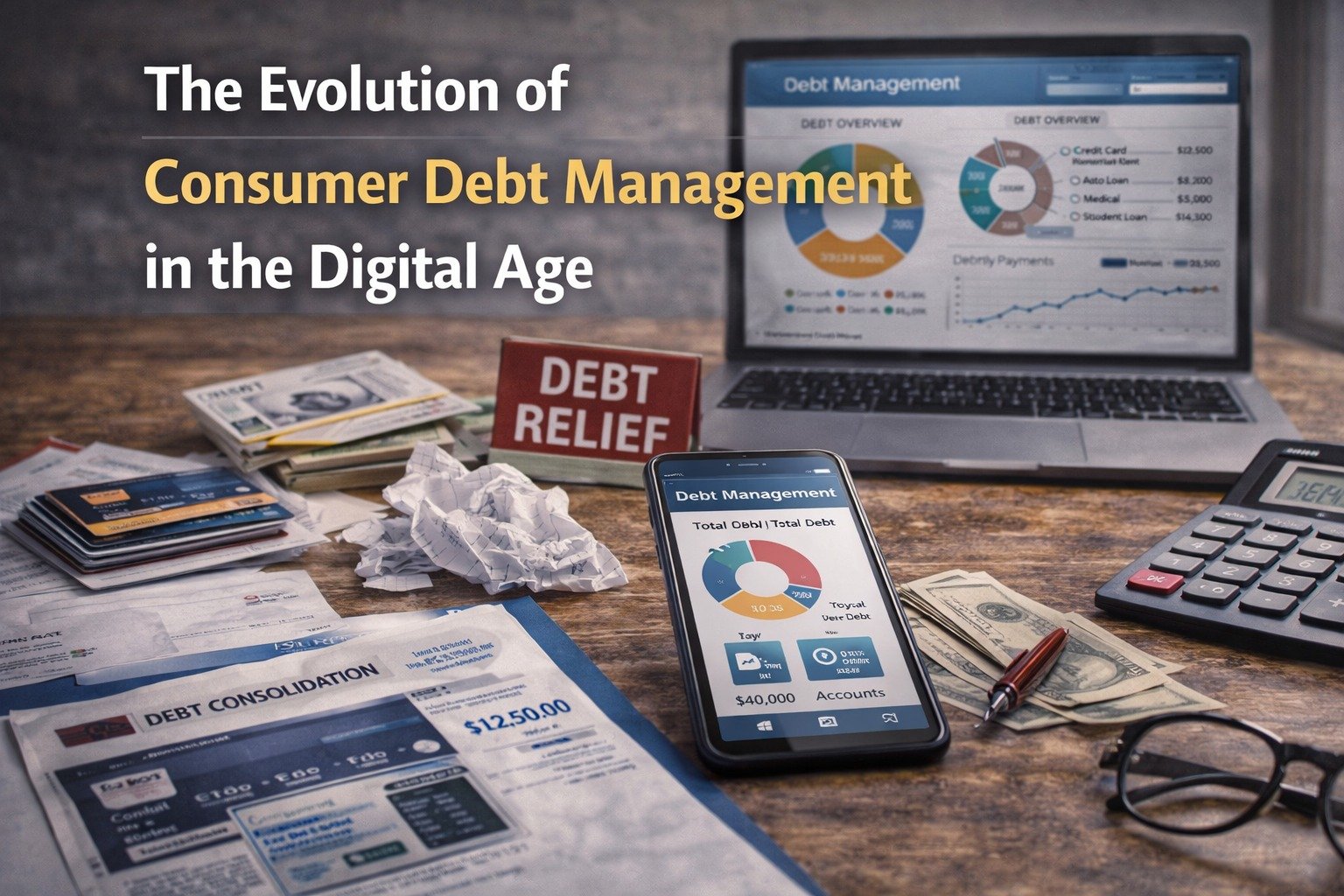
Today, debt exists inside dashboards.
Mobile apps aggregate:
- Credit cards
- Student loans
- Mortgages
- Auto loans
- Personal loans
Balances update in real time. Payoff timelines are visualized. Interest costs are projected instantly.
Visibility has increased dramatically.
And visibility changes behavior.
When borrowers can see debt daily rather than monthly, engagement increases. Engagement can improve discipline but it can also normalize ongoing borrowing.
Automation as a Structural Shift
One of the most important developments in digital debt management is automation.
Auto pay, recurring transfers, algorithm driven allocation and triggered surplus payments reduce reliance on willpower.
Digital tools now allow consumers to:
- Prioritize highest interest balances automatically
- Round up purchases toward debt reduction
- Allocate tax refunds or bonuses directly to loans
- Adjust payments dynamically based on income patterns
Automation lowers friction. Lower friction increases follow through.
But it also shifts responsibility from conscious decision making to system design. When repayment becomes automatic, active budgeting may decline.
The Rise of Self Directed Optimization
Digital platforms encourage constant optimization.
Consumers can refinance online in minutes. Consolidation options appear as targeted offers. Rate comparisons update continuously.
Debt management has become interactive.
Borrowers no longer wait for lenders to initiate change. They proactively search for:
- Lower rates
- Better terms
- Balance transfers
- Hybrid restructuring strategies
This empowerment increases competition among lenders and improves transparency.
At the same time, it can normalize perpetual restructuring rather than long term elimination.
Debt becomes fluid.
Behavioral Tools and Gamification
Digital debt management tools increasingly incorporate behavioral design.
Progress bars, milestone celebrations, payoff projections and personalized nudges turn repayment into a measurable journey.
These tools tap into:
- Loss aversion
- Momentum psychology
- Reward driven behavior
When borrowers see progress visually, they are more likely to continue.
What used to be abstract – “I owe money” – becomes concrete: “I’m 62% toward payoff.”
Behavioral reinforcement is one of the most powerful digital shifts in consumer finance.
Access Expansion and Inclusion
Technology has also broadened access to credit and restructuring tools.
Alternative underwriting models use:
- Cash flow analytics
- Transaction histories
- Employment patterns
This allows borrowers with limited traditional credit history to qualify for loans or consolidation products.
Expanded access can reduce reliance on high cost lenders.
However, easier access also increases aggregate leverage potential.
Digital inclusion must be balanced with sustainable borrowing capacity.
Embedded Finance and Integrated Management
Debt management is no longer confined to standalone platforms.
It is increasingly embedded into everyday financial ecosystems:
- Banking apps integrate payoff tools
- Investment platforms display debt ratios
- Budgeting apps recommend refinancing
- Payroll systems offer earned wage access
Debt is integrated into broader financial decision-making rather than siloed.
This integration reduces fragmentation.
It also reduces the psychological barrier between borrowing and spending.
READ ALSO: Are Debt Consolidation Trends Actually Helping Consumers?
Short Term Liquidity Culture
The digital age has normalized short term liquidity solutions.
Buy-now-pay-later services, instant personal loans and real time credit approvals reshape how consumers approach cash flow gaps.
Debt is now:
- Immediate
- Seamless
- Frictionless
This convenience improves access during emergencies.
But it can also compress reflection time between decision and obligation.
The digital environment accelerates both responsible management and impulsive borrowing.
Data as the New Credit Language
In the digital age, data is central.
Lenders assess borrower risk using more granular behavioral signals. Consumers track spending patterns and debt ratios with precision.
The result is a more responsive credit ecosystem.
Risk pricing adjusts faster. Repayment tools adapt in real time. Offers are personalized.
But personalization can also increase temptation. Targeted refinancing prompts and consolidation ads surface exactly when borrowers show financial stress signals.
Technology responds to behavior and sometimes amplifies it.
Has Risk Declined?
The digital transformation of debt management has improved:
- Transparency
- Payment consistency
- Optimization access
- Financial literacy tools
Yet overall household debt levels remain substantial.
The evolution has changed management efficiency, not necessarily debt prevalence.
Technology improves navigation.
It does not eliminate structural pressures such as housing affordability, healthcare costs, or wage stagnation.
The Bigger Picture
The digital age has redefined what it means to “manage” debt.
Management now includes:
- Real time monitoring
- Automated strategy
- Behavioral reinforcement
- Continuous optimization
The modern borrower is more informed and more empowered than ever before.
Whether that translates into stronger balance sheets depends on discipline, economic stability and long term planning.
Digital tools can accelerate progress.
They can also accelerate exposure.
The evolution of consumer debt management is not simply technological.
It is behavioral.
And the long term outcome will depend less on the sophistication of the tools and more on how intentionally they are used.

