

HomeNewsElon Musk's Signed $1...

Elon Musk’s Signed $1 Trillion Package Could Buy Half the World — Here’s How

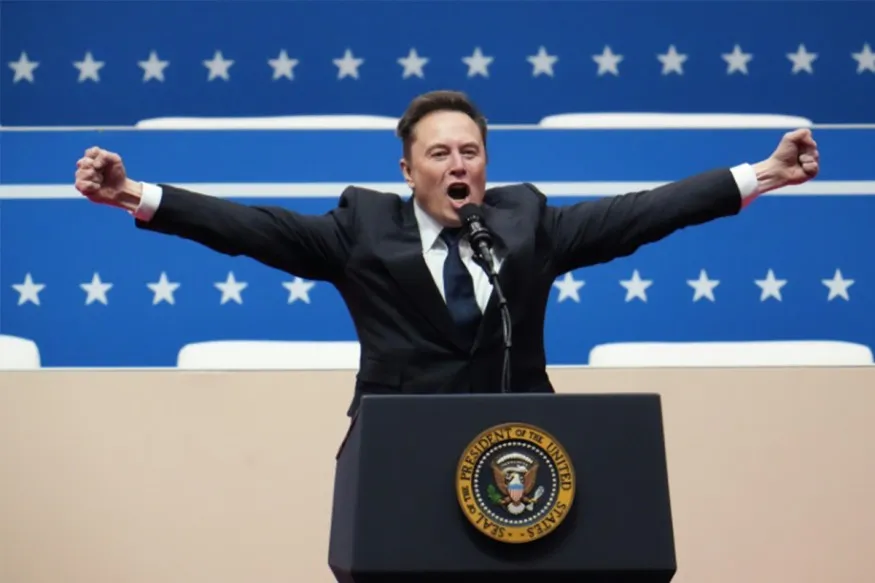
Tesla shareholders have officially approved a staggering $1 trillion (£820 billion) compensation package for CEO Elon Musk, making it the largest executive payout in corporate history. The vote, which passed with 75% in favour, was held at the company’s annual meeting in Austin, Texas.

Under the terms of the plan, Musk will receive up to 12% of Tesla’s stock, contingent upon the company reaching a market capitalisation of $8.5 trillion (£7 trillion) and achieving performance milestones over the next decade.
Tesla
Tesla’s current valuation stands at approximately $1.45 trillion (£1.18 trillion).

The board, led by Chair Robyn Denholm, defended the record sum by arguing that retaining Musk was essential to Tesla’s innovation and expansion into artificial intelligence, robotics, and autonomous technology. Denholm warned shareholders that without approval, Tesla risked losing ‘his time, talent, and vision’ to his other ventures.

The Scale of a Trillion

The sheer size of the deal is almost beyond comprehension. If spent at a rate of $40 (£32) per second, it would take over 790 years to exhaust a trillion dollars. A trillion also dwarfs many national economies — it exceeds the GDP of Switzerland, which stands at around $900 billion (£738 billion), and is equivalent to roughly 2.5% of the total US GDP.

Switzerland
Switzerland has a nominal GDP of approximately $1.06 trillion for 2025

To visualise it in corporate terms: with that level of capital, Musk could purchase every car sold in the United States in a year, or acquire global corporations like Coca-Cola, Toyota, and Royal Caribbean multiple times over. It would also buy 333 JPMorgan Chase skyscrapers or 2,000 luxury yachts, each worth millions.
Elon Musk
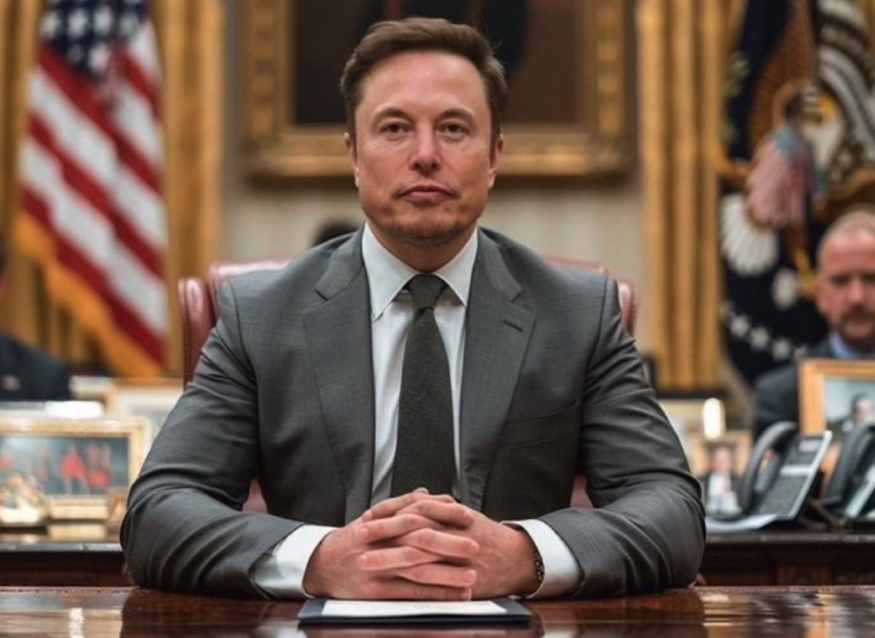
Once paid out, could Elon Musk buy out half the world’s companies?

Could Musk Truly ‘Buy Half the World’?

In practical terms — economically, yes. With $1 trillion (£820 billion) at his disposal, Musk could acquire or control corporations operating across more than half of the world’s major economies. For instance, he could purchase the combined market capitalisations of Toyota, Volkswagen, Hyundai, Ford, and General Motors, effectively dominating the global automotive sector.

Beyond transport, that sum could buy energy giants such as ExxonMobil, Chevron,and ConocoPhillips, or even household brands like Coca-Cola, Nestlé, and Unilever — companies that supply goods and services to billions worldwide. Collectively, these firms represent industries spanning dozens of nations, from the Americas to Europe, Asia, and the Middle East.

The company logo for Unilever is displayed on a screen on the floor of the NYSE
Elon could have the leverage to buy companies that supply goods and services to billions worldwide like Unilever.

By this measure, Musk could influence economic ecosystems that account for half the world’s active markets — a level of financial power no single person has ever approached in modern history. His potential purchasing power extends from energy to technology, transport to consumer goods, symbolising the profound shift toward wealth consolidation in the digital age.

The Era of Exponential Wealth

The vote also signals a wider cultural and economic phenomenon: the acceptance of extreme executive compensation as a vehicle for innovation. Yet critics, including Norges Bank Investment Management, have cautioned against the precedent such a package sets for governance and corporate ethics, citing concerns over ‘key person risk’ and ‘lack of mitigation’.

Still, Tesla’s shareholder enthusiasm underscores confidence in Musk’s ability to transform the company into a dominant player in autonomous transport and AI manufacturing. Whether or not those ambitions materialise, one fact is clear: Musk’s financial footprint could soon rival that of small nations.

In that sense, the question is less whether he could buy half the world — and more how much of it he already influences.

Originally published on IBTimes UK


- Advertisement -

spot_img

Most Popular

LEAVE A REPLY

Please enter your comment!
Please enter your name here

More from MT

Income Volatility Is the New Normal And Policy Hasn’t Caught Up

For much of the postwar era, economic policy rested on a...

The Psychological Weight of Permanent Bills

There was a time when bills were something households managed. Today,...

How Disaster Prone States Are Reshaping Household Finances 

Where Americans live has always shaped their financial lives. But increasingly,...

The New Cost of Stability: Why Fixed Expenses Are Breaking Family Budgets

For generations, financial stability was defined by predictability. A steady paycheck....

- Advertisement -

Related News

Income Volatility Is the New Normal And Policy Hasn’t Caught Up

For much of the postwar era, economic policy rested on a simple assumption: income was stable. Paychecks arrived on schedule. Jobs lasted. Benefits followed employment. Safety nets were designed around predictability. That assumption no longer holds. Today’s economy increasingly runs on irregular hours, variable pay, contract work, performance incentives,...

The Psychological Weight of Permanent Bills

There was a time when bills were something households managed. Today, for many Americans, they feel more like something that manages them. Monthly obligations such as housing, insurance, utilities, healthcare, transportation, subscriptions  have become so constant and so inescapable that they no longer register as temporary expenses. They...

How Disaster Prone States Are Reshaping Household Finances 

Where Americans live has always shaped their financial lives. But increasingly, geography isn’t just about cost of living or job opportunity it’s about exposure. From hurricanes along the Gulf Coast to wildfires in the West and floods in the Midwest, a growing share of U.S. households now live...

The New Cost of Stability: Why Fixed Expenses Are Breaking Family Budgets

For generations, financial stability was defined by predictability. A steady paycheck. A fixed mortgage. Bills you could plan around. Once those pieces were in place, the thinking went, the rest would follow. Today, that definition no longer holds. Across income levels, American families are discovering that stability itself has...

Why Healthcare Remains the Biggest Financial Wild Card

For all the spreadsheets, budgeting apps, and long term planning Americans do, one line item continues to resist control: healthcare. It doesn’t behave like housing. It doesn’t track food or transportation. And unlike most recurring expenses, it can explode without warning. Even in an economy where inflation shows...

What Financial Anxiety Looks Like by Age Group

Financial anxiety is often discussed as a single, shared experience, a vague sense that money feels tighter than it should. In reality, it looks very different depending on where someone is in life. The pressures facing a 25 year old renter are not the same as those facing...