

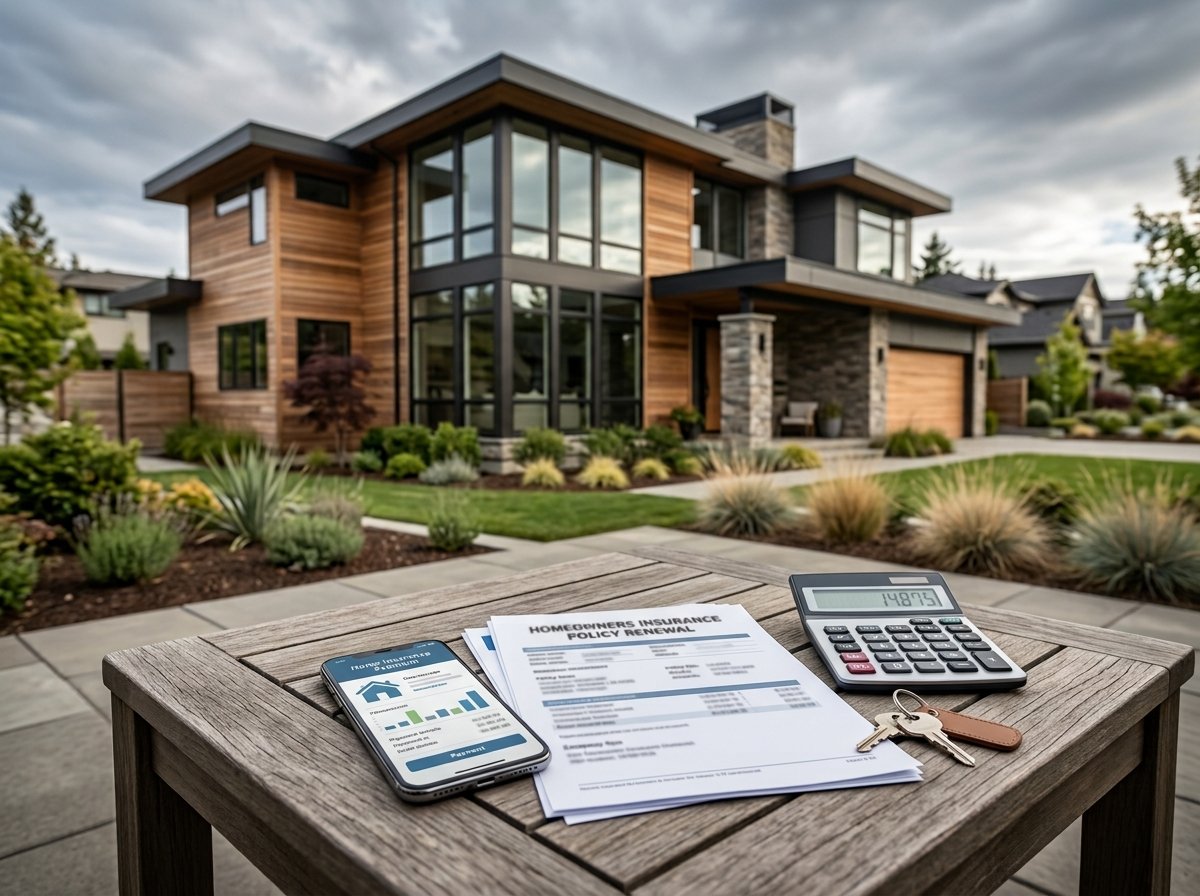
For decades, homeowners have generally viewed rising property values as good news.
A home worth more than it was purchased for can mean greater net worth, more borrowing capacity and a larger financial cushion.
But there is another side to rising home values that is becoming increasingly difficult to ignore.
The more valuable a home becomes, the more expensive it can be to insure and in some markets, the cost of insurance is rising for reasons that have little to do with the homeowner’s mortgage balance.
This creates a new challenge for homeowners.
A property can be worth substantially more on paper while simultaneously becoming more expensive to protect, maintain and own.
That creates an unusual financial contradiction:
The homeowner is wealthier, but the house may be putting greater pressure on monthly cash flow.
For households that rely heavily on home equity as a source of financial security, this distinction matters.
Home value is an asset.
Insurance is an ongoing expense.
And if the cost of protecting that asset continues rising, homeowners may eventually have to reconsider how they think about affordability, equity, borrowing and long term ownership.
A Valuable Home Is Not Necessarily an Affordable Home
Homeowners often measure financial success by looking at their property’s market value.
Suppose someone purchased a home for $300,000 and it is now worth $550,000.
The homeowner may feel substantially wealthier.
And from a net- worth perspective, that may be true.
But the financial equation becomes more complicated if the homeowner is now paying substantially more for insurance, property taxes, maintenance and repairs.
The property has appreciated.
The cost of owning it has also increased.
This is why homeowners should distinguish between asset value and ownership cost.
A house can appreciate significantly without becoming cheaper to own.
In fact, in some markets, appreciation can contribute indirectly to higher expenses.
Why Higher Home Values Can Affect Insurance Costs
Homeowners insurance is not simply based on what someone paid for a property.
Insurers are concerned with the potential cost of repairing or rebuilding the home after a covered loss.
Construction costs, labor, materials, local risks and the characteristics of the property all influence insurance pricing.
As rebuilding costs rise, the amount of coverage needed to adequately protect a home can rise as well.
That means a homeowner can experience higher insurance costs even without taking on a larger mortgage.
The house may have the same roof.
The same walls.
The same mortgage.
But the financial cost of protecting it can change.
The Growing Gap Between Home Value and Insurance Affordability
This creates a problem that is easy to overlook.
Homeowners typically think of insurance as a relatively small component of their housing budget.
But when premiums rise repeatedly, the expense can become much more significant.
Consider a homeowner whose annual premium was once $1,500.
If the premium eventually rises to $3,000, the household has effectively absorbed another $1,500 in annual housing costs.
The mortgage may remain unchanged.
But the cost of owning the property has not.
If the homeowner’s income has not increased proportionately, the additional insurance expense has to come from somewhere.
That may mean less saving, less discretionary spending or additional borrowing.
The “Paper Wealth” Problem
This is where the difference between wealth and liquidity becomes important.
Imagine a homeowner with:
- $300,000 in home equity
- A low rate first mortgage
- Strong property appreciation
- Limited cash savings
- Rising insurance premiums
The homeowner looks financially strong on paper.
But if an insurance renewal requires a large additional payment, the homeowner may have very few liquid resources available.
Equity exists.
But accessing it requires borrowing or selling.
That means the homeowner’s financial strength may be less useful for dealing with immediate expenses than the headline property value suggests.
This is one reason rising insurance costs can expose weaknesses that rising home prices previously concealed.
Why Homeowners May Be Reluctant to Sell
In theory, a homeowner facing rising ownership costs could sell the property and move somewhere less expensive.
In practice, that decision is much more complicated.
A homeowner may be reluctant to move because they have:
- A low existing mortgage rate
- Significant accumulated equity
- Emotional attachment to the property
- Few affordable alternatives
- High transaction costs
- A limited supply of suitable homes
This can create a form of financial lock-in.
The homeowner doesn’t necessarily want to leave.
But remaining in the property becomes increasingly expensive.
That is where insurance costs become more than an isolated household expense.
They can influence the broader decision of whether remaining in the home still makes financial sense.
The Mortgage Rate Can Mask the Insurance Problem
A low mortgage rate can make a homeowner feel protected from rising housing costs.
And there is a good reason for that.
If the homeowner has a fixed rate mortgage, the principal-and-interest portion of the payment is relatively predictable.
But insurance is not fixed for the life of the mortgage.
Neither are property taxes.
Neither are maintenance costs.
This creates a situation where the mortgage payment may remain stable while the total housing bill gradually increases.
A homeowner can therefore say:
“My mortgage hasn’t changed.”
while their actual cost of ownership has increased substantially.
Why Insurance Can Become a Bigger Part of the Housing Budget
The financial impact becomes more noticeable when insurance rises at the same time as other housing expenses.
Imagine a homeowner experiencing:
- Higher insurance premiums
- Higher property taxes
- More expensive repairs
- Rising maintenance costs
- Increasing utility expenses
None of these individually may make the home unaffordable.
Together, they can significantly change the household’s financial position.
This is why homeowners should evaluate housing affordability as a complete system.
The mortgage is only one component.
When Insurance Costs Start Affecting Liquidity
A rising insurance bill can create pressure even for households that are not technically overleveraged.
Suppose a homeowner earns enough to cover all regular expenses but has little left over each month.
A $1,000 increase in annual insurance costs might not cause an immediate crisis.
But it could reduce the household’s ability to rebuild savings.
Over time, that matters.
Without sufficient savings, the homeowner becomes more dependent on credit when another unexpected expense arrives.
The result can be a gradual deterioration in financial resilience.
Insurance may therefore contribute to debt indirectly not because the homeowner immediately borrows to pay the premium, but because the higher premium prevents the household from accumulating cash reserves.
The Connection Between Insurance and HELOC Demand
This is where home equity enters the equation.
A homeowner facing rising insurance costs may look at their property and think:
“I have hundreds of thousands of dollars in equity. Why not use some of it?”
A HELOC can provide access to that equity without replacing the first mortgage.
That can be particularly attractive to homeowners with older, low rate mortgages.
But the strategy needs to be examined carefully.
A HELOC can provide liquidity.
It does not reduce the recurring insurance expense.
If the homeowner borrows to cover a premium increase and then needs to borrow again when the next renewal arrives, the debt can become part of the household’s permanent financial structure.
The Risk of Turning an Asset Into a Funding Source
Home equity is valuable because it represents accumulated ownership in the property.
But borrowing against it changes the balance sheet.
The homeowner receives cash today.
In return, they take on a repayment obligation.
That may be reasonable for a major one time expense.
It becomes more concerning when the money is repeatedly used to cover recurring ownership costs.
Insurance premiums are recurring.
Property taxes are recurring.
Maintenance is recurring.
If home equity is repeatedly converted into cash to pay these expenses, the homeowner may be consuming the financial asset that was supposed to provide long term security.
The House Can Become More Valuable While the Household Becomes More Leveraged
This is one of the stranger outcomes of the current housing environment.
Suppose a home’s market value rises by $100,000.
At the same time, the homeowner accumulates $30,000 in additional debt because of rising expenses.
The homeowner may still be wealthier overall.
But the increase in equity is not necessarily improving monthly cash flow.
In fact, the homeowner could become more financially fragile despite having a more valuable property.
This is why home appreciation should never be treated as a substitute for cash flow management.
Insurance Costs Can Influence Home Equity Decisions
Homeowners often think about home equity in terms of opportunity.
They ask:
- How much could I borrow?
- Could I renovate?
- Could I consolidate debt?
- Could I fund a large purchase?
- Could I use the equity for an investment?
But rising insurance costs introduce another question:
How much of my equity needs to remain untouched as a financial safety buffer?
That is a different way of thinking about equity.
Instead of viewing it purely as available borrowing capacity, homeowners can view some portion of it as a reserve that should remain intact unless absolutely necessary.
This can help prevent a rising cost environment from turning into a rising-debt environment.
Why Homeowners Shouldn’t Assume Appreciation Will Solve the Problem
One common response to rising ownership costs is to point to home appreciation.
If the house continues increasing in value, the homeowner may believe the higher insurance costs are less important.
But appreciation does not pay the monthly bill.
A home can gain $50,000 in market value while the homeowner’s annual housing expenses increase by several thousand dollars.
Those are two different financial events.
The first affects net worth.
The second affects cash flow.
A household can experience both at the same time.
The Hidden Cost of Being Underinsured
There is also an important danger on the opposite side.
When insurance becomes expensive, some homeowners may be tempted to reduce coverage simply to make the premium more manageable.
That can create a different form of financial risk.
Cutting coverage without understanding the consequences can leave a homeowner exposed to a potentially devastating loss.
The goal should therefore not simply be to obtain the cheapest possible policy.
It should be to find an appropriate balance between:
coverage, deductible, premium and financial capacity.
Saving money on insurance is not necessarily a financial victory if it leaves the household unable to recover from a major covered event.
Why Higher Deductibles Aren’t a Free Solution
Increasing a deductible can reduce premiums in some circumstances.
But the tradeoff is straightforward:
Lower recurring cost in exchange for greater out of pocket exposure when a claim occurs.
That means homeowners need enough liquid savings to actually cover the higher deductible if something goes wrong.
A household that raises its deductible while simultaneously maintaining very little cash may be reducing one expense while increasing another type of financial vulnerability.
Insurance decisions therefore need to be evaluated alongside emergency savings.
The Relationship Between Insurance and Property Risk
Insurance costs can also reflect broader risks associated with a property or location.
Homes exposed to severe weather, wildfire, flooding or other hazards can face different insurance conditions than homes in lower risk areas.
That means homeowners should not assume that a property’s market value tells the entire financial story.
Two houses worth the same amount can have dramatically different long term ownership costs.
One may be relatively inexpensive to insure.
Another may become increasingly difficult or expensive to insure.
For buyers, this makes insurance availability and cost an important part of evaluating a property before purchase.
The New Affordability Question for Homebuyers
Traditional affordability calculations often focus heavily on:
- Purchase price
- Down payment
- Mortgage rate
- Principal and interest
But the real cost of owning the home extends beyond those numbers.
A buyer should also consider:
- Insurance premiums
- Property taxes
- Maintenance
- HOA fees
- Utilities
- Potential repair costs
- Local environmental risks
This is particularly important when comparing properties in different locations.
A slightly cheaper home with substantially higher insurance costs may not actually be the cheaper property over time.
Why Insurance Can Change the Economics of a Refinance
Insurance costs can also complicate refinancing decisions.
Suppose a homeowner refinances and reduces principal and interest payments by $300 per month.
That sounds attractive.
But if insurance has risen by $150 per month since the original mortgage was obtained, the household’s total housing cost reduction is much smaller than expected.
This is why homeowners should calculate the entire housing payment before deciding whether refinancing makes sense.
A lower mortgage payment is useful.
But it doesn’t erase other rising costs.
Cash Out Refinancing Doesn’t Eliminate the Underlying Cost
Cash-out refinancing can provide access to home equity.
But homeowners should be careful about using it to absorb recurring expenses.
The homeowner receives cash from the equity in the property.
The insurance bill gets paid.
But the insurance premium still exists next year.
The new mortgage balance, meanwhile, remains.
This creates a mismatch between the duration of the debt and the nature of the expense.
Financing a recurring expense over a long term mortgage can make the immediate bill feel smaller while making the eventual financial cost much larger.
Why Borrowing Can Become More Attractive Than Selling
This is one of the biggest behavioral forces shaping homeowner decisions.
Selling a house can feel like giving up something valuable.
Borrowing against it can feel like preserving ownership while accessing the wealth accumulated inside the property.
For homeowners with substantial equity, borrowing can therefore appear to be the easier solution.
But convenience can obscure the long-term consequences.
The homeowner keeps the property.
They keep the mortgage.
They get access to cash.
But they also increase debt.
If the underlying insurance and ownership costs continue rising, the household can gradually become more leveraged.
The “House Rich, Cash Poor” Problem Can Become More Serious
A homeowner who has significant equity but limited liquidity is already vulnerable to unexpected expenses.
Rising insurance costs can make that problem worse.
The homeowner may be forced to choose between:
- Reducing savings
- Cutting other household spending
- Taking on debt
- Selling investments
- Borrowing against home equity
- Selling the property
The more expensive it becomes to insure and maintain the house, the more important liquidity becomes.
This is why homeownership should not be viewed purely as an asset accumulation strategy.
It is also an ongoing cash flow commitment.
What Homeowners Should Monitor Beyond Their Mortgage
A homeowner doesn’t need to predict every future insurance increase.
But they should monitor the direction of their overall housing costs.
A useful annual review can include:
Insurance
Compare the current premium with previous years and understand what is driving changes.
Property taxes
Check whether assessments or local tax rates are changing.
Maintenance
Estimate expected annual maintenance rather than treating every repair as an emergency.
Debt
Track mortgage, HELOC and consumer debt separately.
Cash reserves
Determine how many months of housing expenses could be covered without borrowing.
Home equity
Know the approximate amount of equity available but don’t automatically treat all of it as spendable money.
A Better Way to Think About Home Equity
Home equity can serve several purposes.
It can represent:
- Long term wealth
- A potential source of retirement resources
- A future borrowing option
- Protection against market declines
- A potential source of funds for major expenses
But not every dollar of equity needs to be immediately monetized.
In a period of rising ownership costs, preserving equity can itself be a form of financial risk management.
A homeowner who maintains substantial equity and strong cash reserves has more options.
A homeowner who repeatedly borrows against the property may have fewer.
When Rising Insurance Costs Become a Bigger Financial Warning
There is no universal premium level at which a homeowner should consider selling.
The important issue is the relationship between housing costs and household income.
Warning signs include:
- Insurance increases repeatedly outpacing income growth
- Using credit to pay recurring housing bills
- Drawing from a HELOC for normal expenses
- Depleting emergency savings to maintain the property
- Falling behind on other financial goals
- Increasing debt despite rising home equity
- Being unable to absorb another significant premium increase
These signals suggest that the property may be becoming financially difficult to sustain.
What Buyers Should Consider Before Purchasing
The insurance problem isn’t only relevant to existing homeowners.
It matters before buying as well.
A prospective buyer should investigate insurance costs before becoming emotionally committed to a property.
Two homes with similar prices can have very different insurance profiles.
The buyer should understand not just:
“Can I get a mortgage?”
but also:
“Can I afford to insure and maintain this property for the next decade?”
That question can prevent a major affordability surprise after closing.
Why the Cheapest House Isn’t Always the Cheapest Home
A lower purchase price can be attractive.
But a home’s total cost matters more than its sticker price.
Consider two hypothetical properties.
Property A costs $450,000 but has relatively manageable insurance and maintenance expenses.
Property B costs $425,000 but carries significantly higher insurance costs and requires more expensive upkeep.
The second property is cheaper to purchase.
It may not be cheaper to own.
This is why sophisticated homebuyers increasingly need to think beyond the transaction itself.
The Bigger Shift in Homeownership Economics
For much of the modern housing conversation, homeowners have been encouraged to think about appreciation, mortgage rates and equity.
Those factors remain important.
But another variable is becoming harder to ignore:
the cost of maintaining and protecting the asset.
A house isn’t simply an investment that sits on a balance sheet.
It is a physical structure that requires insurance, maintenance, repairs, taxes and utilities.
As those costs rise, the economics of homeownership can change even when property values continue climbing.
The Future May Favor Homeowners With More Financial Flexibility
The homeowners best positioned to deal with rising insurance costs may not necessarily be those with the most expensive properties.
They may be the ones with the strongest financial flexibility.
That means:
- Manageable mortgage payments
- Reasonable total housing costs
- Adequate emergency savings
- Limited high interest debt
- Significant but carefully preserved equity
- Stable income
- A realistic understanding of insurance risk
Flexibility matters because homeowners cannot control insurance markets.
They can control how much financial pressure they take on.
A valuable house can create a powerful sense of financial security.
But property value alone does not determine whether homeownership remains sustainable.
Insurance costs are part of the equation.
When premiums rise, they can reduce household liquidity, weaken savings capacity and encourage homeowners to rely more heavily on credit or home equity.
That creates a new kind of homeownership risk.
The house can become more valuable while becoming more expensive to protect.
The homeowner can accumulate equity while simultaneously losing monthly financial flexibility.
And if borrowing becomes the response to every increase in ownership costs, the household can gradually convert its growing asset into growing debt.
The smartest approach is not to ignore rising insurance costs or assume that future appreciation will compensate for them.
Instead, homeowners should evaluate the entire cost of owning the property including insurance, taxes, maintenance and financing and determine whether their income and liquidity can comfortably support it.
Because the real measure of a valuable home isn’t simply how much someone could sell it for.
It is whether the household can afford to keep owning it.