

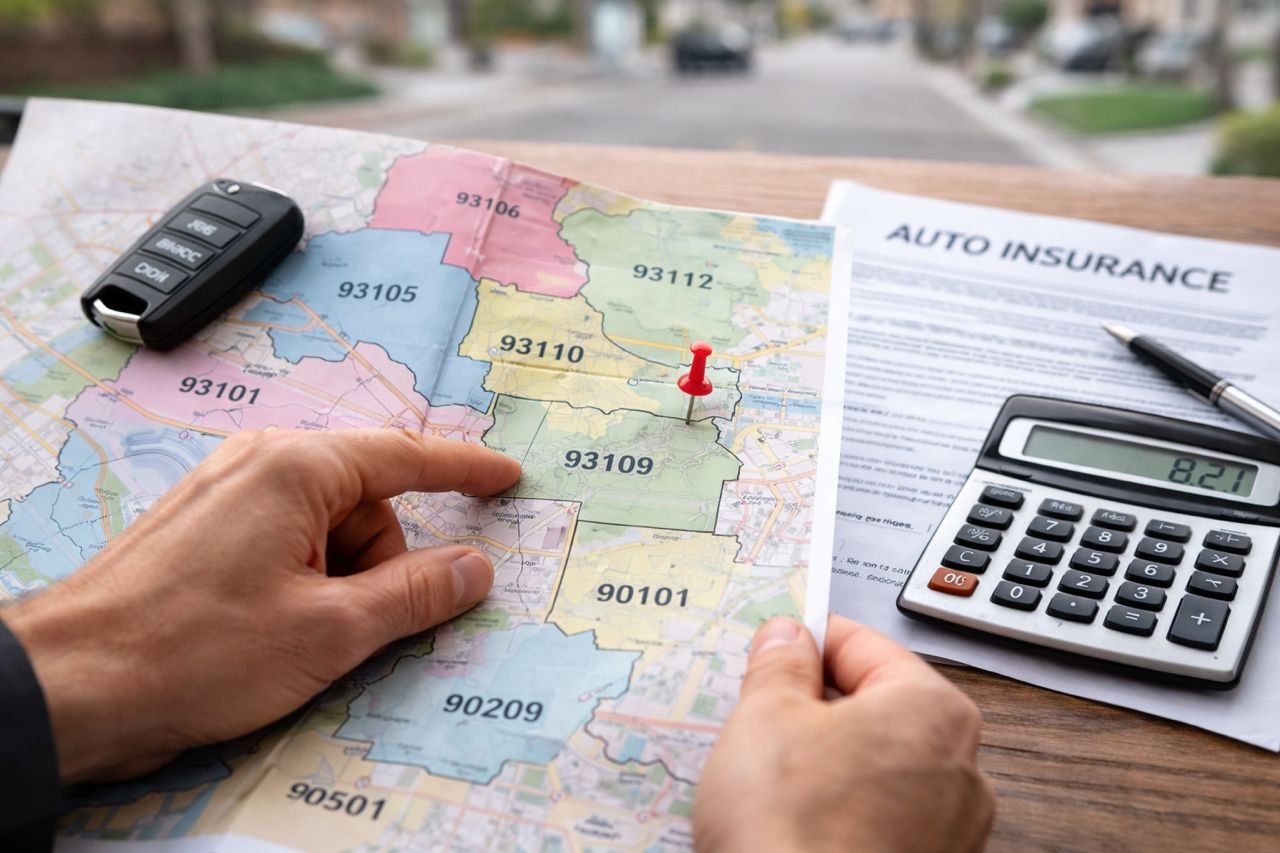
Two people can drive the same car, have clean records, and still pay very different premiums simply because they live a few miles apart.
It feels unfair at first. But from an insurer’s perspective, location changes risk in very real ways.
Here’s what’s actually going on.
1. Crime Patterns Matter
Insurance pricing reflects local claim history. If a ZIP code has higher rates of vehicle theft, vandalism, or break-ins, insurers expect more claims from that area.
Organizations like the Federal Bureau of Investigation publish crime data that insurers often factor into broader risk models.
More theft claims in a neighborhood means higher comprehensive coverage costs. It’s not personal. It’s statistical.
2. Accident Density
Urban areas typically have more traffic congestion, more intersections, and more distractions. That increases the probability of collisions.
The National Highway Traffic Safety Administration consistently shows higher crash volumes in densely populated areas.
Even if you personally drive carefully, living in a high traffic zone raises the overall claim frequency tied to that ZIP code.
3. Repair and Labor Costs
Insurance is local economics.
Labor rates differ by region. Parts availability differs. Body shops in major metro areas often charge more than those in smaller towns. That pushes up average claim severity.
If repairs cost more where you live, premiums follow.
4. Weather and Environmental Risk
Some ZIP codes face higher exposure to floods, hailstorms, hurricanes, or wildfires.
In coastal states, wind and storm claims heavily influence property and auto pricing. In other areas, hail damage might drive repeated comprehensive claims.
Insurers price based on historical loss patterns in each geographic pocket.
5. Medical and Legal Costs
Bodily injury claims are sensitive to local healthcare pricing and legal environments.
Medical treatment costs vary widely by region. So do lawsuit tendencies and jury awards. In areas where injury claims tend to settle higher, liability premiums increase accordingly.
It’s not just about crashes. It’s about what crashes cost.
6. Population Density and Infrastructure
More people means more exposure. More exposure means more claims.
Dense ZIP codes also see more parked vehicles on streets instead of garages, increasing the risk of damage. Infrastructure quality matters too. Poorly maintained roads can contribute to vehicle damage claims.
7. Insurance Regulations by State
Even though pricing can vary by ZIP code, state level regulations set the broader framework.
Each state’s insurance department determines what rating factors are allowed. Some states limit how much weight insurers can give to certain variables. Others allow more flexibility.
That’s why crossing a state line can sometimes shift premiums significantly, even if the neighborhood looks similar.
What This Really Means
Insurance rates by ZIP code aren’t about judging individual drivers. They reflect aggregated data tied to geography.
You might be the safest driver in your area, but if your ZIP code historically produces higher claims, that risk gets shared across policyholders in that zone.
If you’re comparing quotes, even a small change in address, like moving a few streets over, can impact your premium.
Insurance pricing is less about who you are and more about where risk statistically concentrates.
Location, in this industry, is leverage