

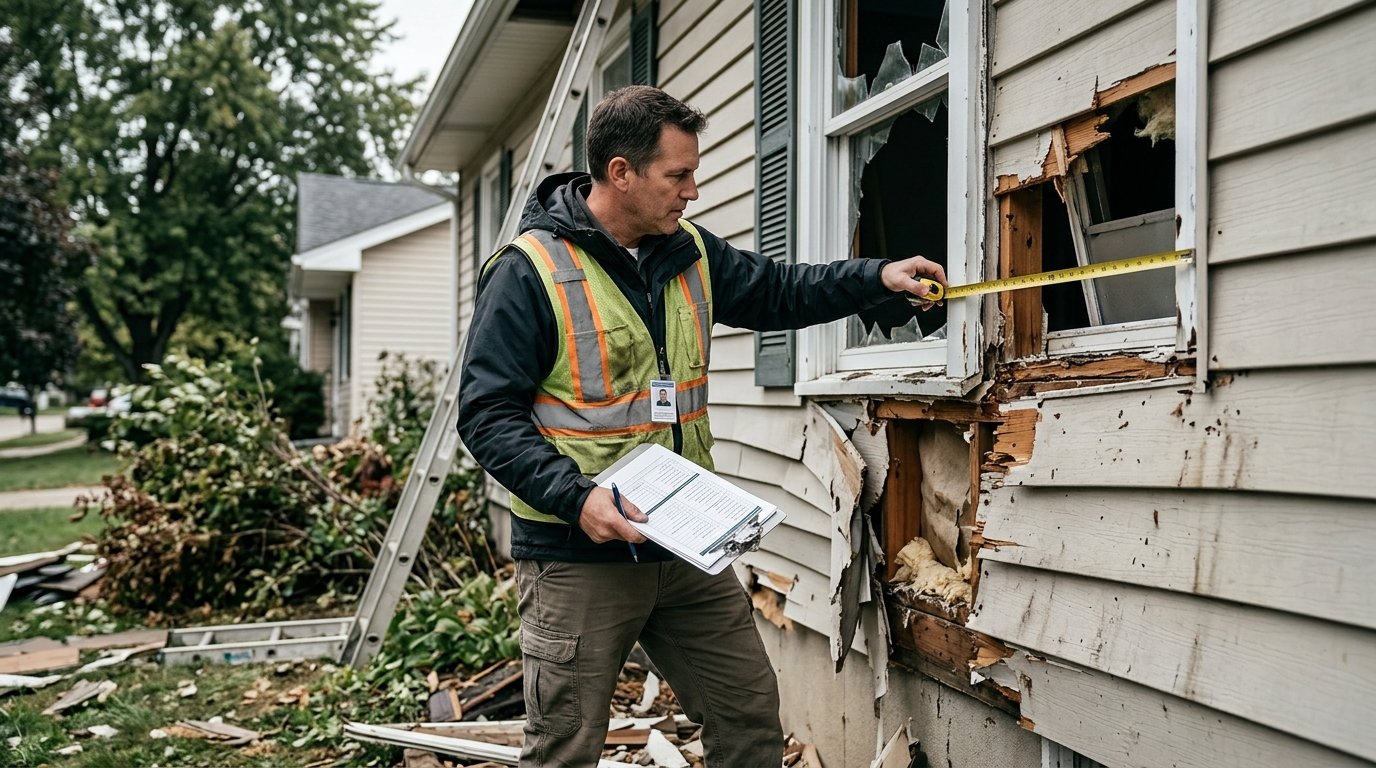
When a home suffers serious damage from a fire, storm, burst pipe, or another covered event, filing an insurance claim can quickly become complicated. Homeowners may need to document damaged property, obtain repair estimates, review policy exclusions, respond to requests from the insurer and determine whether a settlement offer will cover the cost of restoring their home.
A public insurance adjuster can help manage that process. Unlike an adjuster who works for the insurance company, a public adjuster represents the policyholder and may assist with documenting losses, preparing claim estimates, interpreting policy provisions and negotiating a settlement. However, hiring one comes at a cost and the agreement can affect how much money a homeowner ultimately has available for repairs. Pennsylvania Insurance Department
That makes it important to ask the right questions before signing a contract. A public adjuster’s experience, fee structure, communication practices and contractual authority can all influence the experience of handling a claim.
Here are eight questions homeowners should ask before hiring a public insurance adjuster.
1. Are You Properly Licensed in My State?
The first question to ask is whether the public adjuster holds the license required to handle claims in the state where the damaged property is located.
Public adjusters work directly for policyholders, so homeowners need to verify that the person they are considering is authorized to provide those services. Licensing requirements and verification procedures vary by state, making the relevant state insurance department an important starting point. The National Association of Insurance Commissioners (NAIC) provides background on adjuster licensing and the different roles adjusters perform. https://content.naic.org/state_licensing_handbook.htm
Ask the adjuster for their full legal name, license number, business address, and the name of the company they represent. Then check those details against the official state insurance regulator’s records rather than relying exclusively on a business card, website or verbal assurance.
Homeowners should also determine whether the person who will personally inspect and manage the claim is the same person they are interviewing. A firm may advertise an experienced principal while assigning day to day work to another adjuster. Knowing who will handle the file helps establish accountability from the beginning.
Follow up questions to ask:
- Can you provide your current public adjuster license number?
- How can I verify your license with my state’s insurance department?
- Who will personally inspect my property and manage my claim?
- Have you faced any disciplinary actions or licensing restrictions relevant to your work?
It is also worth checking for complaints, where information is publicly available and asking for references from previous clients.
A professional should be willing to explain their credentials and provide the information necessary for independent verification. If someone refuses to disclose their license details or pressures you to sign before you can check them, consider that a reason to pause.
2. How Much Experience Do You Have With Claims Like Mine?
Not all property insurance claims involve the same problems. A homeowner dealing with extensive fire damage may need a different level of technical documentation from someone disputing the cost of a roof replacement after a hailstorm.
Before hiring an adjuster, ask how long they have worked as a public adjuster and whether they have handled claims involving similar damage, property types and insurance disputes.
Experience should be relevant to the particular loss, not simply measured by the number of years someone has been in business.
For example, a homeowner with substantial water damage may need an adjuster who understands how to document affected building materials, distinguish visible damage from concealed damage and evaluate the scope of necessary repairs. Someone handling a large fire claim may need experience coordinating detailed repair estimates, personal property inventories and documentation of additional living expenses where covered by the policy.
Ask the adjuster to explain how they would approach your specific claim. Their answer should demonstrate a clear process for examining the damage, reviewing the policy, identifying supporting evidence and communicating with the insurer.
Follow up questions to ask:
- How many claims similar to mine have you handled?
- Have you worked on claims involving my type of property and damage?
- Can you provide references from previous clients with comparable claims?
- What challenges did you encounter in similar cases, and how were they addressed?
References can provide useful insight into responsiveness, professionalism and the quality of documentation. Ask whether the adjuster communicated regularly, explained settlement decisions and kept the client informed throughout the process.
The goal is not to find someone who promises the largest possible settlement. It is to find a professional who can explain the work required to present your loss accurately and support the claim with appropriate evidence.
3. Exactly What Services Will You Provide?
Before agreeing to hire a public adjuster, establish what the engagement includes and what remains your responsibility.
Public adjusters may help review the insurance policy, document damage, prepare estimates, organize supporting records, communicate with the insurer and negotiate the amount of a claim. However, the services offered can differ by firm and contract. Some agreements may cover the entire claim, while others may be limited to particular portions of a dispute.
Ask for a written description of the work the adjuster will perform.
For example, suppose a homeowner receives an insurance settlement offer after a storm damages the roof, gutters, ceilings and several rooms inside the house. The homeowner believes the estimate does not account for all necessary repairs.
One adjuster might agree to inspect the property, prepare a revised estimate, compile photographs and negotiate with the insurer. Another might only review the existing estimate and advise the homeowner about possible discrepancies. Both services may have value, but they are not equivalent.
Clarifying the scope of work prevents misunderstandings about what the fee covers.
Follow up questions to ask:
- Will you inspect the property in person?
- Will you review my policy and explain relevant coverage provisions?
- Will you prepare a detailed estimate of the damage and repair costs?
- Will you communicate and negotiate directly with my insurer?
- Will you help document additional living expenses or damaged personal property if applicable?
- Are expert reports, engineers, estimators or other specialists included in your services or billed separately?
Homeowners should also ask whether the adjuster will handle all covered damage identified in the contract or only selected parts of the claim.
Get the answers in writing. A clear agreement should identify the services being provided, the loss involved, the compensation arrangement and any important limitations.
4. How Is Your Fee Calculated and What Will I Actually Pay?
The fee is one of the most important issues to discuss before hiring a public adjuster.
Many public adjusters charge a percentage of an insurance claim payment, although compensation structures and legal restrictions vary by state. Some arrangements may use a different fee structure. Fees are generally the policyholder’s responsibility and can reduce the funds available for repairs. Illinois Department of Insurance
Do not assume that the fee is automatically covered by your homeowners insurance policy. Ask the adjuster to explain the proposed fee and confirm the arrangement against your state’s rules.
Consider a hypothetical claim in which the insurer pays $60,000 and the signed agreement specifies a 10% fee calculated on that amount. The adjuster’s fee would be $6,000, leaving $54,000 before any other applicable costs or obligations.
That example illustrates why the percentage alone is not enough. Homeowners need to know exactly which payments count toward the fee.
| Fee question | Why it matters |
| What percentage or flat fee will you charge? | Establishes the basic cost of the service |
| Is the fee based on the entire claim payment or only additional money obtained? | Can substantially change the amount owed |
| Does the fee apply to money already offered or approved by the insurer? | May mean paying for amounts the adjuster did not negotiate |
| Are inspections, experts, travel or other expenses billed separately? | Identifies possible additional costs |
| When is payment due? | Clarifies how the fee affects the settlement funds |
| Can the fee be negotiated? | Allows the homeowner to compare and discuss terms |
Fees and fee limits differ across states and may also depend on the circumstances of the loss. For instance, Texas consumer guidance warns that a public adjuster’s fee may be calculated on the total claim payment rather than only the disputed amount. Texas Department of Insurance
Ask the adjuster to provide a written example showing what you would owe under the proposed arrangement. If the insurer has already made an offer, ask for separate calculations using that existing offer and any additional amount the adjuster hopes to negotiate.
It is also reasonable to interview more than one adjuster. Comparing fee structures and contract terms can help you assess whether the proposed service makes financial sense.
5. How Will You Handle My Existing Settlement Offer or Disputed Amount?
If the insurance company has already inspected the property or issued a settlement offer, ask how the public adjuster’s fee and services will apply to the existing claim.
This question is especially important for homeowners who are unhappy with an offer but have not yet decided whether professional representation is worthwhile.
Suppose an insurer has offered $45,000 for repairs, but a contractor estimates that the documented work will cost $65,000. A public adjuster agrees to review the claim and negotiate with the insurer.
If the insurer ultimately pays $65,000, the amount of the increase is $20,000. However, depending on the signed contract, the adjuster’s fee might be calculated on the full $65,000 rather than only the additional $20,000. The fee arrangement should therefore be understood before the homeowner agrees to representation.
Ask the adjuster to identify the specific issues they believe require further review. These could include omitted damage, quantities that appear insufficient, labor or material costs that need supporting documentation or policy provisions that may affect coverage.
The adjuster should explain how they intend to document those issues rather than simply promising a larger payout.
Follow up questions to ask:
- What specific weaknesses or omissions do you see in the current estimate?
- Will you review the insurer’s estimate before recommending that I hire you?
- How will your fee be calculated if the insurer has already made an offer?
- What happens if the insurer does not increase the settlement?
- Will you explain which disputed items are supported by the policy and available evidence?
A public adjuster cannot guarantee that an insurer will pay a particular amount. Coverage depends on the policy, the facts of the loss, exclusions, applicable limits and the evidence supporting the claim.
Homeowners should also remember that a larger gross settlement does not necessarily mean a better financial outcome. The adjuster’s fee, policy deductible, depreciation provisions, coverage limits and repair costs can all affect the amount available for restoration.
Before signing, compare the likely benefit of professional assistance with the cost of hiring the adjuster.
6. How Will You Communicate With Me and How Often Will I Receive Updates?
An insurance claim may involve inspections, requests for documents, revised estimates, coverage decisions, and settlement discussions. Without regular communication, homeowners can struggle to understand what is happening or what they need to do next.
Ask the public adjuster how they manage communication and whether they will provide updates at agreed intervals.
This is particularly important when a homeowner is temporarily displaced, dealing with contractors, or managing urgent repairs. The adjuster should explain who will be the primary contact and how the homeowner can obtain answers when questions arise.
Follow up questions to ask:
- Who will be my main contact throughout the claim?
- How frequently will you provide written updates?
- How quickly should I expect a response to routine questions?
- Will I receive copies of estimates, submitted documents, and important correspondence?
- Will you explain settlement offers and their implications before I make a decision?
- How will you notify me if the claim encounters a delay or dispute?
It is also important to understand the authority granted under the contract. Some agreements may allow the adjuster to communicate with the insurer on the homeowner’s behalf or designate the adjuster as the main point of contact. That does not mean the homeowner should stop monitoring the claim.
Ask whether you will continue receiving copies of significant communications and whether any decisions require your approval.
For example, if the insurer offers a settlement that resolves some disputed items but not others, the homeowner should have a clear explanation of the offer and its consequences before deciding how to proceed.
A dependable communication process helps homeowners remain informed without having to chase the adjuster for every update. Make the expected communication schedule part of the written agreement when possible.
7. Do You Have Any Relationships With Contractors or Other Service Providers?
Property damage often requires several professionals, including roofers, restoration companies, engineers, mitigation specialists and repair contractors. A public adjuster may have experience working with these professionals, but homeowners should understand whether any financial or business relationships could influence recommendations.
Ask the adjuster whether they receive referral fees, have ownership interests in repair businesses or have any other financial arrangements involving contractors they recommend.
The existence of a professional relationship does not automatically mean that a recommendation is inappropriate. However, homeowners should be able to evaluate recommendations independently and understand who is being paid for each service.
Follow up questions to ask:
- Do you have a financial interest in any contractor or restoration company?
- Do you receive compensation for referring clients to other businesses?
- Can I select my own contractor?
- Are claim adjusting services and repair services covered by separate agreements?
- Who will be responsible if the repair estimate or scope of work needs to be revised?
Homeowners should be cautious about signing a public adjusting agreement that also appears to commit them to a particular contractor or repair arrangement without clearly explaining the terms.
The Pennsylvania Insurance Department, for example, describes restrictions that apply when an adjuster also performs contracting work, including the use of separate contracts for the adjusting and repair functions. Specific rules differ by state. Pennsylvania Insurance Department
It is also wise to obtain independent repair estimates when appropriate. A contractor’s estimate and an insurance claim estimate serve related but different purposes: the contractor estimates the cost of performing the work, while the claim process determines what the insurer owes under the policy.
The homeowner should understand both figures and how any differences will be addressed.
8. What Does the Contract Allow and Can I Cancel It?
The final question concerns the written agreement itself.
A public adjusting contract can determine the fee, scope of work, responsibilities of both parties, and the circumstances under which the relationship can end. Signing without understanding these provisions can create financial or administrative complications later.
Ask the adjuster to walk through the contract with you before signing. Do not rely solely on verbal explanations, promotional material or assurances that the document is standard.
Review these contract provisions carefully:
- Services covered: Confirm which property damage and claim issues are included.
- Fee calculation: Identify the percentage or flat fee, the amount on which it is calculated and any additional expenses.
- Payment timing: Determine when the fee becomes due and how claim payments will be handled.
- Authority: Understand what the adjuster is authorized to do on your behalf and which decisions remain yours.
- Duration: Check whether the agreement ends after a particular claim milestone or remains in effect for a specified period.
- Cancellation rights: Find out whether you can cancel, how to provide notice, and whether any fees or expenses remain payable.
- Dispute resolution: Review the procedure for resolving disagreements about the adjuster’s services or fees.
- Documentation: Confirm that you will receive a signed copy and copies of important claim records.
Do not assume that the cancellation period is the same in every state. Some jurisdictions provide specific rights to cancel a public adjusting contract within a limited period, while the requirements and exceptions vary. Texas consumer guidance, for example, describes a 72-hour cancellation period under its applicable rules. Homeowners should verify the current requirements in their own state before signing. Texas Department of Insurance
Ask what happens if you cancel after the permitted period, if the insurer settles the claim before the adjuster completes the work or if you decide to handle the remaining dispute yourself.
Also check whether the contract gives the adjuster any authority concerning settlement decisions, repair arrangements or the handling of claim proceeds. Do not grant broader authority than you understand or intend to provide.
If a clause is unclear, request a written explanation. For a substantial claim or a contract with complex terms, consider asking an attorney familiar with insurance claims in your state to review it.
The time spent reviewing the agreement can help prevent disputes over fees, responsibilities and control of the claim later.
Warning Signs to Watch for Before Hiring a Public Adjuster
Asking the eight questions above can help homeowners compare candidates, but it is also important to recognize warning signs during the hiring process.
Be cautious if an adjuster:
- Promises a specific settlement amount before reviewing the policy and evidence.
- Pressures you to sign immediately or discourages you from comparing alternatives.
- Refuses to provide license information or a written contract.
- Cannot explain how the fee is calculated.
- Avoids questions about fees on amounts already offered by the insurer.
- Makes vague claims about being able to guarantee coverage or force the insurer to pay.
- Discourages you from reading correspondence or understanding settlement offers.
- Insists that you use a particular contractor without clearly disclosing relevant financial relationships.
These warning signs do not, by themselves, prove misconduct, but they are reasons to slow down and verify the facts. State insurance departments can provide information about licensing, consumer complaints and applicable rules.
Homeowners should also remember that hiring a public adjuster is optional. Some claims can be managed directly with the insurance company, while more complicated or disputed claims may justify seeking professional assistance. The right decision depends on the circumstances of the loss, the policy, the complexity of the dispute and the cost of representation.
Public Adjuster Hiring Checklist for Homeowners
Before signing an agreement, use this checklist to confirm that the important questions have been answered.
- I verified the adjuster’s license with the relevant state regulator.
- I reviewed their experience with claims similar to mine.
- I received a written description of the services included.
- I understand the fee calculation and any additional expenses.
- I know whether the fee applies to an existing settlement offer.
- I understand how often the adjuster will communicate with me.
- I asked about financial relationships with contractors or other service providers.
- I reviewed the contract’s authority, duration and cancellation provisions.
- I know how to obtain copies of estimates and important claim documents.
- I have had enough time to compare options and ask follow up questions.
If any important item remains unclear, delay signing until you receive an adequate explanation.
Hiring a public insurance adjuster can provide additional support when a property insurance claim involves extensive damage, complicated documentation or disagreement over the amount payable. However, professional assistance is not automatically worth its cost in every situation.
Homeowners should begin by verifying the adjuster’s license, evaluating relevant experience, defining the scope of work and understanding the fee structure. They should also establish communication expectations, ask about potential conflicts of interest and carefully review the contract before authorizing representation.
Most importantly, compare the cost of hiring an adjuster with the specific problem they are expected to solve. A credible professional should be able to explain the evidence they intend to gather, the disputed items they will examine and the limits of what they can promise.
A larger settlement is not guaranteed and the amount ultimately available for repairs may be reduced by professional fees and other claim related obligations. By asking these eight questions before signing, homeowners can make a more informed decision about whether a public adjuster is appropriate for their circumstances.