

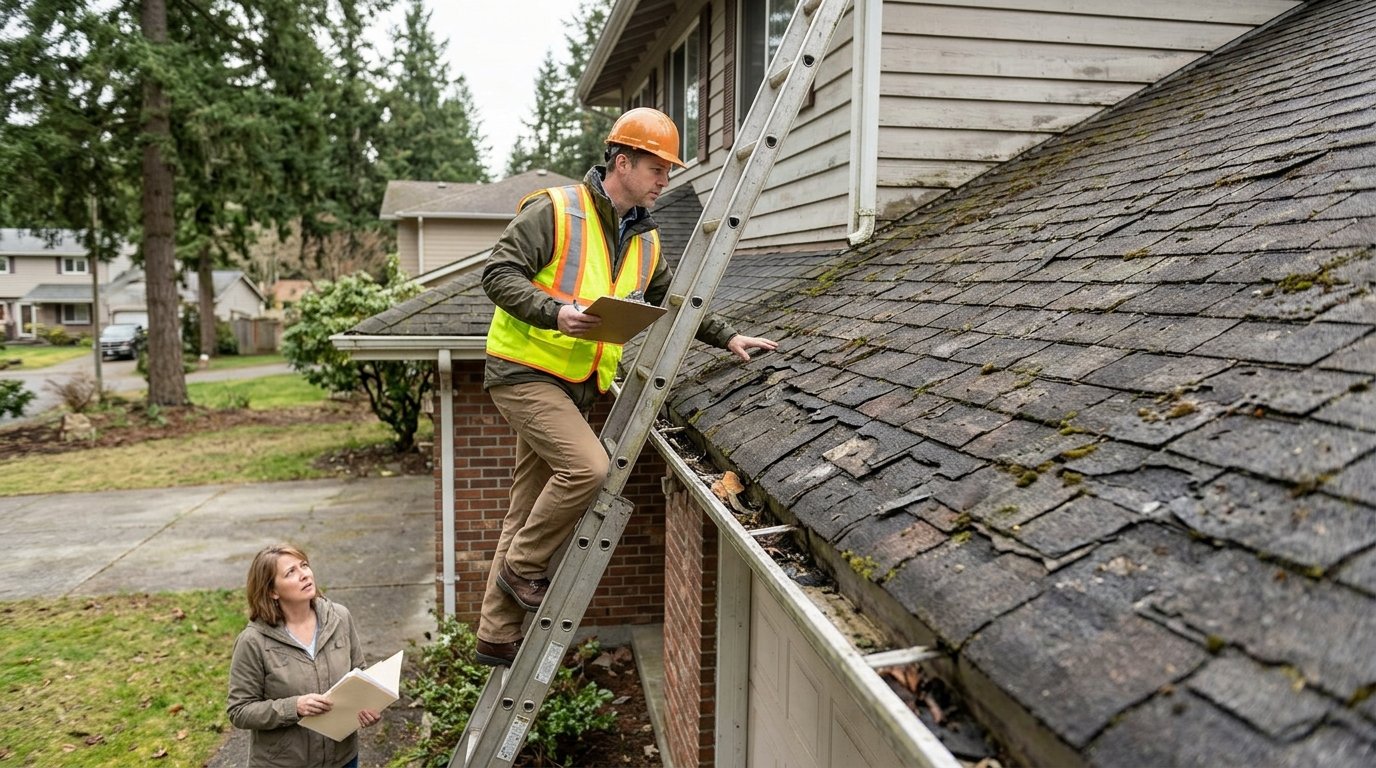
A roof does more than protect a home from rain, wind, heat and other weather conditions. It also plays a significant role in how insurance companies evaluate a property’s risk. Because the roof is one of the home’s primary defenses against external damage, its age, condition, materials and maintenance history can influence whether an insurer is willing to provide coverage and how much that coverage will cost.
For homeowners, this creates an important distinction: having an older roof does not automatically make a property uninsurable, but it can make obtaining affordable coverage more complicated. An insurer may charge a higher premium, require an inspection, limit certain types of roof protection or offer actual cash value coverage instead of full replacement cost coverage.
These decisions can become particularly important when a homeowner needs to file a claim. A policy that appears to provide comprehensive protection may leave the property owner responsible for a substantial portion of replacement expenses if depreciation, deductibles or roof-specific restrictions apply.
Understanding how roof age affects insurance decisions can help homeowners prepare for renewals, evaluate replacement options and avoid unexpected expenses after a storm or other covered event.
1. Older Roofs Can Increase the Insurer’s Perceived Risk
Insurance companies assess the likelihood that a property will experience damage and the potential cost of repairing it. Roof age is one of the factors that can influence this assessment.
As roofing materials age, they can become more vulnerable to weather exposure, deterioration and damage. Asphalt shingles may lose protective granules, seals can weaken and flashing around chimneys, vents and other openings may deteriorate. These conditions can increase the possibility of leaks and water intrusion.
The risk is not limited to the roof itself. A damaged roof can allow water to enter the attic, ceilings, insulation, walls, and electrical systems. A relatively small roofing problem can therefore develop into a much larger property claim.
The National Association of Insurance Commissioners identifies roof age, condition, material, and shape as factors insurers may consider when determining homeowners insurance premiums. It also notes that newer roofs made from stable and fire resistant materials may be less expensive to insure.
This does not mean every older roof presents the same level of risk. A well maintained roof that has received timely repairs may be in better condition than a newer roof that was poorly installed or neglected.
However, insurers may treat advanced roof age as a reason to investigate the property’s condition more closely. Homeowners should therefore understand that the installation date is only one part of the underwriting decision.
2. Insurance Companies May Require a Roof Inspection Before Offering or Renewing Coverage
When a roof reaches an age that concerns an insurer, the company may request additional information before issuing a policy or approving renewal.
A roof inspection helps the insurer evaluate its present condition rather than relying exclusively on the number of years since installation. Depending on the company’s underwriting requirements, the inspection may be performed by an insurance representative, an independent inspector or a qualified roofing professional.
The inspection may examine:
- Missing, cracked, curling or damaged shingles.
- Signs of leaks, moisture intrusion or water stains.
- Deteriorating flashing around roof openings.
- Sagging sections or structural concerns.
- Evidence of previous repairs and whether they were completed properly.
- Moss, algae, or other growth that may indicate moisture problems.
- The overall condition of roofing materials and drainage systems.
The results can influence the insurer’s decision in several ways. A roof in good condition may remain eligible for standard coverage, even if it is relatively old. A roof showing significant deterioration may trigger repair requirements, coverage restrictions, or a recommendation for replacement.
Homeowners should not assume that an inspection automatically means their policy will be canceled. It may simply be part of the insurer’s process for determining whether the property meets its current underwriting standards.
Before an inspection, property owners should gather maintenance records, repair invoices, installation documents, and photographs of completed work. These records can help establish that the roof has been properly maintained.
3. Older Roofs May Qualify for Actual Cash Value Instead of Replacement Cost Coverage
One of the most financially significant consequences of roof age is the possibility of a change in how an insurance claim is settled.
Homeowners insurance policies may provide replacement cost coverage or actual cash value coverage for roof damage. These settlement methods can produce substantially different payments after a covered loss.
Replacement cost coverage generally pays the reasonable cost of repairing or replacing damaged property with materials of similar kind and quality, subject to policy terms, limits, deductibles and any applicable conditions.
Actual cash value coverage accounts for depreciation. This means the insurer deducts an amount reflecting the roof’s age, condition and wear from the replacement cost before calculating the payment.
For example, consider a roof that would cost $15,000 to replace following a covered storm. If depreciation reduces its actual cash value to $7,000 and the homeowner has a $2,000 deductible, the estimated insurance payment would be $5,000. The homeowner would need to fund the remaining $10,000.
Under replacement cost coverage, the insurer may pay the $15,000 replacement expense less the $2,000 deductible, subject to the policy’s settlement requirements. The initial payment and any recoverable depreciation may be handled separately.
The Texas Department of Insurance illustrates how a roof’s age can affect actual cash value settlements, while the NAIC explains that some policies provide only actual cash value coverage for roofs above a certain age or in poor condition.
The important point is that homeowners should not assume their entire dwelling is insured on replacement cost terms simply because the policy provides that protection generally. A roof-specific endorsement or limitation may establish a different settlement method.
Before renewing coverage, homeowners should ask whether their roof is covered at replacement cost, actual cash value or under a separate payment schedule.
4. Premiums May Increase as the Roof Gets Older
An older roof can influence insurance premiums because insurers may associate deteriorating roofing materials with a greater likelihood of damage and claims.
The extent of the premium impact depends on the insurer’s underwriting model and other property characteristics. A company may consider roof age alongside the home’s location, construction materials, weather exposure, previous claims, and overall condition.
For example, a property with an aging roof in an area frequently affected by hail or strong winds may present a different underwriting risk from a similar property in a location with less severe weather exposure.
The insurer may respond by increasing the premium, applying different coverage conditions, or requiring improvements before offering renewal.
However, there is no universal age at which every insurer increases premiums. Some companies place greater emphasis on the roof’s actual condition, while others use age thresholds that vary by roofing material and location.
The NAIC identifies roof age and condition as rating considerations and notes that replacing a roof or making other property improvements may help homeowners qualify for lower premiums.
Homeowners should therefore avoid assuming that a premium increase is based exclusively on roof age. They can ask their insurer to explain which property characteristics influenced the renewal price and whether a roof replacement would change the rating.
5. Some Insurers May Restrict Coverage or Decline to Renew a Property With an Aging Roof
An insurer’s decision about an older roof does not always involve pricing. In some cases, the company may decide that the property’s roofing condition falls outside its underwriting guidelines.
This can happen when an inspection reveals extensive deterioration, repeated leaks, visible structural problems or a roof that appears unlikely to withstand ordinary weather exposure.
Depending on the company’s rules and applicable state requirements, possible outcomes include:
- Requiring the homeowner to repair specific problems.
- Setting a deadline for replacing the roof.
- Restricting coverage for certain types of roof damage.
- Offering a policy with actual cash value settlement for the roof.
- Declining to renew the existing policy.
- Declining a new insurance application.
The distinction between a repair requirement and a coverage restriction matters. An insurer may be willing to continue covering the home if the homeowner corrects identified problems. In another situation, it may offer coverage but change the financial terms under which future roof claims are settled.
The Texas Department of Insurance explains that some insurers may change older-roof coverage to actual cash value as roofs age, while poor roof condition may result in the roof no longer being covered under certain policies.
A homeowner who receives a nonrenewal notice should not wait until the existing policy expires to look for alternatives. Finding another insurer may take time, particularly if the property needs repairs or documentation.
It is also important to understand the difference between a policy cancellation and nonrenewal. The rules governing both vary by state and homeowners should contact their state insurance department if they believe an insurer has not followed applicable requirements.
6. Roof Material and Expected Lifespan Can Matter as Much as Installation Date
Two roofs installed in the same year may not present the same insurance risk. Their materials, construction quality, maintenance history and exposure to local weather can produce different levels of durability.
For this reason, insurers may evaluate the roofing material alongside its age.
Common roofing materials include:
Asphalt shingles: These are widely used in residential properties. Their durability varies by product quality, installation, ventilation, weather exposure and maintenance. An aging asphalt roof may show granule loss, curling, cracking or missing shingles.
Metal roofing: Metal roofs can offer long service life and resistance to certain weather related hazards. However, the type of metal, fastening system, installation quality and exposure to corrosion or impact damage can affect performance.
Tile roofing: Concrete and clay tiles can be durable, but individual tiles may crack or break. The underlying underlayment and supporting structure also require attention.
Wood shingles and shakes: These materials can deteriorate through moisture exposure, splitting, and decay. Their fire related characteristics may also affect insurance considerations, particularly in wildfire prone areas.
Slate roofing: Natural slate can last for decades when properly installed and maintained. However, damaged sections may require specialized repairs and materials that are more expensive or difficult to source.
A roof’s expected lifespan should not be treated as a guaranteed insurance cutoff. Actual durability depends on the product, workmanship, local climate and maintenance. An insurer may accept an older roof in excellent condition while imposing restrictions on a younger roof that has sustained significant damage.
Homeowners should retain product information, contractor documentation, and installation dates so they can accurately explain the roof’s characteristics when applying for or renewing insurance.
7. Wear and Tear Is Usually Treated Differently From Sudden, Covered Damage
One of the most common misunderstandings about homeowners insurance is the assumption that a policy will pay for roof replacement whenever the roof becomes damaged.
Most standard homeowners policies are designed to cover specified sudden and accidental losses, subject to the policy’s exclusions and conditions. They are not intended to function as maintenance plans.
For example, if a storm causes sudden wind damage to an otherwise properly maintained roof, the damage may qualify for coverage depending on the policy.
However, if the roof has gradually deteriorated because of age, neglected maintenance or repeated moisture exposure, the insurer may consider the problem ordinary wear and tear rather than a covered loss.
The distinction becomes more complicated when a covered event affects an already deteriorating roof. An insurer may investigate whether the storm caused new damage, whether existing deterioration contributed to the loss and whether any policy exclusions apply.
Maryland’s insurance regulator explains that homeowners policies generally do not cover maintenance related deterioration and that pre-existing roof problems can affect claims involving later covered events.
This makes routine maintenance financially important. Homeowners should address small leaks, damaged flashing, loose shingles, and drainage problems before they develop into more extensive damage.
They should also document the roof’s condition before severe weather whenever practical. Dated photographs and maintenance records may help establish the property’s condition before a claim occurs.
8. Roof Replacement Can Improve Insurance Options, but Savings Are Not Guaranteed
Replacing an aging roof can improve a property’s insurance profile, particularly when the new materials offer better resistance to weather-related damage.
A replacement may also make the home eligible for coverage options that were previously unavailable. For example, an insurer that restricted an older roof to actual cash value coverage may reconsider replacement cost protection after a qualifying roof replacement.
Some companies may offer discounts or more favorable underwriting terms for newer roofs. However, the availability and size of any discount depend on the insurer, location, roofing material and other rating factors.
Homeowners should consider the full financial picture before arranging a replacement solely to reduce their premiums.
A new roof can involve substantial upfront costs, and the potential insurance savings may not immediately offset the expense. The decision should also account for the roof’s remaining useful life, repair needs, property value and the likelihood of obtaining more favorable coverage.
Before starting the project, homeowners can ask their insurance agent:
- Will a new roof change my premium?
- Does the company offer discounts for particular roofing materials?
- Will replacement cost coverage become available?
- Are there specific installation or contractor requirements?
- Does the insurer require permits, inspection reports, or proof of completion?
- Will the new roof affect wind, hail or other deductibles?
Getting answers before committing to the project helps avoid spending thousands of dollars based on an assumed insurance benefit.
9. Inaccurate Roof Records Can Create Problems During Underwriting and Claims
Homeowners may not always know exactly when their roof was installed, especially if they purchased an older property or previous owners completed renovations without leaving detailed records.
Guessing the installation date can create problems when applying for insurance or updating policy information.
If an application states that the roof is newer than it actually is, the insurer may later discover the discrepancy through an inspection, property records or a claim investigation. Incorrect information can lead to underwriting complications and depending on the circumstances and applicable law, disputes about coverage.
Accurate records are particularly important when a roof has been replaced in stages. For example, a homeowner may have installed new shingles without replacing the underlying roof structure or may have replaced only one section after storm damage.
The insurer may want to know which components were replaced and when the work was completed.
Useful records include:
- Contractor invoices and payment receipts.
- Building permits and inspection approvals.
- Manufacturer warranties.
- Roofing material specifications.
- Before and after photographs.
- Reports from qualified roofing inspectors.
- Documentation of repairs following previous storm damage.
Homeowners who cannot establish the exact installation date should explain what they know and ask their insurer what documentation it will accept. Accurate, transparent information is safer than providing an estimated date as if it were confirmed.
10. Separate Roof Deductibles and Cosmetic Damage Restrictions Can Increase Out of Pocket Costs
Even when an older roof remains insured, homeowners may face additional policy provisions that affect how much they receive after a claim.
One example is a separate wind or hail deductible. Instead of applying the standard homeowners deductible to every covered loss, the policy may require the homeowner to pay a different deductible for certain weather related damage.
Some policies calculate these deductibles as a percentage of the insured dwelling value rather than a fixed dollar amount.
For example, a 2% wind or hail deductible on a home insured for $350,000 would require the homeowner to pay $7,000 toward a qualifying claim before the insurer contributes, subject to the policy terms.
Another consideration is a cosmetic damage exclusion. Depending on the wording, this type of provision may limit coverage for damage that affects the roof’s appearance without affecting its ability to perform its intended function.
This can become relevant when hail causes visible marks or dents but does not create leaks or compromise the roof’s performance.
The Government Accountability Office has documented how insurers in some markets have used older roof depreciation, separate deductibles and other coverage adjustments in response to property risks. These practices are not universal, but they illustrate why homeowners should review the roof specific provisions of their policies rather than relying only on the headline dwelling coverage amount.
What Homeowners Should Review Before Renewing Insurance
An upcoming renewal is a useful opportunity to determine whether an aging roof is changing the property’s coverage or cost.
Rather than focusing only on the new premium, homeowners should review the policy’s roof settlement terms, exclusions, deductibles and any conditions attached to renewal.
| Insurance detail | What homeowners should check |
| Roof settlement method | Is roof damage covered at replacement cost or actual cash value? |
| Roof age restrictions | Does the insurer apply age-based limits or eligibility requirements? |
| Inspection requirements | Does the company need a roof inspection or proof of repairs? |
| Wind and hail deductibles | Are separate deductibles applied to weather related roof damage? |
| Cosmetic damage exclusions | Are appearance related roof damages excluded or limited? |
| Maintenance exclusions | How does the policy treat deterioration and pre existing damage? |
| Replacement requirements | Has the insurer requested repairs or full replacement by a deadline? |
| Discounts | Could a qualifying roof replacement or upgrade reduce the premium? |
| Renewal conditions | Has the insurer changed the roof’s coverage terms? |
Homeowners should request written explanations of important changes and keep copies of policy endorsements. A conversation with an agent can help clarify the terms, but the policy documents ultimately determine the applicable coverage.
Practical Steps to Protect an Aging Roof and Maintain Insurance Coverage
Homeowners do not always need to replace an older roof immediately. In some circumstances, regular maintenance and proper documentation can help preserve insurability while reducing the likelihood of avoidable damage.
Consider the following steps:
- Arrange periodic roof inspections. Have a qualified roofing professional examine the roof and identify problems that may not be visible from the ground.
- Address minor damage promptly. Replace missing shingles, repair damaged flashing and investigate leaks before moisture spreads into other parts of the home.
- Keep a maintenance record. Store invoices, inspection reports, permits and photographs in one location so they are available when an insurer requests documentation.
- Review the policy before renewal. Ask whether the insurer has changed roof settlement terms, deductibles, exclusions or eligibility requirements.
- Compare insurance options before replacing the roof. Different insurers may evaluate the same roof differently. Comparing quotes can reveal whether another company offers more suitable terms.
- Obtain replacement estimates when necessary. If the roof is approaching the end of its useful life, compare contractor estimates and consider the financial consequences of delaying replacement.
- Verify that completed work is documented. After replacement, retain proof of the materials used, installation date, contractor details, permits and final inspection where applicable.
- Avoid assuming that a new roof guarantees full coverage. Even a recently installed roof remains subject to the policy’s exclusions, deductibles, limits and covered peril requirements.
These steps can help homeowners make decisions based on the property’s actual condition rather than waiting until an insurance renewal or storm damage forces an urgent response.
Roof age can affect homeowners insurance in several ways, from premium calculations and inspection requirements to policy eligibility and claim settlement. An aging roof may be viewed as a greater source of potential property damage, particularly when it shows signs of deterioration or is located in an area exposed to severe weather.
However age alone does not tell the entire story. Roofing material, installation quality, maintenance, local weather exposure and the insurer’s underwriting guidelines all contribute to the decision.
For homeowners, the most important issue is understanding what their policy will actually pay if the roof suffers covered damage. A policy that provides replacement cost coverage for the dwelling may still impose a different settlement method or deductible for the roof.
Reviewing these details before renewal, maintaining accurate roof records and addressing deterioration early can help reduce unpleasant surprises. When replacement becomes necessary, homeowners should compare the potential insurance benefits with the upfront cost rather than assuming that a new roof will automatically produce lower premiums.