

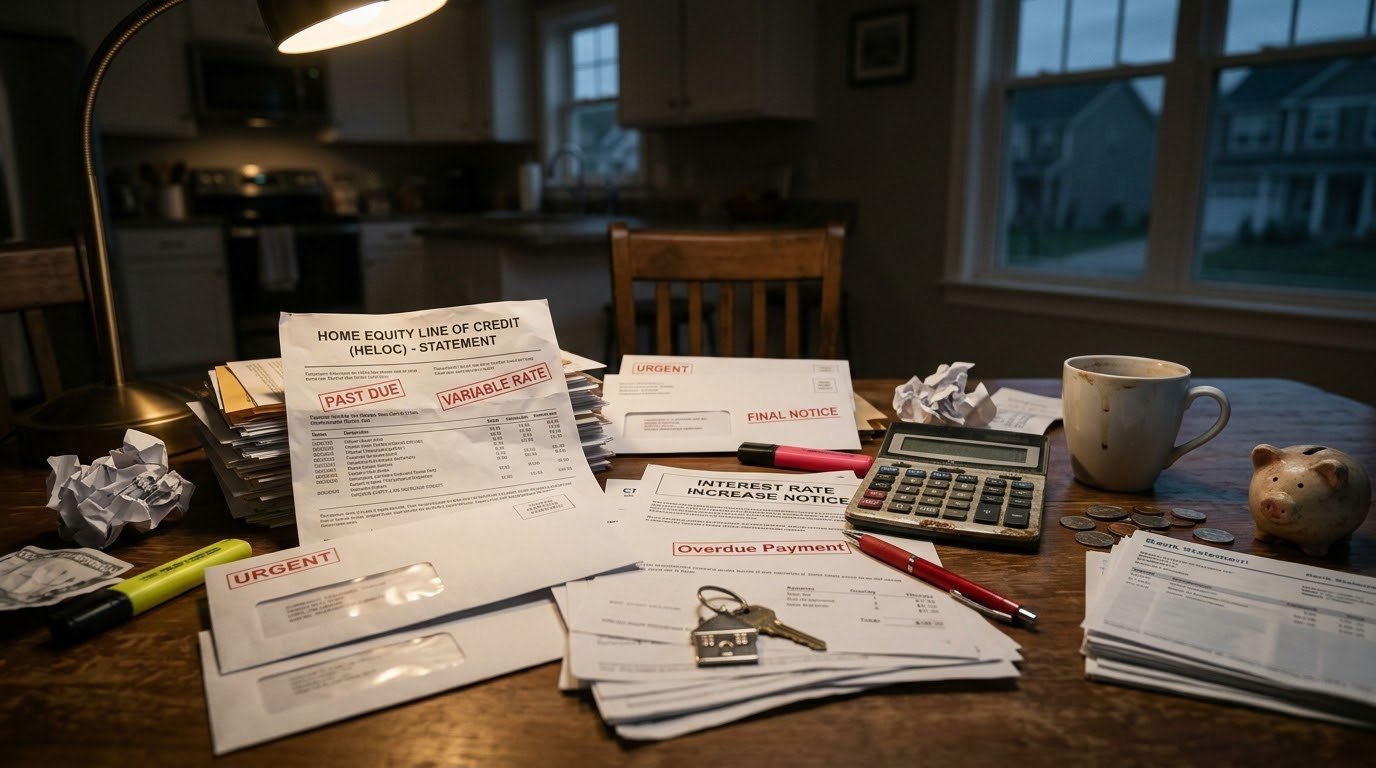
A home equity line of credit (HELOC) can give homeowners access to money without requiring them to sell their property or replace an existing mortgage. It can be useful for planned renovations, certain large expenses and other borrowing needs when the repayment structure is affordable.
However, access to home equity does not necessarily improve a household’s financial position. A HELOC creates another debt obligation, usually secured by the property itself. If homeowners use it to cover recurring expenses, underestimate future payments or borrow more than their income can comfortably support, the facility can add financial pressure instead of relieving it.
The risk is particularly important when household budgets are already strained by higher insurance premiums, property taxes, utility bills, maintenance costs and other ownership expenses. In these circumstances, borrowing against a home may provide temporary liquidity while leaving the underlying financial problem unresolved.
Here are five situations in which a HELOC can create more financial pressure than homeowners initially expect.
1. Using Home Equity to Cover Recurring Household Expenses
One of the most concerning situations is when homeowners begin using a HELOC to pay for expenses that return every month.
A homeowner might draw money to cover groceries, utility bills, transportation, property taxes, homeowners insurance premiums or other routine costs. Initially, the additional credit may appear to provide breathing room. However, these expenses do not disappear after the HELOC withdrawal.
For example, consider a homeowner whose monthly income is no longer sufficient to cover the mortgage, insurance, utilities and household necessities. The homeowner draws $7,000 from a HELOC to cover the shortfall.
The immediate financial pressure may ease because several bills can now be paid. But the household still has the same income, the same recurring expenses and an additional debt balance that must eventually be repaid.
When the following month’s expenses arrive, the homeowner faces the same budget problem. If the HELOC is used again, the balance grows while interest charges accumulate.
This can create a cycle in which borrowing temporarily supports the household’s lifestyle without improving its ability to afford that lifestyle.
The distinction between a temporary liquidity need and a structural cash-flow problem is important. Using a HELOC to finance a one time emergency may be manageable if the borrower has a realistic repayment plan. Using it repeatedly to cover ordinary expenses suggests that household spending and income may be out of balance.
Homeowners should examine:
- Whether HELOC withdrawals are paying for necessities rather than planned expenses.
- Whether monthly income can cover recurring costs without additional borrowing.
- Whether the outstanding balance is increasing over time.
- Whether savings are being depleted alongside home equity.
- Whether the household has a specific plan to stop relying on the credit line.
Why it creates pressure: A HELOC does not increase household income. It converts available home equity into borrowed money that must be repaid. When recurring expenses are the reason for borrowing, the household may end up paying interest on yesterday’s living costs while trying to finance tomorrow’s.
2. Borrowing During the Draw Period Without Preparing for Higher Repayments
Another situation that can create financial pressure is relying on the relatively manageable payments associated with a HELOC’s draw period without preparing for what happens afterward.
Most HELOCs have two main stages:
- Draw period: The homeowner can access available credit, make repayments and potentially borrow again. Some lenders allow interest-only payments during this period, while others require some principal repayment.
- Repayment period: The borrowing period ends, additional withdrawals are no longer available and the outstanding balance must be repaid according to the agreement.
The transition can produce a substantial increase in monthly payments.
Consider a homeowner who borrows $50,000 during a HELOC draw period and makes payments that cover only interest. The monthly obligation may appear manageable because the principal balance remains largely unchanged.
Once the repayment period begins, however, the homeowner may have to repay both principal and interest over a shorter period. The monthly payment could rise considerably even if the homeowner does not borrow another dollar.
The Consumer Financial Protection Bureau warns that HELOC payments can increase significantly when the draw period ends. Depending on the agreement, the borrower may have to repay the balance over a specified period or, in some cases, face a balloon payment.
This is particularly important for homeowners approaching retirement, planning a career change or expecting a reduction in household income.
A household that can comfortably afford interest-only payments today may not be able to manage full principal and interest repayments several years later.
Before opening or using a HELOC, homeowners should investigate:
- The exact length of the draw period.
- Whether payments during the draw period include principal.
- When the repayment period begins.
- How the outstanding balance will be amortized.
- Whether a balloon payment is possible.
- Whether the household could afford the projected payment using its expected future income.
Why it creates pressure: A manageable payment today can conceal a much larger obligation tomorrow. Homeowners who focus only on the initial payment may commit to a borrowing arrangement that becomes difficult to sustain when principal repayment begins.
3. Variable Interest Rates Increase the Cost of Borrowing
Many HELOCs have variable interest rates, meaning the cost of borrowing can change over time. A homeowner who initially qualifies for an attractive rate may face higher interest expenses if the underlying benchmark rate increases or the lender’s applicable margin changes according to the agreement.
This can create financial pressure even when the homeowner has not increased the amount borrowed.
For example, a homeowner draws $40,000 from a HELOC to finance a renovation. The initial interest rate makes the monthly payment appear affordable. Later, the rate rises, increasing the cost of carrying the outstanding balance.
The homeowner must now allocate more income to interest payments, leaving less money available for other obligations.
The risk becomes more significant when a household has already stretched its budget to accommodate the HELOC. Higher interest costs may force the borrower to reduce savings, postpone maintenance or rely on other forms of credit.
The Federal Reserve’s guidance on home equity lending identifies variable interest rates as a potential source of repayment risk. It emphasizes that borrowers should be assessed on their ability to handle possible rate increases and repay the outstanding balance over the loan term.
Homeowners should not assume that a HELOC’s advertised introductory rate will remain in place for the entire borrowing period. They should review the agreement for:
- The initial interest rate and how long it applies.
- The index used to calculate the variable rate.
- The lender’s margin.
- The frequency of rate adjustments.
- Any periodic or lifetime interest rate caps.
- Whether a fixed rate conversion option is available.
- The potential monthly payment at higher interest rates.
It is also important to calculate how much interest would be payable if the homeowner used most or all of the available credit line.
Why it creates pressure: A variable rate HELOC can become more expensive without any additional borrowing. If a household has limited disposable income, even a moderate increase in monthly interest costs can disrupt its budget and make repayment more difficult.
4. Using Home Equity to Pay Off Debt Without Changing Spending Habits
Debt consolidation is another situation in which a HELOC can create more financial pressure than homeowners expect.
A homeowner carrying high interest credit card balances may consider using home equity to pay them off. The arrangement can appear attractive because HELOC interest rates may be lower than the rates charged on unsecured revolving credit.
However, lower interest costs do not automatically mean the household has solved its debt problem.
Consider a homeowner with $25,000 in credit card balances. The homeowner draws $25,000 from a HELOC and uses the funds to pay off the cards.
The credit card balances are reduced, but the debt has not disappeared. It has moved from unsecured borrowing to a credit line secured by the home.
If the homeowner continues using the credit cards for everyday purchases without paying the balances in full, new debt can accumulate. The household may eventually have both a HELOC balance and renewed credit card obligations.
This can leave the homeowner in a worse financial position than before consolidation.
The risk is not limited to spending habits. A HELOC also introduces property related consequences that may not apply to ordinary credit card debt. If the homeowner cannot meet the HELOC repayment obligations, the lender may have the right to pursue foreclosure under the loan agreement and applicable law.
The Federal Trade Commission explains that failure to repay a home equity loan or line of credit as agreed can put the property at risk.
Before consolidating debt through home equity, homeowners should consider:
- Whether the new interest rate is genuinely lower after fees and other charges.
- Whether the HELOC repayment period is longer than the original debt repayment plan.
- Whether the credit cards will remain available for further spending.
- Whether the household has addressed the spending or income problem that created the debt.
- Whether the new monthly payment is affordable under less favorable interest-rate conditions.
- Whether converting unsecured debt into debt secured by the home is an acceptable risk.
A debt consolidation plan should include a realistic repayment schedule and a strategy for avoiding new revolving balances.
Why it creates pressure: Consolidation can reduce the immediate cost of interest while increasing the consequences of default. If spending habits remain unchanged, the homeowner could end up with debt secured by the property and additional unsecured balances.
5. Falling Home Values or Financial Changes Reduce Access to Credit
A HELOC’s availability depends partly on the value of the property and the homeowner’s financial circumstances.
This creates another potential source of pressure: homeowners may assume that an approved credit line will remain available whenever they need it, even if property values decline or their financial position deteriorates.
A HELOC lender may freeze or reduce access to additional credit under certain circumstances permitted by the agreement and applicable law. For example, a significant decline in the home’s value or a material change in the borrower’s financial circumstances can affect the lender’s assessment of the credit line.
Consider a homeowner who opens a $60,000 HELOC and initially uses $20,000 for renovations. The homeowner expects to retain access to the remaining $40,000 as a financial reserve.
Later, property values in the area decline, and the homeowner experiences an income reduction. The lender may have grounds under the agreement and applicable rules to restrict additional advances.
The homeowner is then left with the existing HELOC balance but cannot necessarily access the unused credit when an unexpected expense occurs.
This can be particularly difficult if the household was relying on the remaining credit line to pay for future repairs, insurance costs or other expenses.
The CFPB explains that lenders may freeze or reduce a HELOC in certain circumstances, including a significant decline in home value or a material change in the borrower’s financial circumstances.
Homeowners should investigate:
- How the lender determines the property’s value.
- Whether a decline in property value can restrict additional advances.
- What financial changes could affect access to the credit line.
- Whether the lender can suspend further borrowing under the agreement.
- Whether the household has emergency savings independent of the HELOC.
- Whether the outstanding balance remains affordable if the unused credit becomes unavailable.
Why it creates pressure: A HELOC should not be treated as a guaranteed emergency fund. The lender may restrict access to additional funds when the homeowner needs them most, leaving the household responsible for existing debt without the expected borrowing flexibility.
What Homeowners Should Review Before Drawing From a HELOC
The potential problems associated with HELOC borrowing are not limited to the interest rate or monthly payment. Homeowners should examine the full agreement and evaluate how the additional debt will affect their long-term financial position.
| HELOC consideration | What homeowners should investigate |
| Draw period | How long funds can be borrowed and whether principal repayment is required |
| Repayment period | How the outstanding balance will be repaid after the draw period |
| Interest rate | Whether the rate is variable, fixed or convertible |
| Fees | Application, appraisal, closing, annual and transaction fees |
| Minimum borrowing | Whether the lender requires an initial advance or minimum draw |
| Credit availability | Conditions under which the lender can freeze or reduce the line |
| Home equity | How much equity remains after borrowing |
| Property risk | Whether the household can meet payments without putting the home at risk |
Homeowners should also compare HELOCs with alternatives such as personal loans, fixed-rate home equity loans, savings or a revised household budget. Each option has different costs, repayment structures and risks.
A HELOC can provide valuable financial flexibility, but its usefulness depends on how the money is borrowed and whether the homeowner can repay it without creating additional financial strain.
The risks become more pronounced when home equity is used to cover recurring expenses, when borrowers rely on interest only payments, when variable rates increase or when debt consolidation fails to address the original spending problem. Changes in property values and household income can also affect access to credit.
For homeowners, the most important consideration is that a HELOC is not simply another source of cash. It is a borrowing arrangement secured by the home and the consequences of failing to repay it can be serious.
Before drawing funds, homeowners should calculate the total cost of borrowing, understand the transition from the draw period to repayment and determine whether future payments remain affordable under less favorable conditions.
Home equity can be a useful financial resource when borrowing is planned and repayment is realistic. It becomes a greater risk when households use it to postpone difficult financial decisions or support expenses that their regular income cannot sustain.