

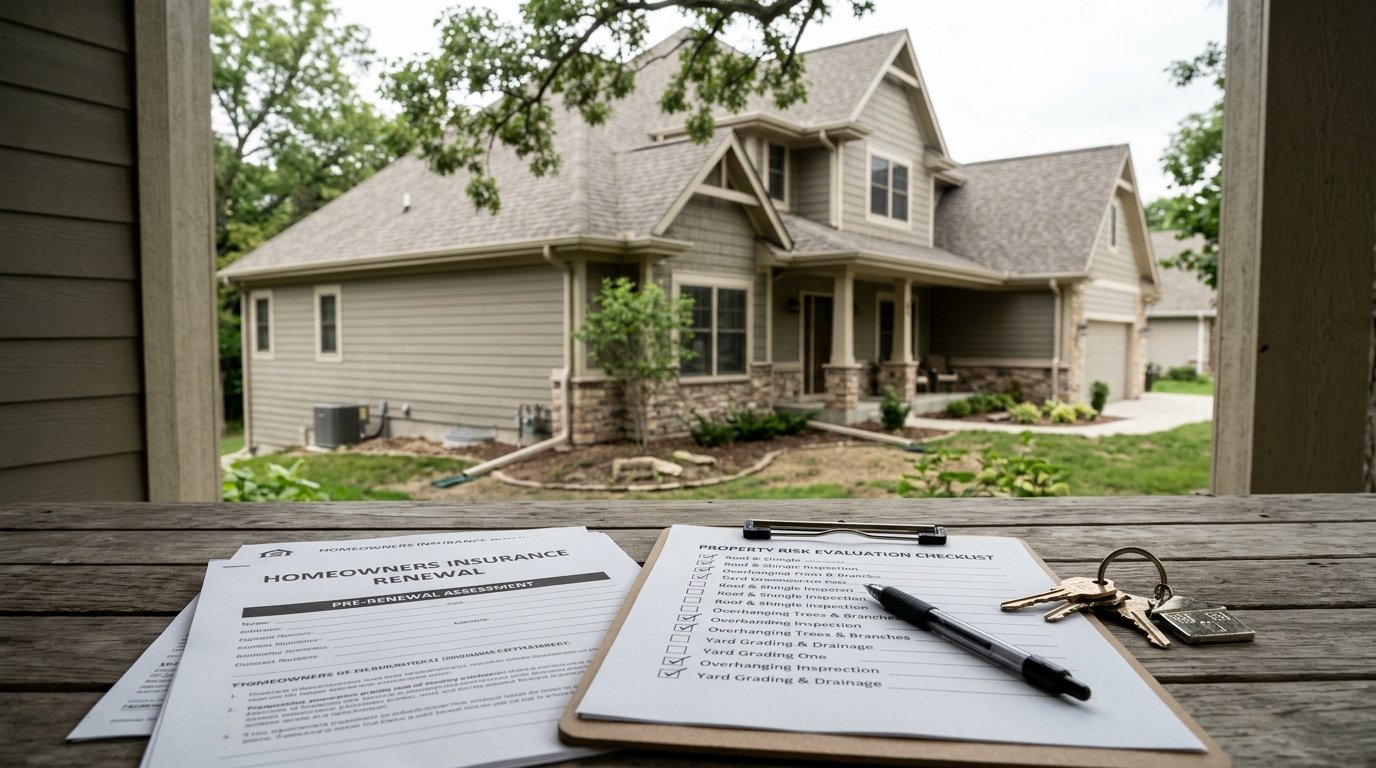
Shopping for homeowners insurance can feel straightforward until several quotes arrive with noticeably different prices. One insurer may offer a policy for $1,400 annually, while another quotes $1,850 for what appears to be similar protection. The lower premium may seem like the obvious choice, but the difference could reflect lower coverage limits, higher deductibles, different property valuation methods, or exclusions that leave important risks uninsured.
For homeowners, comparing insurance quotes accurately is about understanding what each company is actually offering. A policy that costs less upfront may require significantly more out-of-pocket spending after a fire, storm, theft, or water related incident. Another policy may appear more expensive because it includes broader coverage or more favorable claim settlement provisions.
The National Association of Insurance Commissioners (NAIC) recommends establishing the coverage homeowners need before comparing prices and providing consistent property information to each insurer. This helps consumers evaluate competing offers on a more comparable basis.
Here are six ways homeowners can compare insurance quotes more accurately before choosing a policy.
1. Give Every Insurer the Same Property Information
One of the most important steps in comparing homeowners insurance quotes is making sure every insurer receives accurate and consistent information about the property.
Insurance companies evaluate homes using several characteristics that influence the likelihood and potential cost of a claim. These details can affect underwriting decisions, coverage availability, and premiums. If one insurer receives different information from another, the resulting quotes may not represent comparable offers.
For example, one company may calculate a premium using the home’s actual roof age, while another receives an outdated estimate. A difference in reported square footage, construction materials, or recent renovations could also affect the insurer’s assessment.
Before requesting quotes, prepare a property information sheet containing:
- Property address: Confirm the complete address, including the correct ZIP code and any relevant property identification details.
- Year built: Older homes may have different insurance considerations because of aging electrical systems, plumbing, roofing and structural materials.
- Square footage: Provide the home’s accurate living area rather than an approximate figure.
- Construction type: Identify whether the property has wood framing, brick construction, concrete components, or other relevant materials.
- Roof details: Include the roof’s approximate age, materials, and any recent replacement or repairs.
- Heating and electrical systems: Provide information about major systems and documented upgrades.
- Security and safety features: Report monitored alarms, smoke detectors, fire sprinklers, storm shutters, and other protective features.
- Additional structures: Disclose detached garages, sheds, fences, pools, and other relevant property features.
Homeowners should also provide consistent information about previous insurance claims, occupancy, pets, and any home based business activities when requested.
The Consumer Financial Protection Bureau notes that insurers consider factors such as property characteristics, disaster exposure, deductibles and previous claims when calculating homeowners insurance costs.
A practical approach is to use one completed information sheet when requesting quotes from several insurers. If an insurer asks additional questions, provide the same relevant clarification to the other companies when appropriate.
Do not leave out property conditions simply because they might increase the premium. Inaccurate or incomplete information can lead to incorrect quotes and potential problems when the policy is issued or a claim is reviewed.
What homeowners should compare: Check whether each insurer is using the same property address, construction details, roof information, occupancy status, claims history, and safety features.
2. Compare Dwelling Coverage Using Rebuilding Costs Not Market Value
Another common mistake is comparing dwelling coverage limits without understanding how insurers estimate the cost of rebuilding a home.
Dwelling coverage, commonly identified as Coverage A, is designed to protect the insured structure against covered damage. Its limit should reflect the estimated cost of rebuilding the home under the policy’s terms, rather than simply matching the property’s current market value.
Market value and rebuilding cost are different measurements. A home’s market price can include the value of its land, location, neighborhood and surrounding amenities. Rebuilding cost focuses on the labor, materials, construction requirements and other expenses involved in reconstructing the damaged structure.
For example, a property may have a market value of $450,000, but its estimated rebuilding cost could be $320,000. Another home in a high cost construction market may have a rebuilding estimate that exceeds its market value.
Using the same market value figure for every insurer does not necessarily produce an accurate comparison.
Before reviewing quotes, homeowners should examine:
- Estimated cost of rebuilding the structure.
- Local construction labor and material costs.
- Architectural features and custom finishes.
- The home’s size, layout and construction quality.
- Demolition and debris removal considerations.
- Applicable building codes and potential reconstruction requirements.
The NAIC advises consumers to determine how much it would cost to rebuild their homes before requesting premium quotes. It also recommends discussing rebuilding estimates with an insurance agent or contractor when necessary.
There is another important issue: insurers may use different replacement-cost estimation systems. Even when homeowners provide identical property information, the companies may calculate different dwelling limits.
That does not automatically mean one insurer is overestimating the home’s value or another is offering a better deal. It means homeowners should investigate how each estimate was calculated.
For example, suppose three companies provide the following illustrative quotes:
| Comparison detail | Insurer A | Insurer B | Insurer C |
| Estimated dwelling coverage | $320,000 | $350,000 | $390,000 |
| Annual premium | $1,450 | $1,620 | $1,780 |
| Coverage basis | Replacement cost | Replacement cost | Replacement cost |
The premiums cannot be judged fairly until the homeowner understands why the dwelling limits differ and whether each estimate reflects the actual cost of rebuilding the property.
Homeowners should also ask whether extended or guaranteed replacement cost provisions are available. These features may provide additional protection when covered rebuilding expenses exceed the stated dwelling limit, subject to specific conditions and limits.
What homeowners should compare: Examine the rebuilding estimates, replacement-cost provisions, additional rebuilding protection and any special limitations before treating the lowest dwelling premium as the best offer.
3. Match Coverage Limits and Claim Settlement Terms Across Quotes
Two homeowners insurance policies can have similar dwelling limits but offer very different protection for belongings, additional living expenses, and personal liability.
This is why comparing only the main dwelling coverage amount is insufficient. Homeowners should examine the entire coverage structure to understand what each policy could pay after a covered loss.
A standard homeowners policy may include several major coverage categories:
| Coverage | What it generally protects |
| Dwelling coverage | The insured home’s physical structure |
| Other structures | Detached garages, sheds, fences and certain other structures |
| Personal property | Furniture, clothing, electronics and other belongings |
| Loss of use | Certain additional living expenses when a covered loss makes the home uninhabitable |
| Personal liability | Covered claims involving injury to others or damage to their property |
| Medical payments to others | Certain smaller medical expenses for qualifying injuries |
The limits and conditions attached to these categories can differ significantly between insurers.
For example, one policy may provide $240,000 in personal property coverage, while another offers $180,000. Both might advertise the same dwelling limit, but the lower personal property amount could leave a homeowner with a larger potential financial shortfall after a major loss.
Homeowners should also examine how the insurer values damaged or stolen belongings.
Replacement cost versus actual cash value
This distinction can have a major effect on claim payments.
- Replacement cost coverage: Generally pays the cost to repair or replace covered property with materials of similar kind and quality, without deducting depreciation, subject to policy conditions and limits.
- Actual cash value coverage: Generally accounts for depreciation when determining the value of damaged or stolen property.
Consider a homeowner whose five years old television originally cost $2,000. If a covered incident destroys it, an actual cash value settlement may account for depreciation, while replacement cost coverage may provide a higher payment toward purchasing a comparable replacement.
The exact payment depends on the policy, applicable limits, valuation provisions, and any replacement requirements.
The NAIC specifically recommends comparing whether home and personal property coverage is based on replacement cost or actual cash value.
Homeowners should also compare liability limits, additional living expense provisions, and any restrictions on particular belongings. Jewelry, artwork, collectibles, firearms and certain electronics may have special coverage limits that require additional protection.
What homeowners should compare: Match the dwelling, other structures, personal property, liability, and loss of use limits. Then verify whether each policy uses replacement cost or actual cash value for the relevant property.
4. Compare Deductibles and Special Disaster Deductibles
A homeowners insurance quote may look cheaper because the policyholder is agreeing to pay more out of pocket before insurance coverage applies.
This is why comparing premiums without examining deductibles can produce a misleading result.
A deductible is the amount the homeowner is responsible for paying toward a covered loss before the insurer pays the remaining eligible amount. Generally, policies with higher deductibles have lower premiums, while lower deductibles tend to increase the cost of coverage.
Consider two hypothetical quotes:
| Detail | Policy A | Policy B |
| Annual premium | $1,500 | $1,350 |
| Standard deductible | $1,000 | $2,500 |
| Premium difference | $150 more | $150 less |
Policy B costs $150 less annually, but the homeowner must absorb an additional $1,500 in deductible expenses when comparing the two policies.
Whether that trade off makes financial sense depends on the homeowner’s emergency savings, household budget and ability to handle an unexpected loss.
The comparison becomes more complicated when a policy includes separate deductibles for specific disasters.
For example, homes in areas exposed to hurricanes, windstorms, or hail may have special deductibles that operate differently from the standard deductible. Some are calculated as a percentage of the insured dwelling amount rather than a fixed dollar figure.
Suppose a home has $400,000 in dwelling coverage and a policy includes a 2% windstorm deductible. The deductible would be $8,000 for an applicable covered loss, assuming the percentage is applied to that dwelling limit.
That is substantially different from a standard $1,000 deductible.
When comparing quotes, investigate:
- Standard all perils deductibles.
- Windstorm and hail deductibles.
- Hurricane deductibles.
- Roof specific deductibles, if applicable.
- Whether percentage deductibles are based on dwelling coverage.
- Whether different deductibles apply to separate coverage categories.
The Texas Department of Insurance advises homeowners to examine deductible choices, coverage options and discounts when shopping for insurance.
A lower premium should not automatically be considered a saving if the policy introduces a deductible that the household could struggle to pay.
What homeowners should compare: Calculate the actual dollar amount of every applicable deductible and consider whether the household could comfortably afford it after a major covered loss.
5. Review Exclusions, Optional Coverage and Endorsements
A policy’s exclusions can be just as important as its advertised coverage limits.
An insurer may provide a competitive premium while excluding or restricting certain types of damage that matter to the property’s location, construction or condition. Another insurer may include additional protection or offer endorsements that reduce specific coverage gaps.
For example, standard homeowners insurance generally does not cover flood damage. A homeowner who assumes that a policy protects against every type of water damage could discover an expensive gap after a flood.
The Consumer Financial Protection Bureau advises homeowners to consider separate flood insurance when necessary because standard homeowners coverage typically does not cover flooding.
Other coverage areas that deserve attention include:
Water backup and sump pump failure
Some policies exclude or limit damage caused by water backing up through sewers, drains, or sump pumps. Homeowners may need an endorsement to obtain additional protection.
Windstorm and hail damage
The treatment of wind and hail can vary by location and policy. Some homeowners may face separate deductibles or restrictions involving roofing materials and older roofs.
Earthquake damage
Earthquake coverage is generally not included in a standard homeowners policy. Homeowners in earthquake-exposed locations may need separate insurance or an endorsement.
Roof replacement provisions
A policy may settle roof claims using replacement cost or actual cash value, depending on the contract and the roof’s condition. Special roof-payment schedules or age-related restrictions can affect claim payments.
High value personal belongings
Standard policies may impose special limits on jewelry, artwork, collectibles, and other valuable possessions. Additional scheduled coverage may be necessary.
Ordinance or law coverage
If a damaged home must be rebuilt according to updated building codes, ordinary dwelling coverage may not be sufficient to pay all qualifying additional expenses. Ordinance or law coverage can help address certain costs, subject to the policy’s conditions.
The NAIC’s homeowners insurance comparison worksheet specifically encourages consumers to compare optional protection such as water backup, valuable possessions, equipment breakdown, and ordinance or law coverage.
Homeowners should not assume that a feature included in one quote is automatically included in another. Ask each insurer to identify optional endorsements, coverage restrictions, sublimits and exclusions.
What homeowners should compare: Create a list of the property’s most relevant risks and verify whether each insurer covers them, excludes them or requires an additional endorsement or separate policy.
6. Compare the Insurer’s Service, Financial Strength, and Final Premium
Once coverage limits, deductibles, and exclusions have been reviewed, homeowners can make a more meaningful comparison of premiums and insurance companies.
Price remains important, particularly for households dealing with rising housing expenses and insurance costs. However, the company responsible for handling a claim is also an important part of the purchasing decision.
A policy with a slightly higher premium may offer better coverage terms, more suitable endorsements or a claims service that better matches the homeowner’s expectations.
Start by comparing the final written premiums rather than relying on preliminary estimates. A quote can change after underwriting reviews the property, verifies its characteristics, or requests additional information.
Ask each insurer to clarify:
- Whether the quoted premium is final or subject to underwriting review.
- Which discounts have already been applied.
- Whether bundling home and auto coverage changes the total cost.
- Whether payment plans or installment fees affect the final amount.
- Whether the premium could change after a property inspection.
- What renewal conditions or coverage restrictions may apply.
Investigate available discounts
Insurance companies may offer discounts for certain protective measures, policy combinations or property improvements.
Examples can include:
- Bundling homeowners and auto insurance.
- Installing monitored security systems.
- Adding qualifying fire protection equipment.
- Replacing an older roof.
- Updating electrical, plumbing or heating systems.
- Maintaining a qualifying claims free history.
Discount availability and eligibility vary by insurer and state. A discount should also be evaluated against the cost of the improvement required to qualify.
Check the insurer’s reputation
Homeowners should investigate whether the insurer is licensed in their state and review available information about its financial strength, complaint history, and claims-handling practices.
State insurance departments can help consumers verify licensing and access complaint-related information. The Texas Department of Insurance, for example, recommends checking an insurer’s licensing status and complaint record before purchasing coverage.
It is also useful to understand how the company handles claims. Ask whether claims can be reported around the clock, how customers receive updates and what support is available during major property losses.
Compare the total value
After evaluating the insurer and policy terms, compare the complete cost of obtaining the desired protection.
For example:
| Comparison factor | Insurer A | Insurer B |
| Annual premium | $1,500 | $1,680 |
| Dwelling coverage | $350,000 | $350,000 |
| Personal property | $210,000 | $245,000 |
| Standard deductible | $2,500 | $1,000 |
| Water backup endorsement | Not included | Included |
| Liability coverage | $300,000 | $300,000 |
Although Insurer A has the lower premium, Insurer B offers a lower standard deductible, higher personal property coverage, and an included water backup endorsement.
The homeowner should still investigate the wording and limits of each policy, but this comparison demonstrates why the cheapest quote may not offer the strongest overall value.
What homeowners should compare: Examine final premiums, applied discounts, company licensing, financial strength, complaint information, claims service and the total protection provided.
Homeowners Insurance Quote Comparison Checklist
Before selecting an insurer, use this checklist to ensure that the competing offers have been evaluated consistently.
| Comparison item | What to verify |
| Property information | Same address, square footage, roof age, and construction details |
| Dwelling coverage | Adequate estimated rebuilding cost |
| Other structures | Appropriate protection for detached structures |
| Personal property | Comparable limits and valuation method |
| Liability coverage | Matching liability limits |
| Loss of use | Comparable additional living expense protection |
| Deductibles | Same standard deductible where possible |
| Special deductibles | Wind, hail, hurricane and roof related deductibles |
| Exclusions | Important risks that are not covered |
| Endorsements | Water backup, valuable possessions and other optional protection |
| Premium | Final annual cost after underwriting and discounts |
| Insurer | Licensing, financial strength and claims service |
A simple spreadsheet can make this process easier. Place each insurer in a separate column and enter the same coverage categories in every row. Any missing information should be confirmed before making a final decision.
Final Thoughts
Comparing homeowners insurance quotes accurately requires more than identifying the lowest annual premium. Homeowners need to understand how insurers value their properties, what each policy covers, how deductibles apply and whether important risks require additional protection.
The most reliable approach is to provide consistent property information, compare rebuilding estimates, match coverage limits, and examine exclusions before evaluating price. It is equally important to investigate the insurer’s reputation and understand the final premium after underwriting and discounts.
A cheaper policy may be a reasonable choice when its protection meets the homeowner’s needs. But when the savings come from higher deductibles, reduced coverage, or significant exclusions, the apparent discount may create a much larger financial burden after a loss.
Ultimately, an accurate comparison helps homeowners understand what they are paying for and what financial responsibilities they may still face when something goes wrong.