

HomeBusiness & FinanceThe Cost of Convenience:...

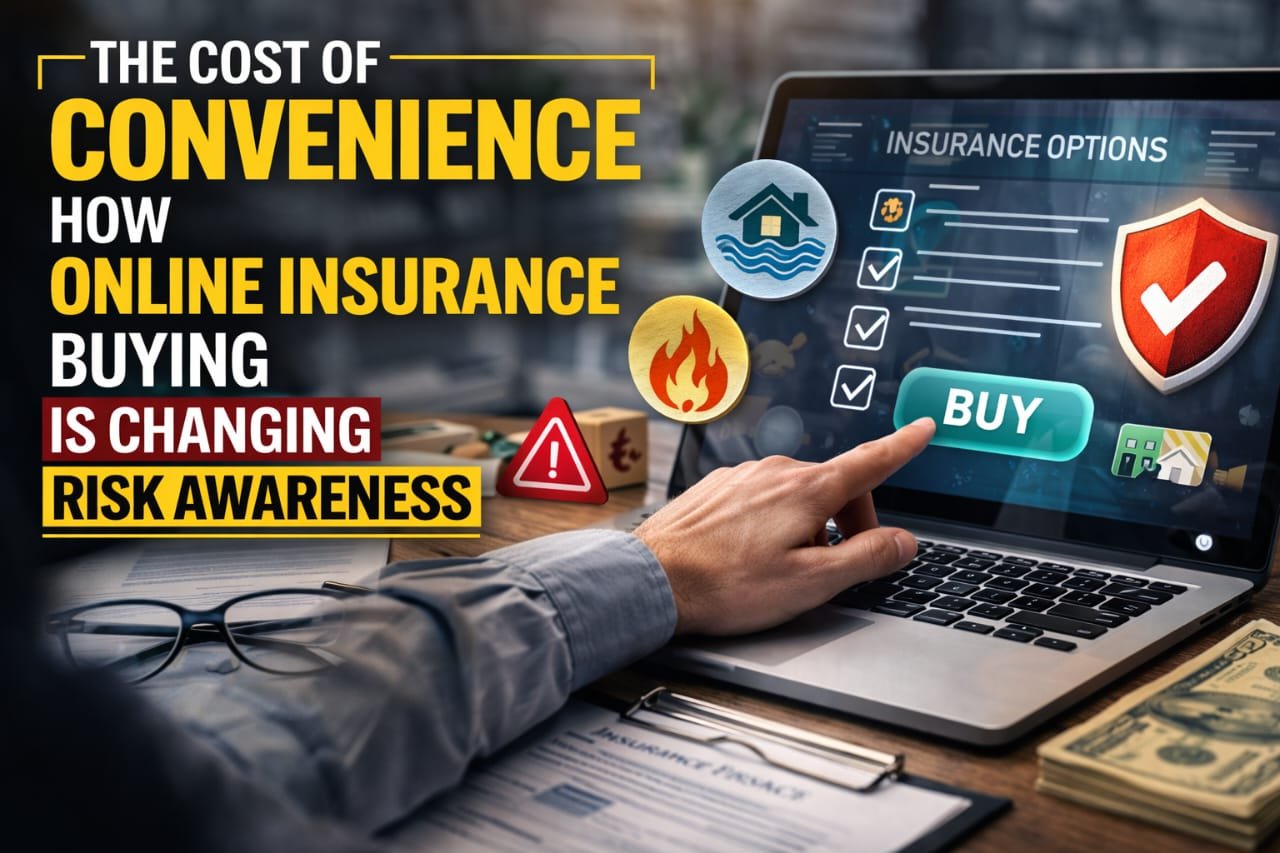
The Cost of Convenience: How Online Insurance Buying Is Changing Risk Awareness

The rise of online insurance platforms has made purchasing coverage faster and more convenient than ever. With a few clicks, consumers can compare policies, select coverage, and pay premiums all without visiting an agent. While this digital convenience offers efficiency, it also comes with unintended consequences for risk awareness and informed decision-making.

Speed vs. Understanding

Online insurance marketplaces often prioritize speed and simplicity, offering pre-packaged policies with minimal explanation. A 2025 study by J.D. Power found that 42% of consumers purchasing insurance online admitted they did not fully understand the coverage they selected. The faster, easier process can encourage people to prioritize cost or convenience over comprehension, leaving them underinsured or unaware of exclusions.

This trade off highlights a fundamental challenge: convenience can inadvertently reduce risk literacy. Consumers may skip reading terms, ignore fine print, or misinterpret coverage limits all factors that directly affect their financial security during a claim.

The Role of Algorithms and AI

Digital insurance platforms increasingly use algorithms to recommend policies based on user data, preferences, and predictive risk models. While these tools can optimize pricing and match consumers with appropriate products, they can also reinforce a false sense of security. Users may assume the recommended policy is automatically suitable, without fully understanding the coverage nuances or potential gaps.

Implications for Risk Awareness

The convenience of online buying can inadvertently shift responsibility away from consumers. A person who purchases insurance online may feel “covered,” even if the policy does not fully align with their actual risk exposure. In contrast, traditional agent-assisted purchases often involve personalized guidance, questioning, and discussion that can improve awareness and understanding.

For insurers, this presents both opportunities and challenges. While online channels reduce operational costs and increase reach, they may also contribute to more claims disputes or customer dissatisfaction when coverage misunderstandings occur.

Moving Toward Smarter Digital Insurance

To address these concerns, insurers and tech platforms are investing in interactive tools, educational content, and AI-driven assistance to guide consumers through the nuances of coverage. Visual aids, policy breakdowns, and real time chat support can help buyers make informed choices without sacrificing convenience.

Ultimately, the convenience of digital insurance buying comes at a subtle cost: reduced engagement with risk and coverage details. Awareness, education, and transparency are essential to ensure that speed and efficiency do not come at the expense of financial security.

In another related article, Will Technology Make Insurance Fairer or More Expensive?

- Advertisement -

spot_img

Most Popular

LEAVE A REPLY

Please enter your comment!
Please enter your name here

More from MT

How Interest Rate Fluctuations Affect HELOC Usage Nationwide

Interest rates do more than influence borrowing costs. They shape behavior. Few credit...

Behavioral Insights: Why People Keep Choosing High Interest Debt

On paper, it makes no sense. If lower-interest options exist, why would...

The Future of Mortgage Refinancing in a Rising Rate Economy

Mortgage refinancing thrives in falling rate environments. In rising rate cycles, it...

The Evolution of Consumer Debt Management in the Digital Age

Debt itself has not changed. How consumers manage it has. Over the past...

- Advertisement -

Related News

How Interest Rate Fluctuations Affect HELOC Usage Nationwide

Interest rates do more than influence borrowing costs. They shape behavior. Few credit products respond to rate movements as directly as home equity lines of credit. Because most HELOCs carry variable rates tied to benchmark indices, changes in monetary policy ripple almost immediately into borrowing decisions. Watching HELOC usage over...

Behavioral Insights: Why People Keep Choosing High Interest Debt

On paper, it makes no sense. If lower-interest options exist, why would anyone willingly choose the expensive one? Yet millions of consumers continue to rely on credit cards, buy-now-pay-later plans, payday advances and other high interest products even when cheaper alternatives are technically available. The explanation isn’t just about...

The Future of Mortgage Refinancing in a Rising Rate Economy

Mortgage refinancing thrives in falling rate environments. In rising rate cycles, it transforms. For decades, refinancing activity followed a predictable pattern: rates decline, borrowers refinance, volumes surge. But when rates climb and remain elevated, the traditional refinance wave slows dramatically. The market doesn’t disappear, it evolves. The future of refinancing...

The Evolution of Consumer Debt Management in the Digital Age

Debt itself has not changed. How consumers manage it has. Over the past decade, the tools, visibility and psychology surrounding debt have shifted dramatically. What was once a static, paper driven process has become real time, automated and data informed. The digital age has not eliminated household leverage but...

How HELOC Trends Reflect Changes in the Housing Market

Home equity lines of credit do more than provide liquidity. They reveal sentiment. When HELOC activity rises or falls, it often signals underlying shifts in the housing market long before headline data fully reflects them. Borrowing behavior tied to home equity is deeply connected to property values, mortgage rates,...

When Refinancing Could Actually Cost You More in the Long Run

Refinancing is often framed as a financial upgrade. Lower rate. Lower payment. Immediate savings. But refinancing is not automatically beneficial. In certain conditions, it can quietly increase long term costs even when the short term math looks attractive. The difference between a smart refinance and an expensive one usually comes...