

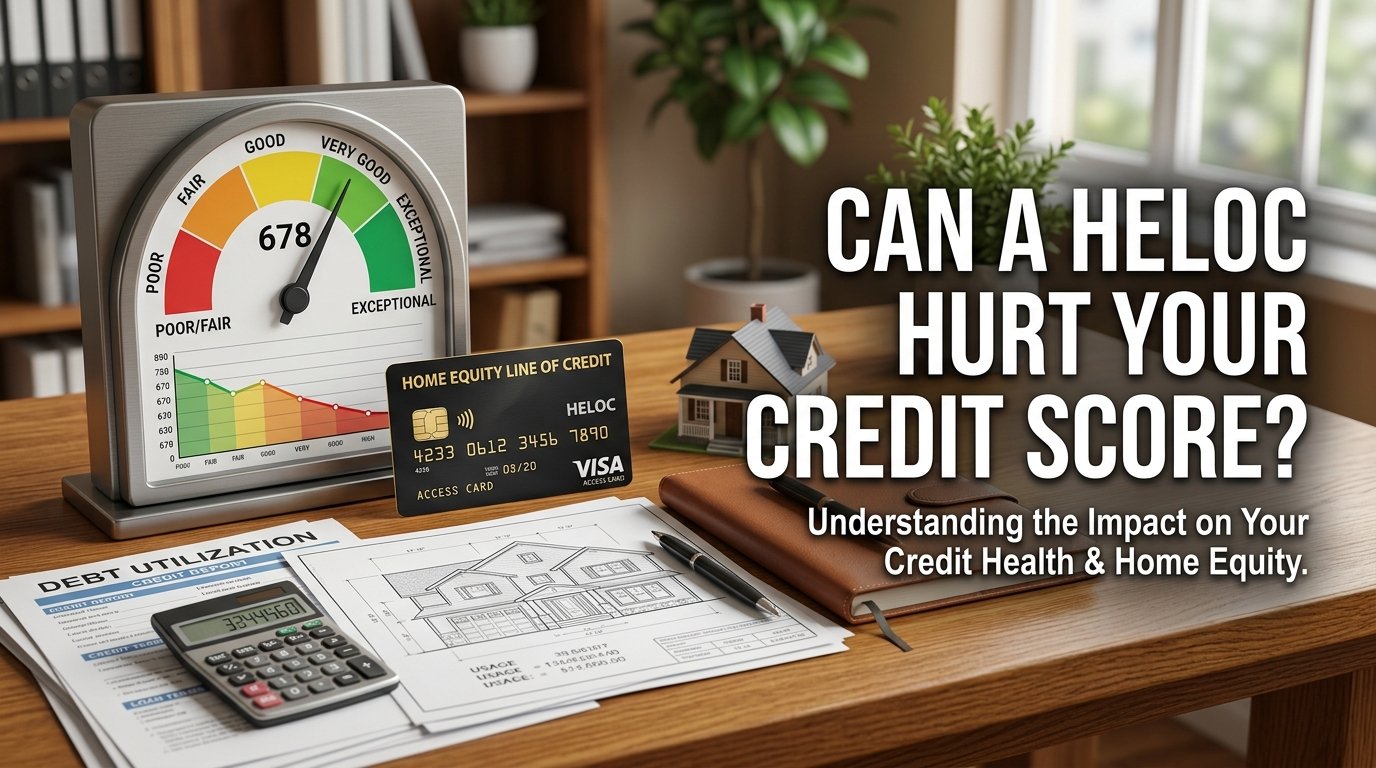
A Home Equity Line of Credit (HELOC) can be useful for accessing funds at a relatively lower rate than many unsecured loans. But like any credit product, it does interact with your credit profile and that raises a common concern: can it actually hurt your credit score?
The honest answer is yes, it can affect your score. But whether that impact is negative, neutral or even positive depends on how it’s used.
1. The initial application can cause a small dip
When you apply for a HELOC, lenders typically run a hard inquiry on your credit report. This is standard, but it can cause a small, temporary drop in your score.
For most people, this effect is minor and short lived. The bigger impact comes from how the account is managed after approval, not the application itself.
2. Your credit utilization can improve or worsen
A HELOC is a revolving line of credit, similar in structure to a credit card. That means it affects your credit utilization ratio.
\text{Credit Utilization Ratio} = \frac{\text{Total Credit Used}}{\text{Total Credit Available}}
If you already have high credit card balances and use a HELOC to pay them down, your utilization can drop, which often helps your credit score over time.
But if you open a HELOC and immediately draw a large portion of it, your utilization can spike, which may temporarily pressure your score.
3. New credit accounts can slightly affect your average age
Credit scoring models also consider the age of your credit accounts. Opening a HELOC adds a new account, which can reduce the average age of your credit history.
This effect is usually small, especially if you already have older accounts, but it can still contribute to a short term dip.
4. Payment behavior is the biggest long-term factor
The most important influence on your credit score is how consistently you make payments.
Missed or late payments on a HELOC can significantly damage your credit, sometimes more than other types of credit because the loan is tied to your home.
On the other hand, consistent on-time payments can help build a stronger credit profile over time.
5. High balances can signal higher risk
Even if you’re making payments, carrying a large outstanding HELOC balance can affect how lenders view your overall risk level.
This is especially relevant if you’re applying for other types of credit while the HELOC is active. Lenders may see higher overall leverage and adjust their decisions accordingly.
6. Closing or paying off a HELOC can also shift your score
When you close or fully repay a HELOC, your available credit decreases. That can sometimes raise your utilization ratio if you still carry other debts, which may slightly lower your score in the short term.
However, reduced debt and improved cash flow often outweigh this effect in the long run.
The bigger picture
A HELOC doesn’t automatically hurt your credit score. It behaves like most credit products: it reflects how you use it, not just the fact that you have it.
Used responsibly, it can actually help reduce credit card balances and improve utilization. Used aggressively or without repayment discipline, it can add risk and pressure to your credit profile.
The impact of a HELOC on your credit score isn’t fixed. It moves with your behavior.
Small short-term changes are normal when opening or using it. The long term outcome depends on whether it helps you manage debt better or adds another layer of financial strain.