

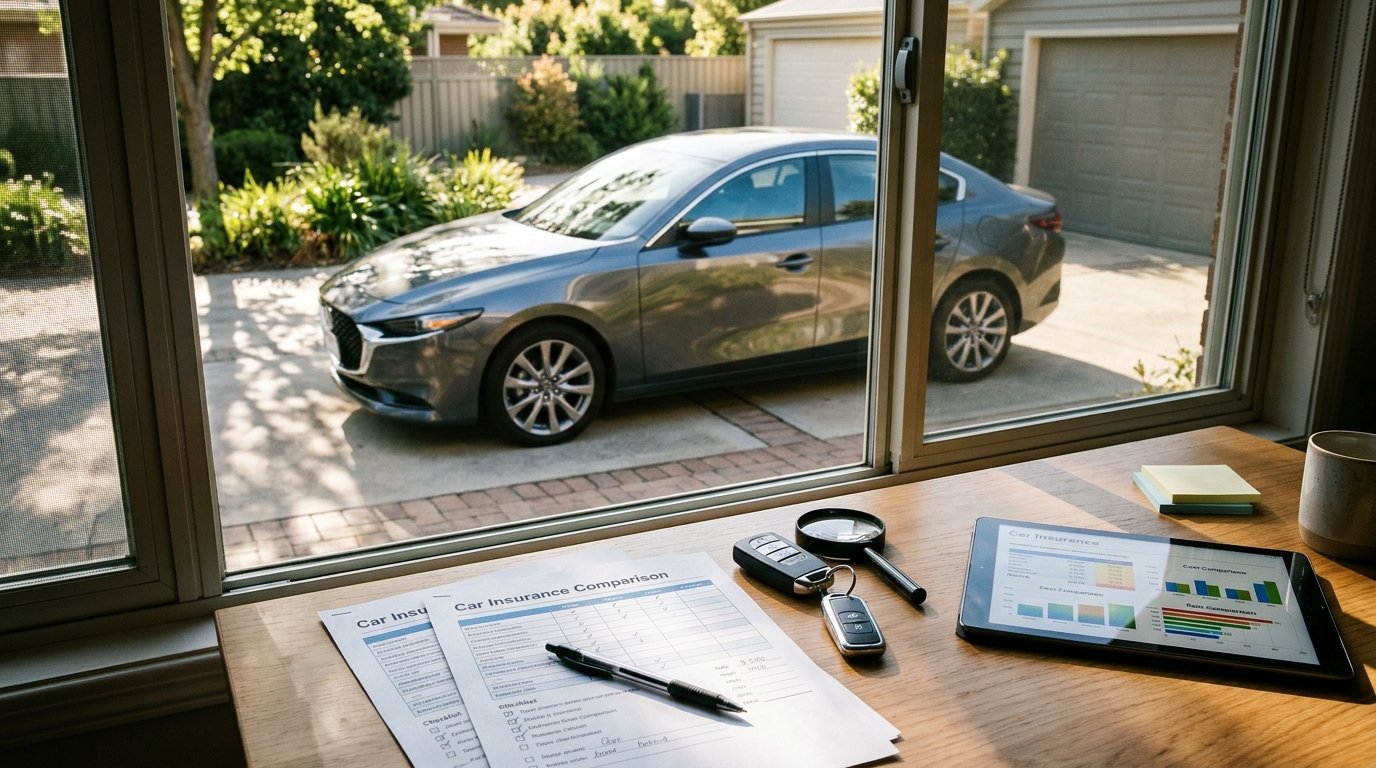
Comparing car insurance quotes can help drivers find more affordable protection, but choosing a policy based solely on its premium can create problems when an accident or unexpected vehicle loss occurs.
Two insurers may offer quotes for the same vehicle at noticeably different prices, yet the policies may provide very different levels of protection. One quote might include higher liability limits, uninsured motorist coverage, rental reimbursement, and comprehensive protection, while another may exclude some of these benefits or apply higher deductibles.
The difference is not always obvious when drivers compare prices on insurance websites. A lower premium may reflect reduced coverage rather than a more competitive offer for equivalent protection.
The National Association of Insurance Commissioners (NAIC) advises consumers to provide the same information to each insurer and compare matching coverage limits and deductibles. It also emphasizes that optional protections and policy conditions can affect the value of a quote.
For drivers, the objective should be to identify a policy that balances affordability with adequate financial protection. That requires looking beyond the headline price and examining what each insurer is actually offering.
Here are eight important areas to review when comparing car insurance quotes.
1. Compare Bodily Injury and Property Damage Liability Limits
Liability coverage should be one of the first items drivers examine when comparing car insurance quotes.
It generally protects the policyholder financially when they are legally responsible for injuries to other people or damage to their property in an accident. However, the protection is limited by the amounts specified in the policy.
Bodily injury liability helps cover qualifying claims involving injuries to other people. These may include medical expenses, lost income and other damages for which the insured driver is legally responsible.
Property damage liability helps pay for damage the driver causes to another person’s vehicle or property.
Most states require drivers to carry at least a minimum amount of liability insurance, but the legally required minimum may not provide enough protection in a serious accident.
For example, a driver who causes a collision involving several vehicles could face property damage claims that exceed the policy’s available limit. An accident involving serious injuries could also generate substantial medical and legal expenses.
Consider two hypothetical quotes:
| Coverage detail | Quote A | Quote B |
| Bodily injury liability per person | $25,000 | $100,000 |
| Bodily injury liability per accident | $50,000 | $300,000 |
| Property damage liability | $25,000 | $100,000 |
| Annual premium | $1,050 | $1,320 |
Quote A is cheaper, but it provides substantially lower liability limits. The $270 annual premium difference should therefore be evaluated against the additional financial protection offered by Quote B.
The appropriate limits depend on the driver’s financial circumstances, assets, exposure to liability, and state requirements. Drivers with significant assets or greater financial responsibilities may have stronger reasons to consider limits above the legal minimum.
The NAIC identifies bodily injury and property damage liability as core components of auto insurance and explains that state requirements differ.
What to compare:
- Bodily injury liability per person.
- Bodily injury liability per accident.
- Property damage liability per accident.
- Whether the limits are identical across all quotes.
- Whether the proposed limits are appropriate for the driver’s financial exposure.
- Whether an umbrella policy may be worth considering for additional liability protection.
A quote with lower liability limits should not automatically be treated as a better deal simply because its premium is smaller.
2. Check Whether Collision and Comprehensive Coverage Are Included
Collision and comprehensive coverage are particularly important when drivers want protection for damage to their own vehicles.
However, these coverages address different types of losses, and a quote may include one without the other.
Collision coverage generally helps pay for damage to the insured vehicle resulting from a collision with another vehicle or an object. It may also apply when the vehicle overturns or is damaged after hitting a pothole, depending on the circumstances and policy terms.
Comprehensive coverage generally addresses covered damage caused by events other than collisions. Common examples include vehicle theft, fire, hail, falling objects, vandalism, and certain weather related losses.
A driver who compares a policy containing both coverages with another policy that only provides liability protection may misunderstand the price difference.
For example, a vehicle damaged in a collision with a tree may be covered under collision insurance, subject to the deductible and policy terms. A vehicle damaged by a falling tree branch while parked may instead fall under comprehensive coverage.
The NAIC explains that collision and comprehensive coverage protect against different categories of vehicle damage. It also notes that lenders may require both when a vehicle is financed or leased.
Drivers should ask the insurer:
- Does the quote include collision coverage?
- Does it include comprehensive coverage?
- What types of losses are covered under each section?
- Are there exclusions or special limitations?
- Are both coverages required by the vehicle lender?
- What is the vehicle’s current value compared with the cost of maintaining these protections?
The decision to retain or remove these coverages should consider the vehicle’s age, value, financing status and the owner’s ability to pay for repairs or replacement.
A driver with an older vehicle that has relatively little market value may decide that the cost of collision and comprehensive coverage is no longer justified. However, someone who depends on the vehicle for work and cannot afford to replace it may place greater value on maintaining the protection.
What to compare:
Do not assume that every quote includes comprehensive and collision coverage. Confirm both are listed, examine their conditions and consider whether removing either one would expose you to an unacceptable financial loss.
3. Compare Deductibles and the Amount You Must Pay Out of Pocket
A deductible is the amount the policyholder generally pays toward a covered loss before the insurer pays the remaining eligible amount.
For comprehensive and collision coverage, the deductible can have a noticeable effect on the premium.
A policy with a higher deductible will often cost less because the driver agrees to absorb more of the initial repair or replacement expense.
However, a lower premium does not automatically make a higher deductible financially sensible.
Consider two hypothetical collision coverage options:
| Detail | Quote A | Quote B |
| Collision deductible | $500 | $1,500 |
| Comprehensive deductible | $500 | $1,000 |
| Annual premium | $1,400 | $1,230 |
| Annual premium savings | — | $170 |
Quote B saves $170 annually, but the driver may have to contribute an additional $1,000 toward a covered collision claim.
If the driver cannot comfortably afford that amount after an accident, the lower premium may create a cash flow problem.
Drivers should also check whether the same deductible applies to both collision and comprehensive coverage. Some policies use different amounts for each.
In addition, certain insurers offer separate glass coverage or special deductibles for specific losses. These details can affect how much a policyholder pays when filing a claim.
The NAIC explains that higher deductibles generally reduce premiums but advises consumers to choose an amount they can afford if a loss occurs.
What to compare:
- Collision deductible.
- Comprehensive deductible.
- Whether glass damage has a separate deductible.
- Whether special deductibles apply to particular losses.
- The difference in annual premiums at each deductible level.
- Whether the household has enough emergency savings to cover the selected amount.
A useful comparison is not simply the deductible that produces the lowest quote. It is the deductible that offers a reasonable balance between premium savings and the amount the driver could realistically pay after a claim.
4. Review Uninsured and Underinsured Motorist Protection
Another important part of a car insurance quote is protection against drivers who have no insurance or insufficient coverage.
Not every driver on the road carries adequate liability insurance. Even when someone has the legal minimum, that amount may not be enough to cover the injuries or losses caused in a serious accident.
Uninsured motorist (UM) coverage and underinsured motorist (UIM) coverage are designed to address certain financial losses arising from accidents involving drivers with inadequate or no insurance.
Depending on the state and policy, these coverages may help pay for injuries suffered by the policyholder and eligible passengers. Some policies also offer uninsured motorist property damage coverage, which may help with damage to the insured vehicle.
However, the availability and structure of UM and UIM protection vary by state.
Drivers should not assume that these protections are automatically included in every quote. Some states require particular forms of coverage, while others allow drivers to purchase them as optional protection.
The NAIC identifies uninsured and underinsured motorist coverage as an important part of auto insurance and explains that requirements vary across states.
Consider a driver who is seriously injured in an accident caused by someone with no liability insurance. Without applicable uninsured motorist protection, the injured driver may have to rely on other available coverage or pursue recovery through other legal options.
A similar problem can arise when the at-fault driver has insurance, but the available liability limit is insufficient to cover the full extent of the injuries.
What to compare:
- Whether UM coverage is included.
- Whether UIM coverage is included.
- Whether the policy covers bodily injury, property damage, or both.
- The available limits.
- Whether the limits match the driver’s liability coverage.
- Any state specific restrictions, exclusions or requirements.
Drivers should also ask whether UM and UIM coverage applies to passengers and household members under the policy.
A lower quote that removes these protections may look attractive initially but could leave the household with greater financial exposure after an accident involving an uninsured driver.
5. Compare Medical Payments Coverage and Personal Injury Protection
Medical expenses following a vehicle accident can create financial pressure even when the driver has health insurance.
Medical payments coverage and Personal Injury Protection (PIP) are two forms of auto insurance that may help with certain accident related expenses.
However, they are not interchangeable and their availability depends partly on state insurance laws.
Medical Payments Coverage (MedPay) generally helps pay eligible medical and funeral expenses for the insured driver and passengers after a covered vehicle accident, regardless of fault, subject to policy terms and limits.
Personal Injury Protection (PIP) may cover medical expenses and depending on the state and policy, additional costs such as lost wages, rehabilitation expenses and funeral benefits.
PIP is particularly relevant in states with no-fault insurance systems. In those states, drivers may be required to carry a specified amount of PIP coverage as part of their auto insurance.
The NAIC explains that PIP can provide benefits for medical treatment, lost wages and other qualifying expenses, although the exact benefits differ among states.
When comparing quotes, drivers should examine the available medical protection rather than assuming that health insurance will cover every expense.
For example, a driver may have health insurance with a substantial deductible, copayments, or restrictions on certain services. Depending on the policy, MedPay or PIP may provide additional financial assistance.
Drivers should ask:
- Is MedPay or PIP included?
- Is either coverage mandatory in my state?
- What is the maximum available benefit?
- Does the policy cover passengers?
- Are lost wages or rehabilitation expenses included?
- How does the coverage coordinate with my health insurance?
- Are there exclusions or limitations involving specific injuries or circumstances?
What to compare:
Look at the benefit amount, eligible expenses, coverage conditions and coordination with other insurance. Two policies with similar premiums may provide different levels of medical protection.
The right choice depends on state requirements, existing health coverage, household needs, and the driver’s ability to handle medical expenses after an accident.
6. Check Rental Reimbursement, Roadside Assistance and Other Optional Benefits
A vehicle accident can create expenses beyond repairing the damaged car.
If a vehicle becomes undrivable after a covered accident, the owner may need a rental car to get to work, take children to school, attend appointments or handle normal household responsibilities.
Rental reimbursement coverage may help pay for eligible rental vehicle expenses while the insured vehicle is being repaired after a covered loss. However, it usually has daily and total payment limits, and it does not necessarily apply to every reason a vehicle is unavailable.
For example, one policy might offer $40 per day up to $1,200, while another offers $30 per day up to $900.
The difference can become important if the vehicle requires several weeks of repairs.
Other optional benefits may include:
Roadside assistance
This may provide help with qualifying breakdown situations, such as towing, battery assistance, flat tires or lockouts. The exact services and limits vary.
Towing and labor coverage
Some policies provide limited reimbursement for towing or roadside labor expenses, while others offer these services through a separate package.
Glass coverage
Certain insurers offer special glass protection or reduced deductibles for windshield damage.
Gap insurance
Drivers who owe more on a financed or leased vehicle than its actual cash value may consider gap protection. Depending on the arrangement, it can help address the difference between the outstanding loan or lease balance and the amount paid under the applicable vehicle coverage after a covered total loss.
New car replacement coverage
Some insurers offer additional protection for qualifying newer vehicles. Eligibility requirements, vehicle age restrictions, and settlement conditions differ.
The NAIC identifies rental reimbursement and towing as examples of optional auto insurance benefits that consumers should consider when comparing policies.
What to compare:
- Whether the benefit is included or optional.
- Daily and total rental reimbursement limits.
- Waiting periods before benefits begin.
- Whether roadside assistance has mileage or service restrictions.
- Whether towing is included under another membership or service.
- Whether gap protection is already available through the lender.
- Any exclusions that could prevent payment.
Drivers should avoid paying twice for benefits they already receive through a vehicle warranty, roadside membership, credit card or another insurance arrangement. At the same time, they should not remove a useful benefit without considering the practical cost of losing it.
7. Confirm That Every Quote Uses Accurate Driver, Vehicle and Usage Information
Even when two insurers offer the same types of coverage, their quotes may not be directly comparable if the information supplied is different.
Insurance premiums are calculated using details about the driver, vehicle, location, driving history and how the car is used.
An inaccurate answer can produce an estimate that changes after the insurer verifies the information. In more serious cases, incorrect or incomplete disclosures may create problems when the policy is issued or a claim is filed.
The NAIC advises consumers to provide consistent information when requesting quotes and to include all relevant household drivers. It also warns that failing to disclose drivers or vehicle use can lead to additional premiums, cancellation or nonrenewal in certain circumstances.
Before comparing prices, confirm the following details.
Driver information
- Names and ages of all drivers who should be listed.
- Driving experience.
- Previous accidents and traffic violations.
- Claims history.
- Any applicable driving restrictions.
Vehicle information
- Correct year, make, and model.
- Vehicle Identification Number (VIN).
- Ownership or financing status.
- Current mileage.
- Safety and anti theft equipment.
- Any modifications that may affect the vehicle.
Vehicle usage
- Whether the vehicle is used for commuting.
- Approximate annual mileage.
- Whether it is used for business.
- Whether it is used for ridesharing or delivery work.
- Where the vehicle is normally parked.
The distinction between personal and commercial use is particularly important. A policy designed for ordinary personal driving may not provide the protection needed for certain ridesharing, delivery or business activities.
Drivers should also make sure the same household drivers and vehicles are included in every quote. Otherwise, one insurer may be pricing a different risk from another.
What to compare:
Use the same accurate driver and vehicle information across all quote requests. If an insurer gives an estimate based on incomplete information, ask for a revised quote before making a decision.
A quote is only useful when it reflects the actual circumstances under which the vehicle will be insured.
8. Examine Exclusions, Claims Service, Discounts and the Final Policy Cost
The final step is to look beyond the coverage summary and headline premium.
Insurance policies contain conditions, exclusions, limitations and claims procedures that can affect what happens after an accident or other covered loss.
A quote may appear comprehensive, but certain circumstances may be excluded or subject to special conditions.
For example, drivers should understand whether the policy covers their intended vehicle use, whether particular drivers are excluded and whether certain modifications or commercial activities require additional coverage.
The NAIC advises consumers to review the policy’s declarations page, ensuring agreement, exclusions and other conditions before purchasing coverage.
Examine the Insurer’s Claims Process
A policy’s value becomes particularly important when the driver needs to report an accident and receive assistance.
Consider how the insurer handles:
- First notice of loss and claim reporting.
- Vehicle inspections and damage estimates.
- Repair shop arrangements.
- Rental vehicle coordination.
- Communication about claim decisions.
- Disputes involving repair costs or liability.
- Updates on claim progress.
Drivers can investigate an insurer’s complaint information through their state insurance department and review its licensing status. The NAIC also recommends checking company complaint information rather than relying entirely on the price of a quote.
Check Which Discounts Are Actually Included
Discounts can make one policy more affordable than another, but drivers should confirm which ones are reflected in the final price.
Possible discounts include:
- Multi policy discounts.
- Multi vehicle discounts.
- Safe driver discounts.
- Low mileage discounts.
- Defensive driving course discounts.
- Good student discounts.
- Vehicle safety and anti theft discounts.
- Automatic payment or paperless billing discounts.
The NAIC identifies several of these as common opportunities for reducing auto insurance costs.
Drivers should also ask whether a discount is permanent, conditional or subject to renewal. An introductory discount may not remain available indefinitely.
Compare the Full Cost Not Just the Monthly Payment
A monthly payment can make a policy appear more affordable, but drivers should examine the total premium and payment conditions.
Review:
- The full six month or 12 month premium.
- Any installment or payment processing fees.
- Down payments.
- Available pay in full discounts.
- Whether the quote is final or subject to underwriting verification.
- Whether the premium is guaranteed for the quoted policy term.
A quote that appears cheaper monthly may cost more over the full policy period if installment fees or other charges apply.
What to compare:
The final decision should consider coverage, exclusions, claims support, insurer reliability, discounts and total cost. A slightly more expensive policy may offer more useful protection and a more manageable claims experience.
A Practical Car Insurance Quote Comparison Checklist
Before choosing an insurer, drivers can use the following table to compare the most important details side by side.
| Comparison item | Insurer A | Insurer B | Insurer C |
| Annual premium | |||
| Bodily injury liability limits | |||
| Property damage liability limit | |||
| Collision coverage | |||
| Comprehensive coverage | |||
| Collision deductible | |||
| Comprehensive deductible | |||
| Uninsured motorist coverage | |||
| Underinsured motorist coverage | |||
| MedPay or PIP | |||
| Rental reimbursement | |||
| Roadside assistance | |||
| Gap or replacement options | |||
| Important exclusions | |||
| Discounts included | |||
| Payment fees | |||
| Claims service information |
The table is most useful when drivers fill it out using actual policy details rather than relying on brief summaries or advertising descriptions.
If a quote does not provide enough information, contact the insurer and request clarification. The NAIC specifically recommends asking companies to revise quotes when coverage limits or other terms do not match.
Common Mistakes to Avoid When Comparing Car Insurance Quotes
Even careful shoppers can overlook important details when several insurers are offering different prices and coverage combinations.
Some common mistakes include:
Choosing the lowest premium automatically. A lower price may reflect reduced liability limits, missing optional coverage, or higher deductibles.
Comparing different liability limits. A quote with lower bodily injury or property damage limits should not be treated as equivalent to one offering more protection.
Assuming comprehensive and collision are included. These coverages should be confirmed individually.
Ignoring uninsured motorist protection. A driver may face significant financial exposure after an accident involving someone without adequate insurance.
Overlooking rental reimbursement limits. A policy may offer rental coverage but provide too little daily or total reimbursement for a prolonged repair.
Providing inconsistent information. Different mileage estimates, driver lists, vehicle details or usage descriptions can make quote comparisons unreliable.
Failing to read exclusions. Important restrictions may appear in the policy documents rather than the initial quote summary.
Cancelling existing coverage too early. Drivers should confirm that the new policy is active before ending their existing insurance to avoid an unintended coverage gap.
Final Thoughts
Comparing car insurance quotes is not simply a matter of identifying which insurer offers the lowest price. The real task is determining what financial protection each policy provides and how much responsibility the driver may still face after an accident or vehicle loss.
Liability limits, collision and comprehensive coverage, deductibles, uninsured motorist protection, medical benefits and optional services can all influence the value of a policy. Accurate driver information, exclusions, claims support, discounts and payment conditions also deserve attention.
Drivers should begin by requesting quotes using consistent information and matching coverage limits. Once the policies are comparable, they can evaluate differences in price, insurer service and available benefits.
A lower premium can represent a genuine saving when the coverage remains suitable. But if the reduction comes from removing important protection or accepting a deductible that the household cannot afford, the apparent saving may create greater financial exposure later.
The goal is to choose car insurance that fits both the household budget and the risks associated with driving.