

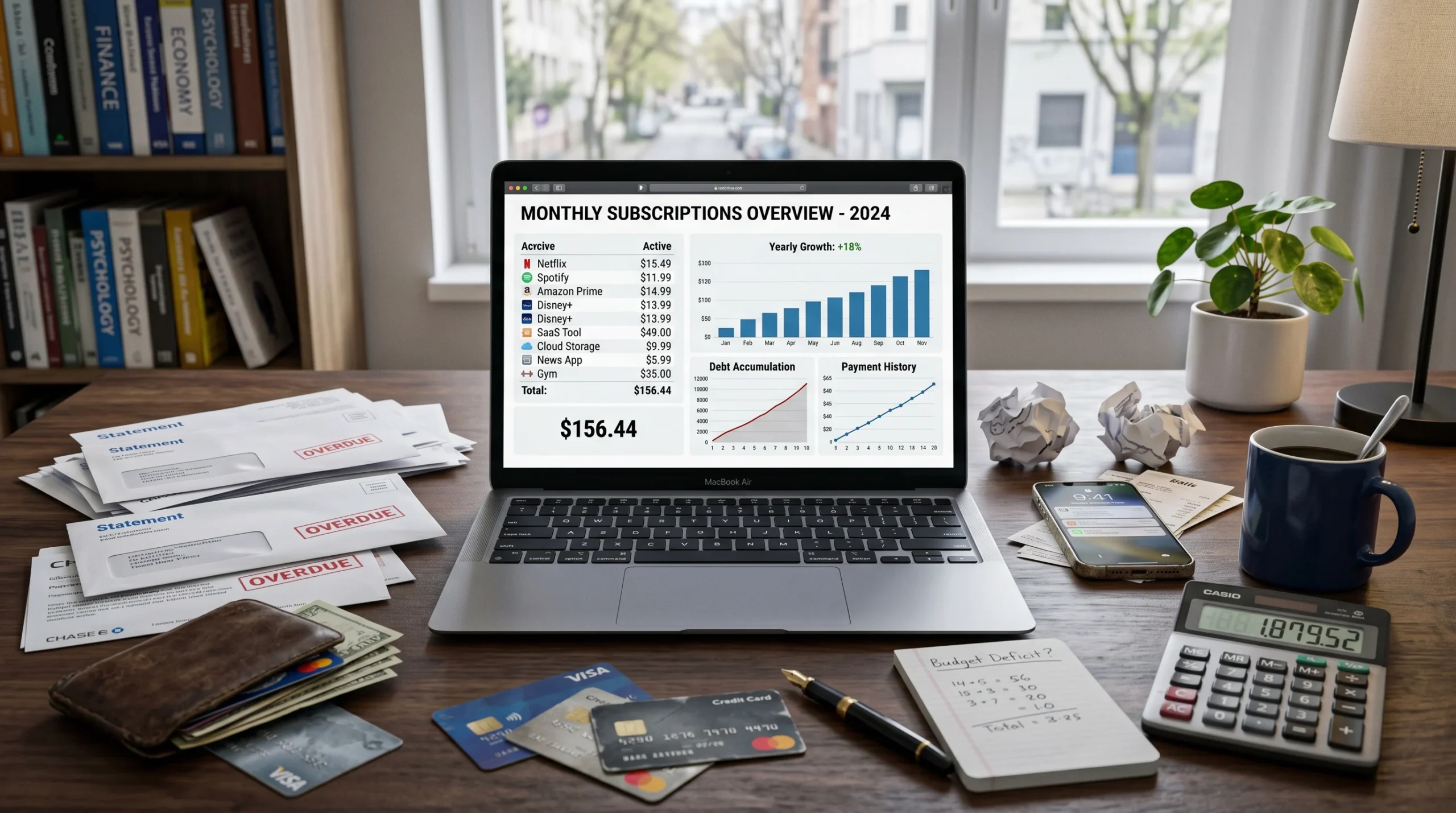
For years, subscription services were marketed as affordable conveniences. A few dollars each month for entertainment, cloud storage, meal delivery, software access, fitness apps, or premium memberships seemed manageable compared to large one time purchases. But over time, the subscription economy has evolved from a convenience model into a recurring financial ecosystem that quietly reshapes consumer spending habits.
Today many households are not simply paying for one or two subscriptions. They are maintaining dozens of recurring charges spread across entertainment platforms, digital services, shopping memberships, productivity tools, gaming accounts, wellness apps and automated delivery systems. Individually many of these costs appear insignificant. Collectively, they can become a meaningful source of ongoing financial pressure.
As inflation, housing costs, insurance premiums and consumer debt continue to rise, subscription spending is receiving greater scrutiny from both consumers and financial analysts. What once looked like harmless monthly convenience is increasingly being viewed as a form of “soft debt” recurring financial obligations that reduce flexibility, increase dependency on predictable income and quietly weaken long-term budgeting stability.
The growing concern is not simply that subscriptions cost money. It is that recurring payments fundamentally change how consumers perceive spending, debt, and financial commitment.
The Rise of the Subscription Economy
The subscription model expanded rapidly because it solved a business problem for companies: recurring revenue is more predictable than one time sales.
Instead of relying on occasional purchases, companies increasingly shifted toward:
- Monthly memberships
- Auto renewing plans
- Tiered access models
- Bundled recurring services
- Usage-based subscriptions
Consumers adapted quickly because subscriptions lowered the psychological barrier to purchase.
Paying:
- $12 monthly
feels easier than: - $144 upfront
Even though the annual cost may be identical or higher.
This shift transformed spending behavior across industries:
- Entertainment
- Software
- Fitness
- Education
- Food delivery
- Automotive services
- Home security
- Retail memberships
- Financial tools
- Digital storage
The subscription economy became embedded into everyday life.
Why Subscription Spending Feels Smaller Than It Really Is
One reason subscription debt has become harder to manage is psychological fragmentation.
Consumers rarely evaluate subscriptions as a combined financial category.
Instead, charges are mentally separated:
- Streaming service: “just $10”
- Music app: “only $5”
- Cloud storage: “barely noticeable”
- Premium shipping membership: “worth it for convenience”
Individually, each expense feels manageable.
Collectively, however, recurring charges can quietly consume hundreds or even thousands of dollars annually.
This effect is amplified because:
- Payments are automated
- Charges occur at different times
- Small monthly costs attract less scrutiny
- Consumers adapt quickly to recurring deductions
Over time, subscription expenses become “invisible spending.”
Subscription Debt Isn’t Traditional Debt But It Behaves Similarly
Subscription obligations differ from credit card balances or loans because they do not always accumulate interest. However, they create a similar financial effect in several important ways.
Like traditional debt, subscriptions:
- Reduce monthly cash flow flexibility
- Create recurring obligations
- Depend on future income continuity
- Become difficult to unwind psychologically
- Encourage long-term financial commitment
The difference is that subscription debt often develops gradually without triggering immediate financial alarm.
A consumer may never feel “in debt” while simultaneously maintaining:
- 15 recurring monthly payments
- Several financed memberships
- Auto renewing digital tools
- Buy now pay later subscriptions
- Subscription-linked credit products
The financial strain emerges slowly rather than suddenly.
The Shift From Ownership to Permanent Payments
Historically, consumers purchased products outright:
- DVDs
- Software
- Gym memberships
- Vehicles
- Music collections
- Home security systems
Today, many products are accessed through ongoing payments instead of ownership.
This changes the financial relationship consumers have with products and services.
Instead of:
“I bought this.”
The model becomes:
“I continuously pay to access this.”
This transition has major long-term consequences:
- Monthly obligations accumulate indefinitely
- Consumers lose visibility into lifetime spending
- Financial dependency on recurring income increases
The economy increasingly rewards continuous payments rather than completed ownership.
Why Younger Consumers Are Especially Vulnerable
Younger consumers grew up inside the subscription economy and often normalize recurring payments as part of everyday life.
Many younger households already juggle:
- Student loans
- Rent inflation
- Credit card debt
- BNPL financing
- Rising insurance costs
Subscriptions layer additional recurring obligations onto already tight cash flow structures.
Younger consumers are also more likely to:
- Use app-based financial ecosystems
- Adopt convenience-first spending habits
- Prioritize flexibility over ownership
- Engage with digital lifestyle products
This creates an environment where recurring spending becomes deeply integrated into identity and daily routines.
Inflation Is Exposing the Weaknesses of Subscription Dependency
During periods of economic stability, subscription costs may feel manageable.
However, inflation changes consumer sensitivity dramatically.
As essentials become more expensive:
- Housing costs rise
- Insurance premiums increase
- Grocery bills expand
- Transportation expenses climb
Previously ignored subscription costs become more noticeable.
Consumers who once tolerated dozens of small recurring charges suddenly discover that:
- Their cash flow is tighter than expected
- Monthly flexibility has disappeared
- Small recurring payments add up quickly
Economic pressure exposes how fragile heavily automated spending structures can become.
Subscription Layering Is Quietly Replacing Budgeting Discipline
One major concern among financial analysts is that subscription models encourage passive spending behavior.
Traditional spending decisions required:
- Active purchasing choices
- Physical transactions
- Conscious budgeting
Subscriptions remove much of that friction.
Once automated, payments continue indefinitely unless interrupted manually.
This creates “subscription layering,” where consumers continuously add new recurring services without removing old ones.
The result is:
- Reduced spending awareness
- Budget drift
- Higher fixed monthly obligations
- Lower discretionary flexibility
Consumers often underestimate how much recurring spending reduces long-term financial resilience.
The Behavioral Trap of Convenience
Convenience is one of the strongest drivers behind subscription growth.
Consumers are willing to pay recurring fees to avoid:
- Advertisements
- Delays
- Manual renewals
- Inconvenient shopping
- Limited access features
Over time, however, convenience itself becomes expensive.
Many households maintain overlapping subscriptions that duplicate functionality:
- Multiple streaming platforms
- Several cloud storage services
- Redundant delivery memberships
- Similar productivity apps
The psychological value of convenience can outweigh rational cost evaluation.
Why Companies Prefer the Subscription Model
The rise of subscriptions is not accidental; it is strategically valuable for businesses.
Recurring revenue models provide companies with:
- Predictable cash flow
- Higher customer retention
- Long term consumer dependency
- Easier upselling opportunities
- More stable valuation metrics
This creates strong incentives for businesses to:
- Encourage auto-renewal
- Increase switching friction
- Bundle services together
- Offer low introductory pricing
- Normalize ongoing payments
Consumers often focus on immediate affordability while companies focus on lifetime customer value.
Subscription Creep and Financial Exhaustion
One increasingly common phenomenon is “subscription creep.”
This occurs when consumers slowly accumulate recurring services over time without noticing the total impact.
For example:
- One streaming platform becomes four
- One delivery membership becomes three
- Basic software upgrades into premium tiers
- Trial offers convert into paid plans automatically
Because the increases occur gradually, spending escalation rarely feels dramatic at the moment.
Eventually, consumers may experience:
- Budget exhaustion
- Reduced savings capacity
- Difficulty identifying unnecessary expenses
- Dependence on stable monthly income
Subscription creep turns discretionary spending into fixed financial obligations.
The Link Between Subscription Spending and Credit Card Debt
Many subscriptions are tied directly to credit cards, which creates another layer of financial risk.
When consumers experience cash flow pressure:
- Subscriptions continue charging automatically
- Credit balances increase gradually
- Interest compounds on recurring charges
This can lead to a dangerous pattern where:
- Recurring convenience spending becomes financed debt
Over time, small subscription charges may contribute meaningfully to revolving credit balances.
Because the individual transactions appear minor, consumers often underestimate their cumulative impact on debt growth.
Why Consumers Struggle to Cancel Services
Subscription models are designed to reduce cancellation rates.
Common barriers include:
- Complicated cancellation processes
- Emotional attachment to services
- Fear of losing convenience
- Forgetting login credentials
- “Pause instead of cancel” prompts
- Bundled ecosystem dependence
The longer consumers remain subscribed, the more psychologically difficult cancellation becomes.
In many cases, subscriptions continue not because they are actively valued but because they are passively tolerated.
The Broader Economic Impact
The growth of recurring-payment consumer culture may have broader implications for household financial stability.
As more income becomes committed to automated obligations:
- Emergency savings rates may weaken
- Financial flexibility declines
- Households become more income dependent
- Consumer resilience during downturns decreases
The issue is not merely overspending, it is the transformation of discretionary spending into permanent financial infrastructure.
This shift may alter how future generations approach:
- Ownership
- Savings
- Debt
- Financial independence
- Consumption habits
Can Subscription Spending Be Managed Sustainably?
Subscriptions are not inherently harmful. Many services provide legitimate convenience, entertainment, productivity or cost savings.
The problem emerges when recurring spending expands without intentional oversight.
Sustainable management typically requires:
- Regular subscription audits
- Categorizing recurring obligations clearly
- Eliminating redundant services
- Separating “needs” from “habitual conveniences”
- Tracking total annual subscription costs instead of monthly costs alone
Awareness is critical because automated spending naturally reduces active financial engagement.
Subscription debt is becoming a bigger financial problem not because individual services are necessarily expensive but because the recurring-payment economy fundamentally changes consumer spending psychology.
Small automated charges accumulate quietly, reduce financial flexibility, normalize permanent payments and encourage passive consumption habits. Over time, recurring convenience spending can evolve into a hidden form of financial pressure that competes with savings, debt reduction and long term financial stability.
As economic uncertainty and living costs continue rising, consumers are beginning to reevaluate the true cost of convenience and many are discovering that the subscription economy may be far more expensive than it initially appeared.