

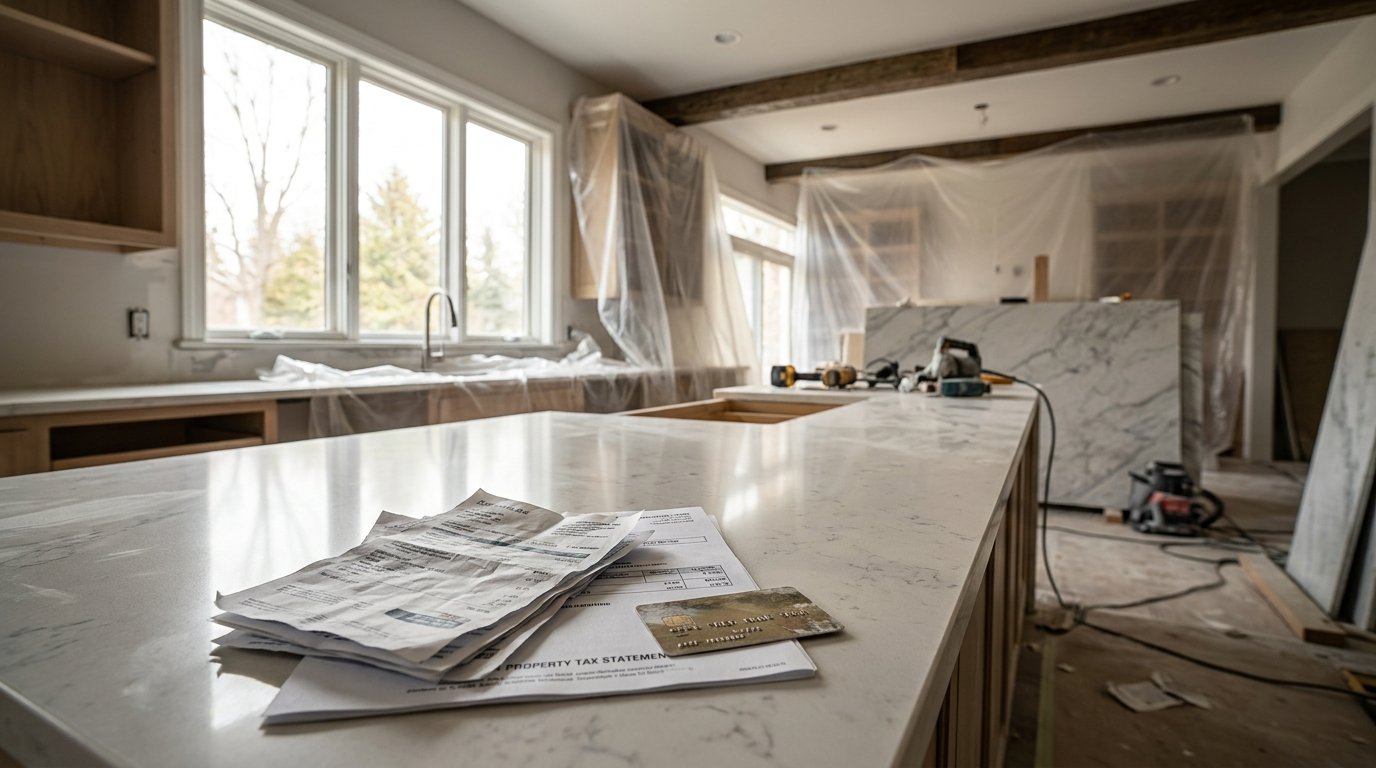
For years, moving was the natural solution when a home stopped fitting a household’s needs.
A growing family could move into a larger house. A couple whose children had left could downsize. Homeowners who wanted a better kitchen, an additional bedroom or a home office could sell and find a property that already had those features.
That calculation is becoming harder.
Mortgage rates remain well above the levels many existing homeowners locked in several years ago. As of September 10, 2026, the average 30 year fixed mortgage rate was around 6.85%, according to Bankrate data reported by The Wall Street Journal.
For a homeowner sitting on a mortgage below 4%, moving can mean voluntarily giving up one of the most valuable financial advantages they have.
So instead of moving, more homeowners are asking a different question:
What if we simply make the house we already own work better?
That shift is creating a new renovation cycle.
It may help homeowners avoid higher mortgage payments and transaction costs, but it also creates another financial question that is becoming increasingly important:
How much household debt is being created to avoid moving?
The New Alternative to Moving
The traditional housing decision was relatively straightforward.
If the house no longer worked, the homeowner moved.
But today’s homeowner may be sitting on a mortgage with a rate that is dramatically below the current market.
Replacing that mortgage can be expensive even when the next house is not dramatically more expensive.
Consider a homeowner who purchased a house several years ago with a $400,000 mortgage at 3%.
The homeowner might now need another $400,000 mortgage to purchase a different property.
At 3%, the principal and interest payment would be about $1,686 per month.
At 6.85%, that same $400,000 balance would require roughly $2,625 per month in principal and interest.
That’s nearly $940 more every month before accounting for taxes, insurance or other ownership costs.
Over a year, that difference is more than $11,000.
Suddenly, spending $50,000 or $80,000 to improve the existing house can look much more attractive than selling it and taking on a substantially more expensive mortgage.
This is one reason renovation is increasingly becoming a substitute for relocation.
Homeowners Are Choosing to Improve What They Already Own
Recent market behavior supports the shift.
Barron’s reported in September that homeowners are increasingly choosing renovation and redecorating while the housing market remains sluggish and mortgage rates approach 7%. A Bank of America Institute analysis also found evidence that some homeowners are choosing renovation over relocation, with HELOC utilization increasing alongside that behavior.
This is not necessarily a sign that Americans suddenly became more interested in home improvement.
For many households, it is a financial decision.
The homeowner may already have:
- a low mortgage rate
- substantial home equity
- a familiar neighborhood
- established schools and services
- moving costs to consider
- high transaction costs
- limited affordable alternatives
Renovation allows the household to change the property without changing the mortgage attached to it.
That can be a powerful advantage.
But it can also create a new form of leverage.
The Mortgage Rate Becomes an Anchor
The biggest reason homeowners are staying put is not necessarily emotional.
It is mathematical.
A homeowner with a 2.75%, 3%, or 3.5% mortgage has something that is increasingly difficult to replicate.
Selling the property effectively means giving up that financing.
The homeowner may not think of the mortgage as an asset, but economically, a below market fixed mortgage can be extremely valuable.
This creates what could be called a renovation incentive created by mortgage lock-in.
The homeowner thinks:
“Why should I give up my cheap mortgage just because my kitchen is outdated?”
Or:
“Why should I move when I can add another bedroom?”
Or:
“Why take on another $1,000 a month in mortgage costs when I can remodel the house for a fraction of that?”
The logic is understandable.
But there is an important distinction between avoiding a higher mortgage payment and avoiding higher housing costs altogether.
Renovation does not make housing free.
It simply changes where the money goes.
Renovation Can Be Cheaper Than Moving Until Debt Enters the Picture
Suppose a homeowner wants to make $75,000 of improvements.
The project might include:
- $30,000 kitchen improvements
- $15,000 bathroom renovation
- $20,000 additional living space
- $10,000 electrical, flooring and other work
If the alternative is selling the house and buying another property with a substantially higher mortgage, the renovation may make financial sense.
But the homeowner still has to fund the $75,000.
And that is where household debt becomes part of the story.
Some homeowners will pay cash.
Others will use savings.
Some will finance part of the project.
And others may tap their home equity through a HELOC or home equity loan.
The financing method can dramatically change the long term economics of the decision.
Why HELOCs Fit the Renovation Strategy So Well
A HELOC can be particularly attractive for a renovation because the homeowner does not necessarily know the exact cost of the project upfront.
A kitchen renovation might begin with one budget and end with another.
Unexpected electrical problems may appear.
Construction materials may cost more than expected.
The homeowner may decide to add another improvement once the original work begins.
A revolving credit line provides flexibility.
Instead of borrowing the entire amount immediately, the homeowner can draw money as expenses arise.
That flexibility is one reason HELOCs are commonly associated with home improvements.
Current HELOC rates remain materially higher than the mortgage rates many existing homeowners are trying to protect. HELOCs are also generally variable rate products, meaning the cost can change over time.
So the homeowner may be protecting a 3% first mortgage while financing a renovation at a substantially higher rate.
That can still be preferable to replacing the entire mortgage.
But it is not free money.
The Second Mortgage Problem
This is where the renovation trend gets more interesting.
The homeowner may believe they are avoiding debt by staying in their current house.
In reality, they may be avoiding one type of debt while creating another.
Instead of:
Sell → buy → replace low rate mortgage with high-rate mortgage
the household chooses:
Stay → renovate → add home equity debt
The second option can be financially superior.
But it can also gradually increase the household’s leverage.
The first mortgage remains unchanged.
The new renovation debt sits on top of it.
This creates a two layer mortgage structure.
For homeowners with strong incomes and manageable debt, that may be perfectly reasonable.
For households already operating close to their monthly limits, however, renovation financing can make the balance sheet considerably more fragile.
The Biggest Risk Is Renovation Creep
Renovations rarely stay perfectly within their original scope.
A homeowner might start with a $30,000 kitchen project.
Then the cabinets are removed.
The electrical system needs updating.
The flooring no longer matches.
The homeowner decides to replace the adjacent dining room.
Then the appliances are upgraded.
A $30,000 project can gradually become a $50,000 project.
Current construction costs make this particularly important.
A recent Angi report found that 43% of homeowners who hired professionals for home improvement projects went over budget, and more than one-third of those who exceeded their budgets spent at least 30% more than planned.
That means homeowners should not treat a renovation estimate as a guaranteed final cost.
The financing plan needs a margin of safety.
Why Renovation Debt Can Be Different From Other Household Debt
There is an argument that renovation debt is different from credit-card debt.
Sometimes it is.
A renovation can potentially improve the home’s functionality, protect the property from deterioration or increase its market value.
But that does not automatically make the debt financially productive.
A $50,000 kitchen renovation does not necessarily create $50,000 of additional property value.
A homeowner should therefore avoid thinking:
“I’m borrowing against the house, so the house will pay me back.”
That is not guaranteed.
Housing markets can remain flat.
Buyers may not value the renovation as highly as the homeowner does.
Personal design preferences may have little resale value.
And construction costs can exceed the eventual increase in property value.
A renovation can be worthwhile because it improves the homeowner’s quality of life without being a profitable investment.
Those are two different goals.
The Difference Between Improving the Home and Financing a Lifestyle
This distinction is becoming increasingly important.
Some renovations solve a genuine housing problem.
For example:
- adding a bedroom for a growing family
- replacing a failing roof
- repairing outdated plumbing
- improving accessibility
- fixing electrical problems
- creating functional space for working from home
Other renovations are primarily lifestyle upgrades.
That does not make them bad decisions.
But they should be evaluated differently.
A homeowner may reasonably decide that a new kitchen is worth $50,000 because they plan to live in the house for another decade.
That is a lifestyle decision.
It should not automatically be presented as an investment.
Once the renovation is financed with debt, however, the distinction matters even more.
The homeowner is now paying interest for the privilege of enjoying that improvement.
Renovating Can Protect Cash Flow or Destroy It
There is an interesting contradiction here.
Renovating can sometimes improve household finances.
For example, replacing an inefficient HVAC system could reduce energy costs.
Replacing an aging roof could prevent a much larger emergency expense.
Improving insulation could reduce utility bills.
Creating a functional home office could reduce commuting expenses.
In these cases, the renovation may improve the household’s long-term financial position.
But other renovations simply increase the amount of money tied up in the house.
The homeowner might have a nicer property but less cash.
If the project is financed, the household also has a new monthly payment.
That is why homeowners should evaluate renovations based on cash flow, not simply property value.
The “We Can’t Afford to Move” Problem
There is another psychological shift happening.
Some homeowners are no longer thinking:
“We want to renovate.”
They are thinking:
“We can’t afford to move.”
That distinction matters.
When renovation becomes a response to unaffordable relocation, homeowners may feel pressure to make the existing house solve every problem.
Need another bedroom?
Build one.
Need a home office?
Convert a room.
Need a better kitchen?
Remodel it.
Need more storage?
Expand.
Need a nicer outdoor space?
Build it.
Individually, each decision can appear reasonable.
Together, they can create a significant debt burden.
The homeowner may eventually spend enough on renovations to make the original low mortgage rate less meaningful because a large second mortgage has accumulated alongside it.
The Renovation Trap: Preserving a Cheap Mortgage While Expanding Debt
This is one of the most important financial tradeoffs in the current housing market.
A homeowner may successfully preserve a 3% first mortgage.
But suppose they add a $100,000 HELOC at a much higher variable rate.
The homeowner still has the cheap mortgage.
But the total cost of housing has increased.
This does not necessarily make the strategy wrong.
It simply means the homeowner should evaluate the combined debt, not celebrate the low first mortgage rate in isolation.
The relevant question is no longer:
“What is my mortgage rate?”
It becomes:
“What is the cost of financing my entire housing situation?”
That includes the first mortgage, second mortgage, HELOC, taxes, insurance, maintenance and utilities.
A Home Can Become More Comfortable and More Leveraged at the Same Time
This is the broader trend worth watching.
Renovation can improve a home dramatically.
But improvement and financial strength are not the same thing.
A homeowner can end up with:
- a newer kitchen
- an additional bedroom
- a finished basement
- a better backyard
- a more functional home
while simultaneously having:
- a larger monthly debt obligation
- less emergency savings
- greater exposure to variable rates
- less unused home equity
- less flexibility if income falls
The house becomes better.
The household balance sheet may become weaker.
That is the paradox of renovation financed through debt.
What Happens If Home Values Stop Rising?
A renovation strategy often feels safer when property values are rising.
The homeowner thinks:
“I am borrowing $75,000, but my house is worth $100,000 more than it was a few years ago.”
The problem is that past appreciation does not guarantee future appreciation.
If home prices remain flat, the homeowner cannot assume that every dollar spent on improvements will be recovered.
This matters particularly for homeowners who borrow heavily against the property.
A decline in property values can reduce available equity and make refinancing or selling more difficult.
The homeowner may then find themselves in an uncomfortable position:
high renovation debt + high mortgage balance + expensive property + limited flexibility.
That is exactly why renovation financing should be based on the household’s ability to repay rather than expectations about future appreciation.
Renovation Costs Can Also Change the Meaning of “Affordable Housing”
Housing affordability is usually discussed in terms of mortgage payments.
But for existing homeowners, another affordability question is emerging:
How much does it cost to keep the current house suitable for the household?
That includes maintenance and improvement costs.
A homeowner may technically have an affordable mortgage but still face tens of thousands of dollars in required improvements.
This is especially relevant as the U.S. housing stock ages.
Reuters recently reported that Home Depot expects continued remodeling demand partly because the median age of U.S. homes has risen above 40 years.
An older home may require more than cosmetic improvements.
Roofing, plumbing, electrical systems, HVAC equipment and other major components eventually require attention.
That means some renovation spending is not discretionary at all.
Homeowners may be borrowing because they have no realistic alternative.
Not All Renovation Debt Is Created Equal
The purpose of the borrowing matters.
Consider three homeowners.
Homeowner A: The Necessary Repair
The homeowner borrows $25,000 to replace a failing roof.
Without the repair, the property could suffer serious damage.
The debt solves a genuine problem.
Homeowner B: The Functional Renovation
The homeowner borrows $50,000 to create an additional bedroom because their family has grown and they plan to stay for another decade.
The debt increases functionality and may be reasonable if the payment fits comfortably into the budget.
Homeowner C: The Lifestyle Upgrade
The homeowner borrows $75,000 to install a luxury kitchen because they no longer like the existing one.
The project may be enjoyable, but the household now carries substantial additional debt for a discretionary expense.
All three homeowners are “renovating.”
But the financial logic is completely different.
That is why the headline amount spent on remodeling tells us very little about whether household debt is becoming healthier or riskier.
The Question Homeowners Should Ask Before Borrowing
Before financing a renovation, homeowners should ask a more fundamental question than:
“Can I qualify for the loan?”
They should ask:
“Can my household comfortably repay this debt without depending on future raises, refinancing, home appreciation or perfect economic conditions?”
That changes the analysis.
A lender evaluates creditworthiness.
The homeowner needs to evaluate resilience.
Those are not the same thing.
Five Ways to Prevent a Renovation From Becoming a Debt Problem
1. Separate necessary work from optional upgrades
A leaking roof and a luxury bathroom should not be treated as the same financial priority.
2. Build a real contingency into the budget
Renovation overruns are common, and current construction costs remain unpredictable. A project should have room for unexpected expenses rather than relying on the maximum available credit.
3. Do not automatically borrow the maximum available equity
A lender’s approved amount is not a renovation budget.
Borrow only what the household can reasonably repay.
4. Stress-test the new payment
If the renovation is financed with a HELOC, consider what happens if the interest rate rises.
If the household would struggle after a moderate increase, the project may be too large.
5. Decide how long you actually plan to stay
A major renovation makes more sense when the homeowner expects to remain in the property for many years.
Borrowing $100,000 for a house you may sell in two years creates a very different financial calculation.
The Hidden Cost of Staying Put
There is an important point that can get lost in the discussion about mortgage lock-in.
Staying in a home is not automatically cheaper than moving.
It may be cheaper from a mortgage perspective.
But homeowners still have to maintain, repair and adapt the property.
If the house no longer fits the household’s needs, the cost of forcing it to work can become significant.
That creates a new financial calculation:
Move and accept a higher mortgage or stay and invest in the existing property.
Neither option is automatically better.
The right choice depends on the homeowner’s income, equity, mortgage rate, renovation costs, expected time in the home and ability to handle additional debt.
The Bigger Housing Trend
The renovation versus relocation decision says something important about the current housing market.
High mortgage rates are not simply reducing home sales.
They are changing how existing homeowners use the homes they already own.
Instead of selling, some are adding rooms.
Instead of moving to a better neighborhood, they are improving the current property.
Instead of replacing a low rate mortgage, they are using home equity to finance changes around it.
That is rational from one perspective.
But it also means household debt is increasingly becoming part of the strategy for adapting to a housing market that makes moving expensive.
And that deserves attention.
Because if homeowners increasingly use debt to make their current homes fit their lives, the housing market could gradually produce more households with excellent properties, valuable equity and larger second layer debts.
The Real Question Is Not Whether Renovating Is Better Than Moving
For many homeowners, renovating may genuinely be the better choice.
Giving up a very low mortgage rate for a much more expensive loan can be difficult to justify.
Renovating can allow a household to remain in a familiar community, avoid transaction costs and improve the property they already own.
But the financial advantage disappears if the renovation is financed so aggressively that it creates a new affordability problem.
The goal should not simply be to avoid moving.
The goal should be to create a home that works without turning the household balance sheet into a source of permanent stress.
The current renovation trend is about more than kitchens, bathrooms and extra bedrooms.
It reflects a deeper change in how homeowners are responding to expensive mortgage financing.
When moving becomes financially unattractive, the existing home becomes the place where households try to solve their housing problems.
That can be smart.
But every renovation financed with debt changes the household’s financial structure.
The homeowner may preserve a valuable low rate mortgage, but add a HELOC. They may avoid a larger first mortgage payment, but create another monthly obligation. They may improve the property’s value and functionality, but reduce their financial flexibility.
The smartest homeowners will therefore look beyond the question of “Can we afford to renovate?”
They will ask:
“Can we improve this house without making the rest of our financial life harder?”
That may ultimately be the more important affordability test in a housing market where staying put is becoming a financial strategy of its own.