

Debt used to be static.
You borrowed. You paid monthly. You waited.
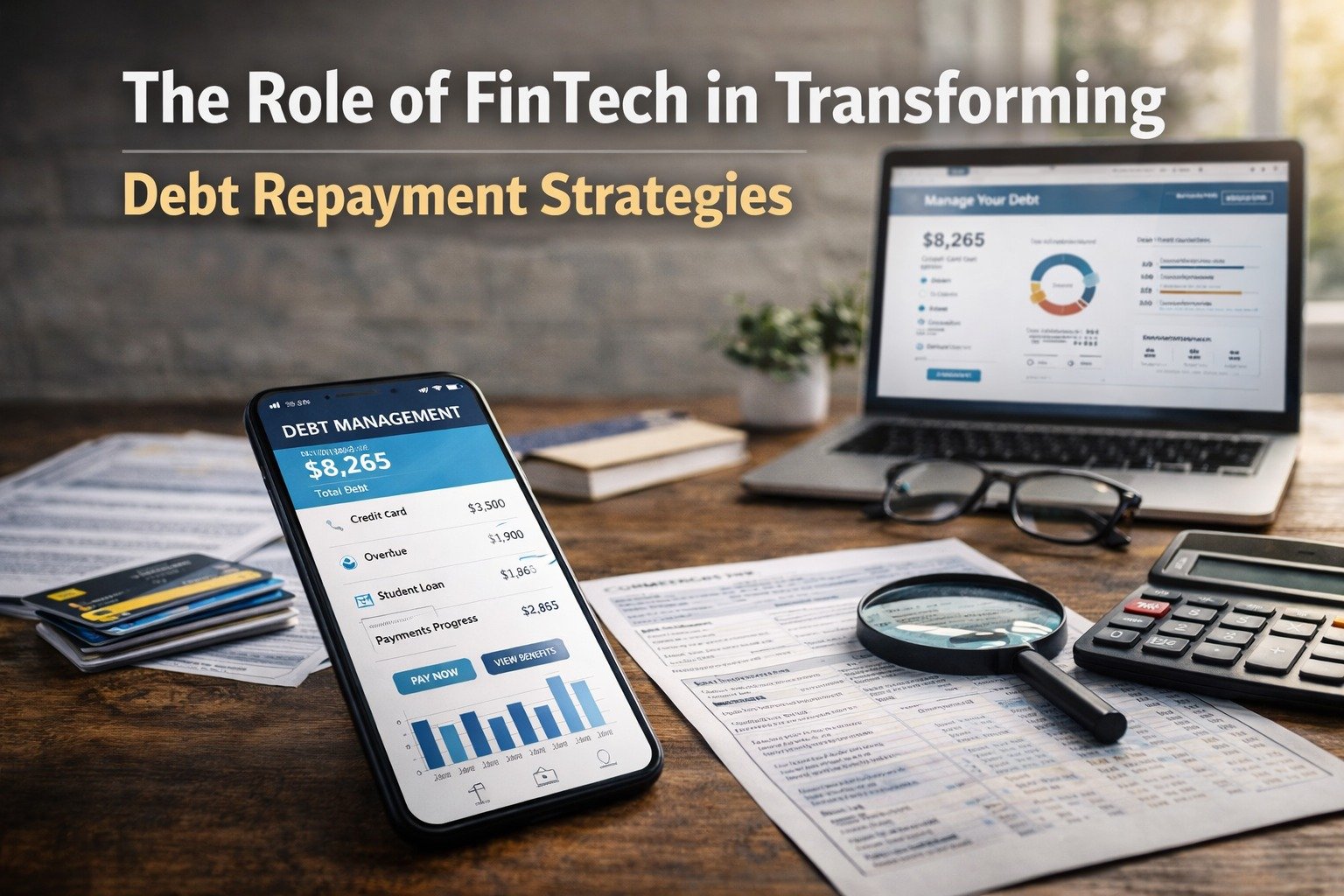
Today, repayment is increasingly dynamic. Apps track balances in real time. Algorithms suggest payoff sequencing. Automated tools move money between accounts. Behavioral nudges replace paper statements.
Financial technology hasn’t just made debt easier to access. It has quietly reshaped how consumers think about paying it down.
The question is whether that transformation is making households more resilient or simply more comfortable carrying leverage.
From Passive Repayment to Active Management
Traditional debt repayment was structured and predictable. Fixed schedules, limited transparency, and minimal optimization.
FinTech platforms changed that model by introducing:
- Real time balance tracking
- Automated payment scheduling
- Snowball and avalanche payoff modeling
- Consolidation comparison tools
- Micro roundup payments tied to spending
Instead of passively servicing debt, borrowers can now actively manage it.
That shift changes behavior.
When repayment becomes interactive, it feels controllable. And perceived control influences financial decision making more than many assume.
Automation as Discipline Substitute
One of the most significant FinTech impacts is automation.
Apps now allow users to:
- Automatically allocate surplus cash toward highest interest balances
- Trigger extra payments when income exceeds a threshold
- Redirect spending savings directly to loan reduction
Automation reduces reliance on willpower.
Behavioral research consistently shows that default settings drive outcomes. When repayment becomes the default use of surplus cash, debt declines faster at least for disciplined users.
But automation also introduces a subtle risk.
If borrowers assume the system is optimizing for them, they may disengage from deeper financial planning. Technology becomes a substitute for strategy.
Consolidation in a Digital Environment
FinTech lenders have also accelerated digital debt consolidation.
Online platforms provide:
- Instant rate comparisons
- Soft credit prequalification
- Rapid funding timelines
- Transparent amortization simulations
This has lowered the friction historically associated with restructuring debt.
As a result, consolidation is no longer a last resort. It is increasingly positioned as proactive financial optimization.
That reframing matters.
When restructuring debt feels strategic instead of reactive, adoption increases.
The Behavioral Power of Visual Feedback
Digital dashboards make progress visible.
Borrowers can watch balances decline in charts and projections. That visual reinforcement taps into behavioral momentum.
Progress tracking increases adherence.
This feedback loop did not exist in traditional lending. Monthly statements provided limited context. Now, payoff projections update daily.
Visibility encourages engagement. Engagement can accelerate repayment.
But it can also encourage refinancing cycles if platforms continuously surface “better options.”
Micro Optimization Culture
FinTech has introduced a culture of micro optimization.
Borrowers are encouraged to:
- Refinance small rate differences
- Transfer balances strategically
- Shift between products based on promotional windows
In theory, this reduces interest expense.
In practice, constant optimization can normalize ongoing leverage. Instead of eliminating debt, consumers may perpetually restructure it.
Debt becomes fluid rather than final.
The psychological goal shifts from freedom to efficiency.
Data Driven Risk Segmentation
From a lender perspective, FinTech enables more granular risk pricing.
Alternative data models incorporate:
- Cash flow behavior
- Spending patterns
- Subscription usage
- Employment stability signals
This allows lenders to approve borrowers who might have been excluded under traditional underwriting.
Expanded access increases inclusion.
It also increases exposure if macroeconomic conditions deteriorate.
Technology can assess current behavior with precision. It cannot eliminate cyclical risk.
READ ALSO: Regional Debt Patterns: What the Data Shows About Household Risk
The Rise of Embedded Repayment Tools
Some platforms now embed repayment features directly into banking apps.
Automatic rounding of purchases, goal based payoff accounts and structured debt plans are integrated into everyday financial interfaces.
Debt repayment is no longer a separate activity. It is integrated into spending behavior.
This convergence reduces friction and friction is often what prevents financial follow through.
Does FinTech Reduce Risk?
The data presents a mixed picture.
On one hand:
- Delinquency rates among digitally engaged borrowers tend to be lower.
- Automated repayment reduces missed payments.
- Visibility improves short term discipline.
On the other:
- Easier restructuring can delay deleveraging.
- Streamlined refinancing may encourage higher baseline debt levels.
- Constant credit availability can blur urgency.
FinTech improves efficiency. It does not automatically improve restraint.
Structural Shift or Behavioral Layer?
At its core, FinTech is not eliminating debt cycles.
It is layering behavioral tools on top of them.
The structural drivers of household leverage housing costs, wage growth, healthcare expenses and education financing remain unchanged.
Technology optimizes navigation within the system. It does not fundamentally alter the system.
Still, that optimization has real impact.
For disciplined borrowers, FinTech accelerates payoff timelines.
For risk-prone borrowers, it may simply make borrowing smoother.
The Bigger Signal
The rapid adoption of digital repayment tools reveals something broader: consumers want agency.
They want transparency.
They want flexibility.
They want responsiveness.
FinTech delivers those qualities.
Whether that translates into lower systemic household risk depends less on the tools themselves and more on how they are used.
Technology can guide.
It cannot decide.
The transformation underway is not just technological.
It is behavioral.
And that distinction will determine whether the next decade of digital debt management strengthens household balance sheets or simply makes them more efficient at carrying leverage.