

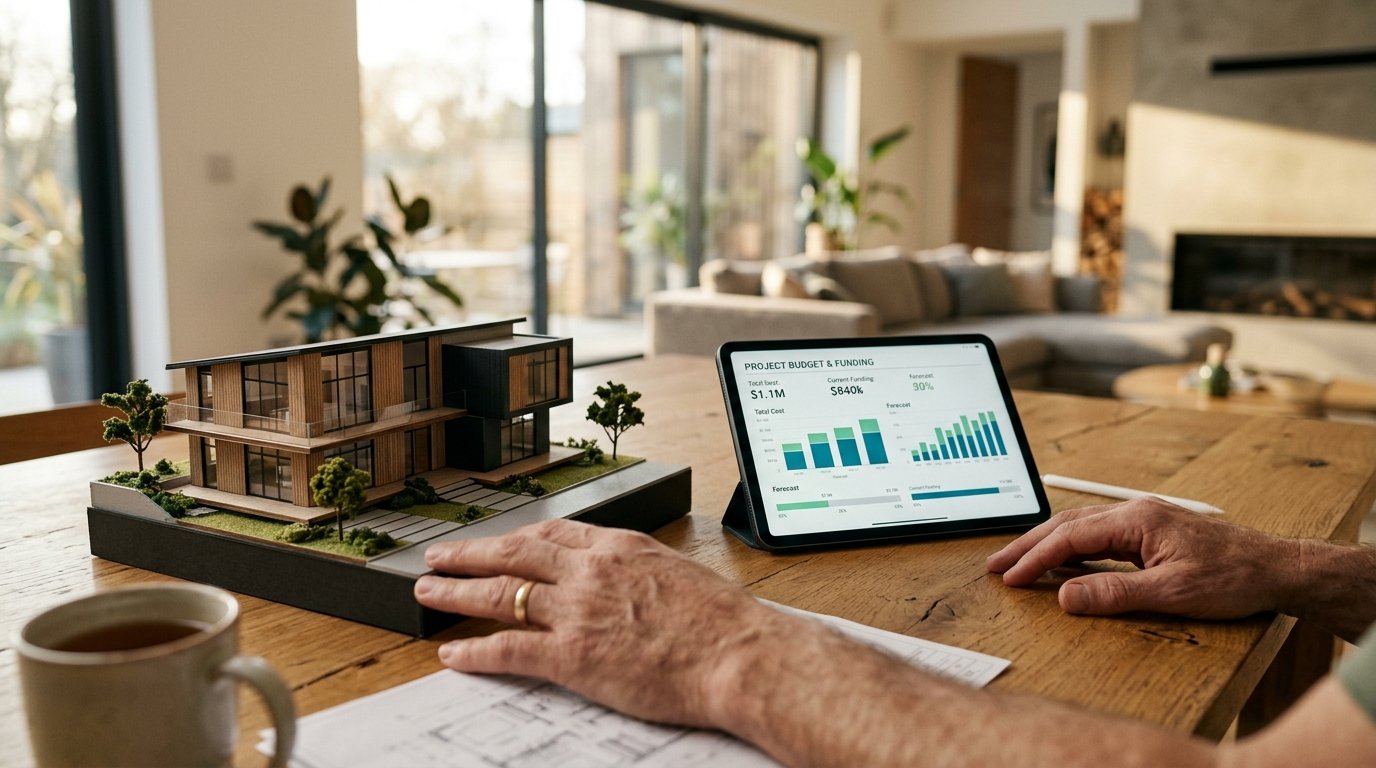
For many homeowners, home equity can feel like money that is sitting there waiting to be used.
Years of mortgage payments have reduced the balance. Home values may have increased. A property that once represented mostly a monthly housing expense may now represent hundreds of thousands of dollars in accumulated wealth.
The temptation is easy to understand.
Why leave all that money tied up in a house when some of it could be used to pay off expensive debt, cover a major expense, finance a business, handle an emergency or simply provide more financial flexibility?
That question is helping change the way homeowners think about home equity.
A home equity line of credit or HELOC, can allow homeowners to borrow repeatedly against available equity during a draw period rather than taking out a single lump sum loan. But that flexibility comes with an important tradeoff: the homeowner is converting part of an asset into debt secured by the home. If the debt cannot be repaid, the house can ultimately be at risk.
The growing use of HELOCs suggests that more homeowners are willing to make that tradeoff. The Federal Reserve Bank of New York reported that U.S. HELOC balances reached $459 billion at the end of the second quarter of 2026, up $13 billion from the previous quarter and $48 billion from a year earlier. It was the 17th consecutive quarterly increase in outstanding HELOC balances.
But having access to equity does not automatically mean borrowing against it is a good idea.
Before turning a valuable home into a source of spending power, homeowners need to ask a different set of questions, ones that look beyond the size of the available credit line and the monthly payment.
1. What am I actually trying to accomplish with the money?
This may be the most important question because the purpose of the borrowing can determine whether the debt strengthens or weakens the household’s finances.
A homeowner might want a HELOC to consolidate credit card balances.
Another might need money for a medical expense.
Someone else might want to pay college tuition, purchase a vehicle, start a business or invest in another property.
These situations are not financially identical.
A homeowner borrowing to address a temporary expense has a different problem from someone borrowing because regular income is no longer covering regular spending.
That distinction matters because a HELOC can provide liquidity, but it cannot permanently solve a recurring cash flow shortage.
Imagine a household that consistently spends $1,000 more each month than it earns. Borrowing $20,000 against the house could make the problem disappear temporarily. But unless something changes in the household’s income or expenses, the deficit eventually returns with an additional debt payment attached.
By contrast, a homeowner facing a one time $20,000 expense with stable income and a realistic repayment plan may be dealing with a liquidity problem rather than a structural budget problem.
The two situations can look identical when someone simply asks, “How much equity do you have?”
They are very different when the question becomes, “Why do you need the money?”
Home equity should have a job
Before borrowing, homeowners should be able to explain what the money is supposed to accomplish.
Is it reducing a more expensive debt?
Paying for something essential?
Creating an asset or income stream?
Covering an expense that could not reasonably be handled from savings?
Or simply making current spending more comfortable?
The answer does not automatically determine whether borrowing is appropriate, but it reveals what the debt is expected to accomplish.
If the answer is difficult to define, that may be a reason to pause before turning equity into a new financial obligation.
2. Am I borrowing against an asset to solve a temporary problem or a permanent one?
Homeowners sometimes use equity to absorb costs that have risen faster than their income.
Insurance premiums increase.
Property taxes rise.
Child care expenses remain high.
Credit card balances accumulate.
A major repair arrives at the wrong time.
The household needs more breathing room.
A HELOC can make those pressures feel manageable because it creates access to money without requiring the homeowner to sell the property.
But that creates a critical distinction between temporary financing and permanent financing.
If the homeowner expects to repay the balance within a defined period, the HELOC may be serving as a bridge.
If the homeowner expects to keep drawing from the line every time another major expense appears, the house may gradually become a substitute for adequate cash flow.
That can be a very different financial strategy.
The risk is particularly easy to miss with a revolving line of credit.
A homeowner might borrow $10,000 today and feel comfortable with the payment.
Six months later, another $5,000 may seem manageable.
Then another $5,000.
The individual decisions may not look alarming. The accumulated balance can tell a different story.
A useful question is therefore:
If I could no longer borrow from this HELOC tomorrow, would my finances still work?
If the answer is no, the problem may be larger than a temporary need for liquidity.
3. How much of my equity am I actually comfortable putting at risk?
A lender may approve a particular credit limit.
That does not mean the homeowner should use all of it.
This distinction is important because lenders evaluate whether a borrower meets their underwriting requirements. The homeowner has to make a separate judgment about how much debt fits comfortably within the household’s financial plan.
Equity is not all or nothing.
A homeowner with $300,000 of equity does not necessarily need to borrow $100,000 simply because a lender makes that amount available.
In fact, treating the credit limit as a spending target can undermine the reason for having equity in the first place.
A homeowner should consider how much equity would remain after borrowing and what would happen if the property’s value declined.
The CFPB notes that if the value of a home decreases significantly, a lender may restrict additional borrowing under a HELOC. A lender may also freeze further draws if the borrower’s financial circumstances change and the lender believes repayment may become difficult.
That means available equity should not be treated as a guaranteed reserve of cash.
The amount that can actually be accessed can depend on both the property and the borrower’s financial circumstances.
Equity is a buffer before it becomes debt
A homeowner might reasonably want to preserve some equity as a financial cushion.
Using a smaller portion of available equity can leave more room between the household and the property’s maximum leverage.
This can matter if the homeowner eventually needs to refinance, sell the property, move or obtain another form of financing.
The goal should not necessarily be to extract the maximum amount possible.
It may be to borrow only the amount that has a clear purpose and a realistic repayment path.
4. What will this money cost me over time, not just each month?
Monthly payment is one of the easiest numbers to understand.
It is also one of the easiest numbers to misunderstand.
A $500 monthly payment may sound manageable.
But the more important questions are:
How long will I make that payment?
How much interest will I pay?
Can the interest rate change?
Are there upfront fees?
Will the payment increase when the draw period ends?
A HELOC can have a variable interest rate, meaning the payment can change as market rates move. The CFPB also warns that monthly payments can increase substantially once the draw period ends and the borrower enters the repayment period.
That means homeowners should examine the entire life of the borrowing rather than evaluating the loan solely through its initial payment.
The introductory rate can tell only part of the story
Some HELOCs may offer an initial promotional rate.
That rate can make borrowing appear particularly inexpensive.
But homeowners need to know what happens after the introductory period.
The lender’s disclosures should explain how the annual percentage rate can change, how the minimum payment is calculated and how long the draw and repayment periods last.
A homeowner comparing two HELOCs should therefore look beyond the initial rate.
The relevant comparison includes:
- The ongoing rate structure
- The margin over the underlying index
- Any introductory rate period
- Rate caps and floors
- Annual or maintenance fees
- Closing costs
- Minimum draw requirements
- Minimum balances
- Repayment terms
- Conversion options, if available
- Potential payment changes
A lower starting rate does not necessarily translate into a lower total borrowing cost.
5. What happens if interest rates move against me?
This question becomes especially important because HELOCs are generally variable-rate products.
A homeowner might be comfortable with the payment today.
But a future increase in the interest rate could change the economics.
That does not mean rates will necessarily move higher.
It means the borrower should understand the possibility before taking on the debt.
For a household with significant financial room, a rate increase may be inconvenient.
For a household operating close to its monthly limit, the same increase could materially affect the budget.
The CFPB notes that HELOC payments may change from month to month because these lines generally have variable rates. Some HELOCs may offer the ability to convert some or all of a balance to a fixed rate, although the fixed rate is generally higher in exchange for greater predictability.
The question is therefore not simply:
“What is the HELOC rate today?”
It is:
“What payment could I still comfortably handle if the rate were meaningfully higher?”
That is a much more useful stress test.
6. What happens when the draw period ends?
A HELOC can feel unusually flexible during its draw period.
The homeowner can borrow, repay and potentially borrow again, depending on the terms.
But that flexibility does not last forever.
Eventually, the draw period ends.
At that point, the homeowner generally enters the repayment period and can no longer borrow under the same arrangement. The payment may also rise because the outstanding principal must be repaid over a defined period. In some circumstances, the borrower may face a substantially larger payment than during the draw period.
This is one of the most important questions to ask before using a HELOC for a major expense.
A homeowner should not only ask whether the current payment fits the budget.
They should ask:
What will the payment look like after I can no longer draw from the line?
That distinction becomes particularly important when borrowers make interest-only or otherwise low payments during the early portion of the loan.
A payment that looks comfortable today can become considerably less comfortable later.
The end of the draw period should be part of today’s decision
The repayment period is not a future problem that can be ignored until it arrives.
It is part of the cost of the borrowing from day one.
A homeowner should understand when the draw period ends, how the balance will be amortized afterward and whether the household expects to have enough income to handle the higher payment.
If the plan is simply to refinance the HELOC later, that introduces another uncertainty.
Future interest rates, home values, credit conditions and lender requirements cannot be guaranteed today.
7. What if my home’s value falls?
Home equity is calculated using the property’s value and the amount of debt secured against it.
That means the homeowner’s equity can change even without making another borrowing decision.
If the property value declines, the amount of equity available can shrink.
This matters because homeowners sometimes think about their equity as though it were a fixed account balance.
It isn’t.
A house valued at $600,000 today may not be worth $600,000 several years from now.
If the homeowner has a $300,000 mortgage and a $75,000 HELOC balance, the total secured debt is already $375,000.
If the property later falls in value to $500,000, the household has considerably less equity than it did when the HELOC was opened.
That does not necessarily mean the borrower is immediately in trouble.
But it reduces the financial cushion.
It can also make selling or refinancing more complicated.
The CFPB notes that a significant decline in home value can cause a lender to restrict access to additional HELOC credit.
For homeowners who expect to move within several years, this question can be particularly important.
Borrowing against the house today may affect the amount of money available when the property is eventually sold.
8. Would I still make this decision if I couldn’t deduct the interest?
Tax treatment can influence the apparent cost of home-equity borrowing, but it should not be the primary reason for taking the debt.
The IRS currently states that interest on a home equity loan or HELOC secured by a main or second home may be deductible when the borrowed funds are used to buy, build or substantially improve the residence, subject to applicable requirements and limitations. Interest on the same debt used for personal expenses such as paying credit-card debt generally does not qualify for the home mortgage interest deduction.
That distinction is particularly relevant because modern HELOCs are often used for purposes beyond home improvement.
A homeowner who uses a HELOC to pay off credit cards should not automatically assume the interest receives the same tax treatment as mortgage interest used for a qualifying home improvement.
Tax rules can also change, and individual circumstances matter.
The more useful approach is to treat any potential tax benefit as a secondary consideration rather than allowing it to justify borrowing that otherwise does not make sense.
The first question should be whether the debt is affordable and serves a legitimate financial purpose.
The tax treatment comes afterward.
9. Is a HELOC actually the right type of borrowing?
Not every need for cash calls for a HELOC.
Sometimes homeowners focus so heavily on the amount of equity they have that they overlook other financing options.
Depending on the circumstances, alternatives could include:
- Using existing savings
- Delaying the expense
- A fixed rate home equity loan
- A personal loan
- A conventional loan
- A balance transfer strategy for certain types of debt
- A structured debt management plan
- Negotiating the expense or payment arrangement
- Reducing discretionary spending temporarily
The choice depends heavily on the purpose of the money.
A HELOC may make more sense for an expense that will occur in stages.
A fixed rate home equity loan may be more predictable when the exact borrowing amount is known.
Savings may be preferable when using them does not leave the household without an adequate emergency reserve.
And in some cases, the best financing decision may be to postpone the purchase entirely.
The CFPB recommends comparing more than the monthly payment when evaluating home equity borrowing, including fees and other costs.
The fact that a homeowner can access equity does not mean equity is automatically the cheapest or safest source of cash.
10. Am I protecting my existing mortgage in the process?
For homeowners who have an older mortgage with a relatively low interest rate, this question can be especially important.
A homeowner may have substantial equity but also a mortgage rate that would be difficult to replace today.
That can make a HELOC fundamentally different from a cash-out refinance.
With a cash out refinance, the homeowner generally replaces the existing mortgage with a new, larger mortgage.
A HELOC can allow the homeowner to access some equity without replacing the first mortgage.
That can preserve the existing mortgage structure while adding a second layer of debt.
But “preserving the mortgage” does not mean the borrowing is free.
The homeowner now has another payment, another interest rate and another lender relationship to manage.
The question should therefore be:
Does accessing a portion of my equity without disturbing my existing mortgage outweigh the additional cost and risk of carrying a second debt?
That is more useful than assuming one product is automatically superior to another.
11. What happens if I need to sell my home sooner than expected?
Homeowners often think about HELOCs over a relatively short horizon.
The expense is today.
The repayment will happen over time.
But life does not always follow the original plan.
A job relocation could happen.
A divorce or family change could alter housing needs.
A retirement decision could lead to a move.
A health or caregiving situation could require a different home.
A homeowner who has borrowed heavily against the property needs to understand what happens when the house is sold.
Generally, the mortgage and other liens secured by the property have to be addressed from the proceeds of the sale.
That means borrowing against equity today can reduce the amount of money the homeowner ultimately walks away with when the property is sold.
For someone who has no plans to move for decades, that may be less important.
For someone who expects to sell within a few years, it deserves much more attention.
The question is not simply whether the home has enough equity today.
It is whether enough equity is likely to remain after the debt is repaid and selling costs are considered.
12. Am I using my home to finance something that will outlast the debt?
This question gets at the economic quality of the borrowing.
Some uses of debt create an asset or lasting benefit.
Others create a short lived benefit while leaving the debt behind.
That difference matters.
Suppose a homeowner borrows $40,000 to make a substantial improvement to the property.
The improvement may remain part of the home for years.
Now consider borrowing $40,000 for a series of vacations, luxury purchases or recurring household expenses.
The debt may last for years even though the benefit is largely gone.
That does not mean every non home expense is automatically a bad use of equity.
A medical expense, education, business investment or necessary family expense may have a strong justification.
But homeowners should recognize the mismatch when it exists.
Long term debt financing short term consumption creates a very different financial outcome from debt financing a durable asset or a temporary expense with a clear repayment plan.
That is one of the most useful questions to ask before turning home equity into spending power.
The Difference Between Access to Money and Financial Wealth
The growing popularity of HELOCs reflects an interesting reality in the American housing market.
Many homeowners are sitting on significant property wealth.
At the same time, some households still face tight monthly budgets, high consumer debt and expensive everyday costs.
The result is a growing temptation to bridge the gap by borrowing against the house.
The New York Fed’s latest data illustrates how significant that market has become: outstanding HELOC balances reached $459 billion in Q2 2026, $48 billion above the level a year earlier.
But homeowners need to be careful about what that number represents.
A HELOC balance is not newly created wealth.
It is debt.
The homeowner has converted some of the property’s equity into borrowed spending power.
That can be useful when the money is deployed strategically.
It can become problematic when borrowing begins to substitute for income, savings or sustainable household cash flow.
A Simple Test: What Will Be Different After I Borrow?
One of the best questions a homeowner can ask is also one of the simplest:
What will be financially different after I take this money?
If the answer is:
“I’ll have eliminated expensive credit-card debt, and I’ve changed my spending so I can repay the HELOC,” that describes a meaningful financial restructuring.
If the answer is:
“I’ll be able to afford my monthly bills for another year,” that suggests the household may be dealing with a deeper cash-flow problem.
If the answer is:
“I’ll have a new business asset that should generate income,” the homeowner needs to determine whether the expected income is realistic enough to justify putting the house behind the investment.
If the answer is:
“I want more money available because it makes me feel financially comfortable,” the homeowner may want to distinguish between actual financial security and access to additional debt.
The same HELOC can produce very different outcomes depending on what happens after the money is borrowed.
Home Equity Is Powerful Precisely Because It Is Valuable
There is a reason homeowners are increasingly interested in turning equity into spending power.
Equity can represent a substantial amount of wealth that would otherwise remain tied to the property.
A HELOC can make some of that wealth accessible without requiring the homeowner to sell the house or replace an existing mortgage.
That flexibility can be meaningful.
But the flexibility exists because the homeowner owns an asset valuable enough to secure the borrowing.
That is also what makes the decision different from using an ordinary credit card or unsecured loan.
The house is involved.
If the borrowing works as planned, the homeowner may gain access to capital while preserving the property.
If the plan fails, the consequences can be much more serious.
The CFPB puts the fundamental risk plainly: homeowners should only consider a HELOC if they are confident they can keep up with the payments because falling behind can ultimately put the home at risk.
That makes the right question less about how much equity a homeowner can unlock and more about how much equity should remain untouched.
Home equity can be one of a household’s most valuable financial resources.
But it is not the same thing as cash.
Turning equity into spending power means exchanging part of the home’s ownership cushion for debt, interest and repayment obligations.
That trade can make sense for some homeowners.
The key is understanding exactly what the borrowing is supposed to accomplish and whether the household can comfortably live with the consequences if circumstances change.
Before opening a HELOC or another home equity product, homeowners should ask:
Why do I need the money?
Is the expense temporary or recurring?
How much am I actually comfortable borrowing?
What will the total cost be?
What happens if interest rates rise?
What will my payment look like after the draw period?
What happens if my home’s value falls?
What happens if I need to sell?
Does the tax treatment actually apply to my use of the money?
Is there a less risky way to accomplish the same goal?
And perhaps most importantly:
Will borrowing against my home improve my financial position or simply make today’s financial pressure easier to tolerate?
That final distinction can determine whether home equity becomes a useful financial tool or an increasingly expensive source of spending power.
The value of a HELOC is not simply that it allows a homeowner to access money.
Its real value depends on what that money accomplishes after it leaves the house and whether the resulting debt remains manageable long after the original expense has been forgotten.

