

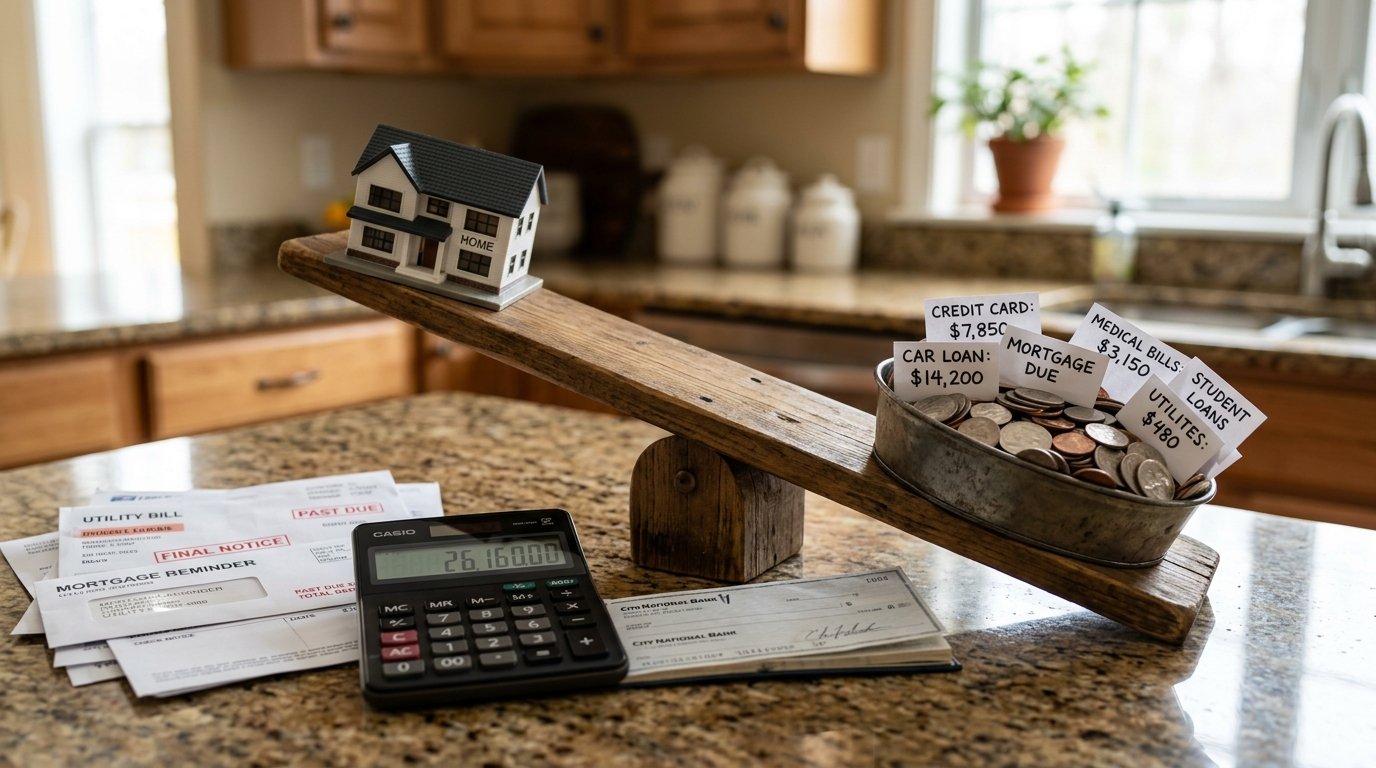
Debt has become a normal part of modern household finances.
For many consumers, borrowing is not necessarily a sign of financial trouble. Mortgages help families purchase homes, auto loans provide transportation, student loans can support education and credit cards offer convenience and short term flexibility.
The challenge is not whether households should use debt.
The challenge is understanding when debt shifts from being a useful financial tool into a source of long term financial pressure.
Determining how much debt is too much is not as simple as looking at one number. A household earning $100,000 per year may comfortably manage a level of debt that would overwhelm another household with the same income but less stability, fewer savings or higher expenses.
Debt affordability depends on several factors, including:
- Monthly income
- Fixed expenses
- Interest rates
- Savings levels
- Job stability
- Future financial goals
- Household obligations
As consumers face rising housing costs, higher borrowing expenses and increased financial uncertainty, understanding debt capacity has become more important than ever.
The real question is not simply:
“How much debt do I have?”
It is:
“Does my current debt structure support my financial goals, or is it limiting my ability to build financial security?”
Debt Is Not Automatically a Financial Problem
One of the biggest misconceptions about debt is that all borrowing is harmful.
In reality, debt exists on a spectrum.
Some forms of debt can support long-term wealth creation.
Examples include:
Mortgage Debt
A mortgage allows households to purchase an asset that may appreciate over time.
Business Debt
Borrowing can help entrepreneurs expand operations and generate future income.
Education Debt
Student loans may increase earning potential when managed responsibly.
Strategic Home Equity Borrowing
Products such as HELOCs or cash out refinances can provide financial flexibility when used carefully.
The problem typically arises when debt:
- Consumes too much monthly income
- Funds ongoing lifestyle expenses
- Carries high interest costs
- Prevents saving and investing
- Creates dependence on additional borrowing
The issue is not debt itself.
The issue is whether debt remains manageable.
The Importance of Debt to Income Ratio
One of the most common ways lenders evaluate debt affordability is through the debt to income ratio (DTI).
The calculation compares monthly debt payments with gross monthly income.
Formula:
Monthly debt payments ÷ Gross monthly income = Debt-to-income ratio
For example:
Monthly income:
$8,000
Monthly debt payments:
$2,400
DTI:
30%
A lower DTI generally indicates greater financial flexibility.
A higher DTI suggests that more income is committed to existing obligations.
Why Debt to Income Ratio Matters
A household with a high DTI may experience challenges such as:
- Limited ability to handle emergencies
- Difficulty qualifying for new loans
- Reduced savings capacity
- Increased financial stress
Even if payments are currently manageable, high debt obligations can become problematic when circumstances change.
Examples include:
- Job loss
- Medical expenses
- Rising interest rates
- Increased insurance costs
- Higher living expenses
Financial stability depends not only on today’s situation but also on the ability to absorb unexpected changes.
Housing Debt: When Is a Mortgage Too Large?
For many households, the mortgage represents the largest monthly financial commitment.
Homeownership often requires balancing:
- Mortgage payments
- Property taxes
- Insurance costs
- Maintenance expenses
- Utilities
A home may technically be affordable according to lender standards but still create financial pressure.
For example, a household may qualify for a large mortgage but find that the payment leaves little room for:
- Retirement savings
- Emergency funds
- Family expenses
- Lifestyle choices
A financially comfortable mortgage is not always the maximum mortgage a lender will approve.
The Hidden Cost of Being House Poor
The term “house poor” describes a situation where a household spends such a large portion of income on housing that other financial priorities suffer.
Signs include:
- Little money left after mortgage payments
- Delaying repairs because of cash shortages
- Using credit cards for everyday expenses
- Struggling to save
- Feeling financially trapped
A home can be a valuable asset while still creating short term financial pressure.
This is why homeowners should evaluate affordability beyond the monthly mortgage payment alone.
Credit Card Debt: The Most Dangerous Type of Household Debt
Not all debt carries the same risk.
Credit card debt is often considered one of the most financially challenging forms because of:
- High interest rates
- Revolving balances
- Minimum payment structures
- Difficulty eliminating principal
A consumer who pays only minimum payments may remain in debt for years while paying substantial interest.
The danger increases when credit cards are used to cover:
- Groceries
- Utility bills
- Housing expenses
- Regular household costs
When borrowing becomes necessary for basic living expenses, it may indicate deeper financial pressure.
The Warning Signs That Debt Has Become Too Much
There are several practical indicators that household debt may be reaching unhealthy levels.
1. Monthly Payments Leave No Financial Cushion
A healthy budget typically includes room for:
- Savings
- Emergencies
- Future goals
If every dollar goes toward debt obligations, the household becomes vulnerable.
2. Borrowing Is Used to Pay Existing Debt
This pattern can create a cycle.
Examples:
- Using credit cards to cover loan payments
- Taking personal loans repeatedly
- Opening new accounts to manage old balances
Debt restructuring can be helpful, but constant borrowing without reducing obligations is a warning sign.
3. Savings Are Consistently Delayed
A household may appear financially stable because bills are being paid.
However, if debt prevents building:
- Emergency savings
- Retirement funds
- Investment accounts
long-term financial progress slows.
4. Financial Decisions Are Based on Payment Amount Alone
Consumers often focus on:
“Can I afford the monthly payment?”
A stronger question is:
“What is the total financial impact over time?”
A lower monthly payment may sometimes result in:
- Longer repayment periods
- Higher total interest
- More years carrying debt
The Emotional Impact of Excessive Debt
Debt is not only a financial issue.
It also affects emotional well-being.
Households carrying heavy debt often experience:
- Financial anxiety
- Reduced confidence
- Relationship tension
- Decision fatigue
- Fear of unexpected expenses
The psychological burden can influence financial behavior.
Some consumers avoid reviewing statements, ignore balances or delay addressing problems because confronting debt feels overwhelming.
This avoidance can allow problems to grow.
Why Some Households Underestimate Their Debt Risk
Several factors can cause consumers to underestimate their financial exposure.
Easy Access to Credit
Modern lending makes borrowing simple.
Consumers can often access:
- Credit cards
- Personal loans
- Buy now, pay later services
- Home equity products
within minutes.
Convenience can reduce the psychological impact of taking on additional obligations.
Rising Income Expectations
Some borrowers assume future income growth will solve current financial pressure.
They may think:
- “I will earn more next year.”
- “My expenses will decrease later.”
- “This is only temporary.”
Sometimes these assumptions are correct.
Sometimes they create long term problems.
Normalization of Debt
Because borrowing is common, consumers may compare themselves with others rather than evaluate their own financial position.
High debt levels can appear normal when many households face similar challenges.
However, widespread debt does not necessarily mean manageable debt.
How Households Can Evaluate Their Debt Situation
A practical debt assessment should include more than total balances.
Consumers should examine:
Monthly Debt Burden
How much income goes toward:
- Mortgage
- Car loans
- Credit cards
- Student loans
- Personal loans
Interest Costs
High-interest debt deserves attention because it grows faster.
A $10,000 balance at a high interest rate behaves very differently from a $10,000 balance with low-cost financing.
Financial Flexibility
Ask:
- Can unexpected expenses be handled?
- Is there emergency savings?
- Are financial goals still possible?
Future Changes
Consider:
- Potential income changes
- Family expenses
- Interest rate increases
- Housing costs
Debt should be evaluated based on future circumstances, not only current conditions.
When Debt Consolidation Makes Sense
For some households, restructuring debt can improve financial stability.
Debt consolidation may help when it:
- Reduces interest costs
- Simplifies payments
- Creates a clear repayment plan
Options may include:
- Personal consolidation loans
- Balance transfers
- Home equity solutions
However, consolidation works best when combined with changes in spending behavior.
Replacing old debt with new debt does not solve the underlying issue if borrowing habits remain unchanged.
The Role of Liquidity in Debt Management
A common mistake is focusing only on eliminating debt while ignoring financial flexibility.
Some households aggressively pay down debt but maintain no emergency savings.
This can create problems when unexpected expenses occur.
A balanced strategy often involves:
- Managing expensive debt
- Maintaining emergency reserves
- Continuing long-term savings
Financial security comes from both reducing obligations and maintaining flexibility.
Why the Definition of “Too Much Debt” Is Changing
Economic conditions have changed how households view debt.
Higher costs for:
- Housing
- Insurance
- Food
- Transportation
have increased financial pressure.
As a result, many consumers are shifting from asking:
“How quickly can I become debt-free?”
to:
“How can I manage debt while staying financially resilient?”
This reflects a broader change in consumer priorities.
Financial flexibility has become increasingly valuable.
Looking Ahead
Debt will remain a central part of household financial planning.
Future consumers will likely continue balancing:
- Homeownership goals
- Borrowing needs
- Investment priorities
- Emergency preparedness
The most successful financial strategies will not necessarily eliminate all debt.
Instead, they will focus on maintaining debt levels that support stability, flexibility and long term goals.
Determining how much debt is too much depends on more than the size of outstanding balances. The true measure is whether debt allows a household to continue building financial security or whether it limits choices and creates ongoing pressure.
A manageable debt structure provides room for savings, unexpected expenses and future goals. An unhealthy debt burden often creates dependence on additional borrowing, reduces financial flexibility and increases stress.
As borrowing becomes increasingly accessible and household expenses continue changing, consumers must evaluate debt through a broader lens. The goal is not simply to avoid debt but to ensure that debt remains a useful financial tool rather than a barrier to long term financial progress.
For homeowners especially, understanding the difference between productive borrowing and excessive leverage can make the difference between using debt strategically and allowing it to control future financial decisions.