

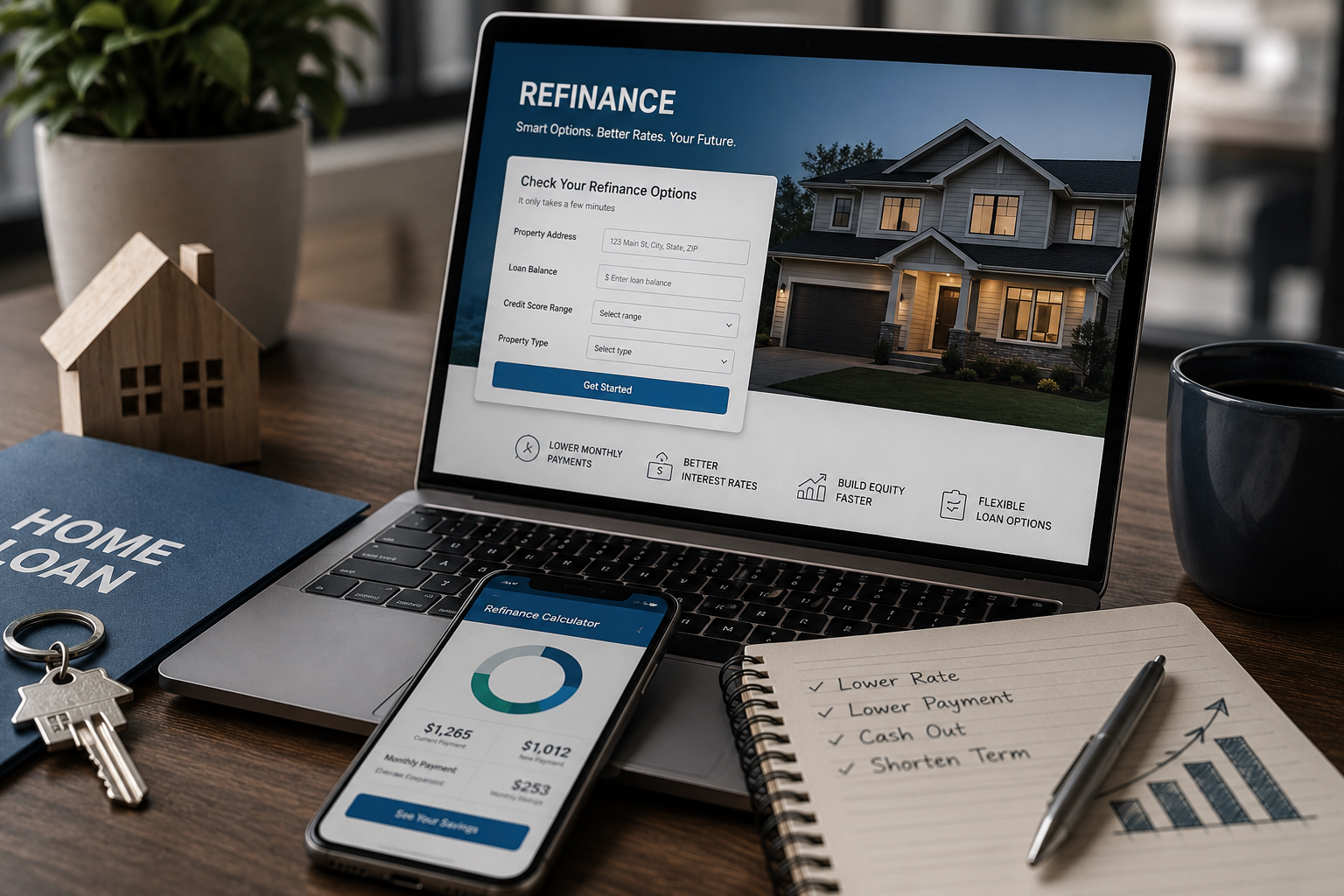
Refinancing a mortgage was once viewed as one of the most time consuming financial transactions a homeowner could undertake. The process often involved multiple in person meetings, stacks of paperwork, lengthy phone calls, repeated requests for documentation, and weeks or even months of waiting for updates. For many borrowers, refinancing was not only financially significant but also administratively exhausting.
Today, that experience is undergoing a remarkable transformation.
Advances in digital technology are reshaping nearly every stage of the refinance journey. From online rate comparisons and digital mortgage applications to automated income verification, electronic signatures, artificial intelligence (AI)-powered underwriting and secure document sharing, technology is making refinancing faster, more transparent and increasingly consumer friendly.
This shift reflects broader changes across financial services. Consumers have become accustomed to managing banking, investing, insurance and everyday purchases through smartphones and computers. As expectations for speed and convenience continue to grow, the mortgage industry has been under increasing pressure to modernize its refinancing process.
Digital platforms are helping lenders respond by reducing paperwork, improving communication, automating routine tasks and streamlining decision making. At the same time, borrowers are gaining greater visibility into loan options and application progress than ever before.
However, the digital transformation of refinancing also introduces new challenges involving cybersecurity, data privacy, digital accessibility and the balance between automation and personalized financial advice.
Understanding how digital platforms are reshaping the refinance experience provides insight into one of the most significant changes currently taking place in consumer mortgage lending.
The Traditional Refinance Process
Historically, refinancing required substantial manual effort from both borrowers and lenders.
A typical refinance often included:
- Scheduling appointments
- Completing lengthy paper applications
- Gathering tax returns
- Printing bank statements
- Providing employment documentation
- Mailing or delivering paperwork
- Waiting for manual underwriting decisions
Communication frequently occurred through:
- Phone calls
- Emails
- In-person meetings
The process often stretched over several weeks while documents moved between borrowers, loan officers, underwriters, appraisers and closing professionals.
Although these procedures helped ensure accurate lending decisions, they also created delays and administrative burdens.
Why Consumers Expect More Digital Experiences
Consumer expectations have changed dramatically over the past decade.
People now routinely use digital platforms to:
- Transfer money
- Shop online
- File taxes
- Manage investments
- Purchase insurance
- Book travel
- Sign legal documents electronically
These experiences have reshaped expectations for financial services.
Borrowers increasingly expect mortgage refinancing to provide:
- Faster applications
- Real time updates
- Mobile accessibility
- Secure digital communication
- Reduced paperwork
Digital mortgage platforms have emerged largely in response to these changing expectations.
Online Rate Comparisons Improve Transparency
One of the earliest ways technology changed refinancing involved interest rate research.
Previously, homeowners often contacted multiple lenders individually to compare offers.
Today, digital platforms allow borrowers to:
- Compare refinance rates
- Evaluate loan products
- Estimate monthly payments
- Review lender information
within minutes.
Greater transparency helps consumers better understand available options before beginning formal applications.
Although interest rates remain only one component of refinancing decisions, easier comparison has made consumers more informed participants in the lending process.
Digital Applications Reduce Administrative Burden
Paper mortgage applications required significant manual completion.
Digital platforms simplify much of this work.
Borrowers can now:
- Complete applications online
- Save progress
- Upload documents electronically
- Review information before submission
- Correct errors more easily
Many systems automatically populate repetitive fields, reducing duplicate data entry.
These improvements save time for both borrowers and lending institutions.
Secure Document Uploads Simplify Verification
Mortgage refinancing requires extensive financial documentation.
Examples include:
- Tax returns
- Pay stubs
- Bank statements
- W-2 forms
- Investment account records
- Identification documents
Digital platforms now allow secure document uploads through encrypted online portals.
This eliminates many traditional challenges associated with:
- Printing
- Faxing
- Mailing
- Physical document storage
Borrowers also gain confidence knowing required documentation remains organized within a single platform.
Automated Income and Asset Verification
Technology has significantly changed document verification.
Instead of manually reviewing every financial record, lenders increasingly use secure verification systems that with borrower authorization can access certain financial information electronically.
These tools may help verify:
- Employment
- Income
- Bank balances
- Asset ownership
Automation reduces processing time while minimizing manual errors.
Importantly, borrowers remain responsible for authorizing access where required.
Artificial Intelligence Is Accelerating Underwriting
Artificial intelligence has become an increasingly important component of mortgage refinancing.
AI systems help lenders:
- Organize financial data
- Detect inconsistencies
- Prioritize document review
- Identify missing information
- Support credit risk assessment
Rather than replacing human underwriters, AI often performs repetitive analytical tasks, allowing professionals to focus on more complex lending decisions.
This combination of technology and human oversight improves efficiency while maintaining regulatory compliance.
Real Time Application Tracking Reduces Uncertainty
One of the biggest frustrations associated with traditional refinancing involved limited communication.
Borrowers frequently wondered:
- Has my application been received?
- Is underwriting complete?
- Are additional documents needed?
- When will closing occur?
Modern refinance platforms increasingly provide application dashboards showing:
- Current processing stage
- Outstanding requirements
- Submitted documentation
- Estimated timelines
Greater transparency reduces uncertainty throughout the refinance process.
Electronic Signatures Accelerate Closing
Electronic signature technology has simplified many aspects of mortgage refinancing.
Borrowers may now review and sign numerous documents electronically where permitted.
Benefits include:
- Faster processing
- Reduced scheduling conflicts
- Fewer printing requirements
- Improved document tracking
Although certain documents may still require in-person notarization depending on local laws and transaction requirements, electronic signatures have significantly streamlined many refinance transactions.
Mobile Technology Is Increasing Accessibility
Consumers increasingly manage finances through smartphones.
Mortgage platforms have adapted accordingly.
Many refinance applications now allow borrowers to:
- Submit documentation
- Track progress
- Receive notifications
- Communicate with loan officers
- Review disclosures
using mobile devices.
This flexibility is particularly valuable for busy homeowners who may not have time to visit physical branch locations during business hours.
Personalization Is Becoming More Sophisticated
Digital platforms increasingly analyze borrower information to provide more personalized experiences.
For example, systems may recommend refinance options based on:
- Loan balance
- Credit profile
- Property characteristics
- Financial objectives
- Current interest rate environment
Rather than presenting identical information to every borrower, technology helps tailor recommendations to individual financial circumstances.
Personalization may improve decision-making while simplifying product comparisons.
Consumer Education Is Improving
Many refinancing platforms now include educational resources alongside loan applications.
Borrowers may access explanations covering:
- Closing costs
- Interest rates
- Loan terms
- Cash out refinancing
- Fixed versus adjustable rates
- Monthly payment estimates
Providing educational content within the application process helps consumers better understand financial decisions before committing to new mortgage terms.
Challenges of Digital Refinancing
Despite numerous advantages, digital refinancing also presents challenges.
Cybersecurity
Mortgage applications contain highly sensitive financial information.
Protecting borrower data requires strong encryption, secure authentication and continuous monitoring against cyber threats.
Data Privacy
Consumers increasingly want transparency regarding:
- Data collection
- Information sharing
- Third party access
- Storage practices
Maintaining trust requires responsible handling of personal financial information.
Digital Accessibility
Not every borrower possesses the same level of technological confidence.
Some consumers continue preferring:
- In-person guidance
- Telephone conversations
- Paper documentation
Lenders increasingly recognize the importance of offering multiple communication options.
Complex Financial Situations
Automation works well for straightforward refinance applications.
However, unique circumstances involving:
- Self employment
- Multiple income sources
- Complex investments
- Irregular financial histories
often continue requiring experienced human review.
Technology supports these cases but rarely replaces professional judgment entirely.
Human Expertise Still Matters
Despite rapid digital transformation, refinancing remains a significant financial decision.
Experienced mortgage professionals continue helping borrowers:
- Understand loan structures
- Compare financing options
- Evaluate long term affordability
- Interpret closing costs
- Navigate unusual circumstances
Technology improves efficiency.
Human expertise provides context.
Successful refinance experiences increasingly combine both.
The Future of Digital Refinancing
Technology is likely to continue reshaping mortgage refinancing over the coming years.
Future innovations may include:
- More sophisticated AI underwriting
- Enhanced fraud detection
- Faster property valuation tools
- Expanded digital closings
- Personalized financial planning support
- Improved borrower communication through intelligent automation
The industry is gradually moving toward refinance experiences that are faster, simpler and more transparent while maintaining appropriate regulatory safeguards.
Looking Ahead
Digital platforms are changing more than the speed of refinancing; they are changing borrower expectations.
Homeowners increasingly value convenience, visibility, and flexibility alongside competitive interest rates. As technology continues to evolve, lenders that combine efficient digital tools with knowledgeable human support are likely to be better positioned to meet the needs of modern borrowers.
At the same time, ongoing attention to cybersecurity, privacy and equitable access will remain essential as digital mortgage lending becomes even more widespread.
Digital platforms are transforming the refinance experience by reducing paperwork, automating routine tasks, improving communication, and giving homeowners greater control over the lending process. Online applications, secure document sharing, AI-assisted underwriting, electronic signatures and real time application tracking have made refinancing faster and more transparent than in the past.
These innovations benefit both borrowers and lenders by increasing efficiency and simplifying many administrative aspects of mortgage lending. However, technology does not eliminate the need for careful financial decision making or experienced professional guidance, particularly in complex situations.
As the mortgage industry continues its digital evolution, the most successful refinance experiences will likely combine advanced technology with personalized expertise. For homeowners, this means greater convenience without losing sight of the long term financial considerations that make refinancing one of the most important borrowing decisions they may ever make.