

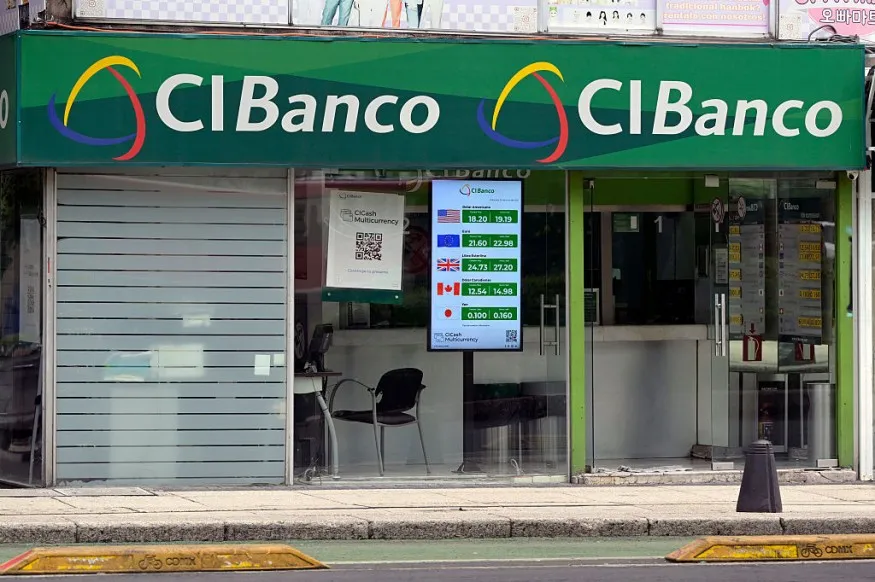
Earlier this year, in June, the U.S. Treasury Department announced sanctions against three Mexican financial institutions, alleging they were used by drug cartels to launder millions of dollars and to facilitate payments for precursor chemicals used in the production of fentanyl.
In the months that followed the announcement, the Mexican government launched investigations into CIBanco, Intercam Banco and the brokerage firm Vector Casa de Bolsa. These actions convinced the Treasury Department to grant a temporary reprieve, citing Mexico’s progress in addressing money laundering by drug trafficking cartels.
Despite the reprieve, one of the banks originally sanctioned by the United States began liquidating its assets this week after Mexican authorities revoked its operating license.
On Oct. 10, Mexico’s Bank Savings Protection Institute (IPAB) announced that CIBanco’s license was revoked due to suspected money laundering linked to drug trafficking, as alleged by U.S. authorities in June.
As reported by Animal Político, the agency said it would begin compensating account holders on Oct. 13 with guaranteed obligations from the financial institution. It added that individuals with bank accounts at CIBanco would be protected up to 400,000 investment units (UDIs) per person.
Investment units, or UDIs, are inflation-linked instruments created during Mexico’s 1990s financial crisis to help stabilize the economy and safeguard savings. Their value fluctuates with changes in inflation and overall price levels.
As reported by The Latin Times in June, the U.S. Financial Crimes Enforcement Network (FinCEN) said investigations by authorities found that CIBanco and Intercam facilitated transfers to two unnamed U.S. financial institutions, while Vector facilitated a transfer to another unidentified U.S. bank.
The Treasury said CIBanco helped launder money for several Mexican cartels, including the Jalisco New Generation Cartel (CJNG), the Beltrán Leyva Organization and the Gulf Cartel. Officials said the bank “facilitated procurement” of fentanyl precursor chemicals shipped from China by processing more than $2.1 million in payments.
Nearly two months after the sanctions were announced, Animal Político reported that CIBanco filed a lawsuit in a U.S. federal court, arguing the “erroneous orders” put $40 billion in U.S. funds at risk.
In August, Mexico’s Finance Ministry announced that, following an internal evaluation process, it had approved the transfer of CIBanco’s trust division to Banco Multiva S.A., a multiple banking institution within Grupo Financiero Multiva. The move was intended to ensure the continuity of existing contracts and the full protection of trusts and their beneficiaries.
Following the revocation of CIBanco’s license, the IPAB released information for customers, noting that some branches would remain closed as of Oct. 10.
It also provided a list of CIBanco branches that would reopen on Monday, Oct. 13, but only for account-related inquiries, clarifications or to submit requests for guaranteed payments, adding that these locations will not process any active banking operations or services.
The revocation comes less than a month after John K. Hurley, U.S. under secretary for terrorism and financial intelligence, visited Mexico to strengthen cooperation against illicit financing, drug trafficking and cartel operations. During the visit, Hurley met with members of Mexico’s banking sector and emphasized the role of financial institutions in cutting off cartel funding.
In a statement announcing Hurley’s visit, the Treasury Department reiterated that the United States “will not permit Mexico-based drug cartels to access the U.S. financial system.”
Originally published on Latin Times