

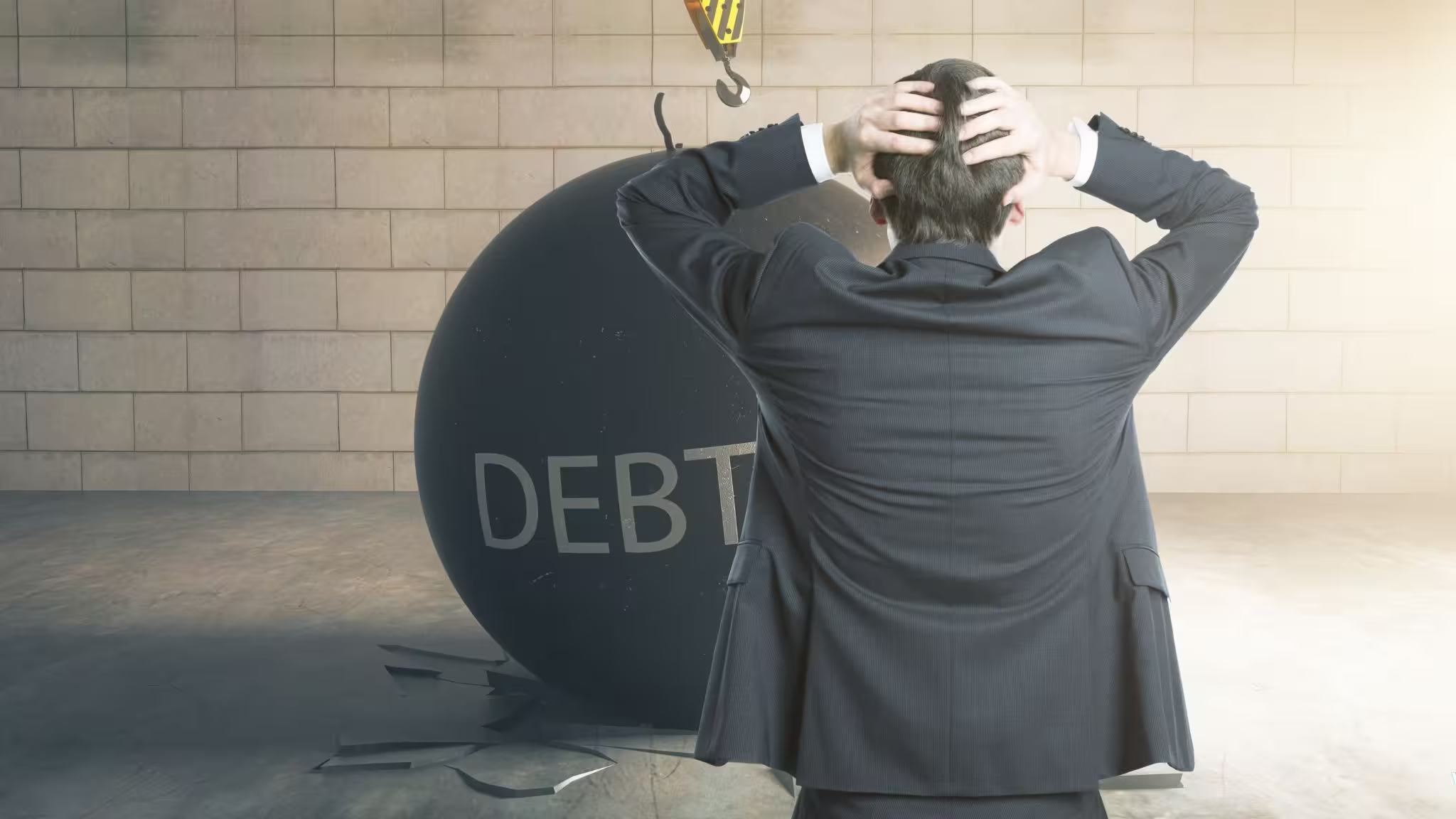
For years, America’s debt crisis simmered quietly beneath the surface visible in scattered data points, hinted at in household surveys, but rarely acknowledged as a systemic issue. That’s no longer the case. Today, debt has become one of the clearest indicators of how the modern economy is stretching families beyond their limits.
Across the country, more people are enrolling in debt relief programs not as an act of financial collapse but as a form of economic adaptation. The trend reflects a deeper truth: the cost of living has risen faster than the tools Americans have traditionally relied on to manage it.
A Debt Burden That Tells a Bigger Story
The United States now holds more household debt than at any point in its history, exceeding $17.5 trillion. But what matters isn’t just the size of that number it’s what’s driving it.
Credit card balances have climbed above $1.1 trillion, despite consumers paying some of the highest interest rates in decades. Many families aren’t overspending on luxuries; they’re financing essentials like food, childcare, and transportation. The line between “unexpected expense” and “daily survival” has blurred.
The economic narrative is shifting: debt is becoming less of a personal financial issue and more of a structural consequence of rising costs and stagnant wages.
Why Debt Relief Programs Are Seeing a Surge
The recent uptick in debt relief enrollment is not a sign of poor financial discipline it’s a reflection of economic pressure points that have accumulated over the past few years. Several key forces are driving families toward structured relief:
1. The New Reality of High Interest Rates
With average credit card APRs crossing 21–24%, minimum payments no longer serve their original purpose. Many households are realizing that even steady payments barely chip away at principal.
In this environment, traditional budgeting strategies lose their effectiveness.
2. Savings Have Been Exhausted
Emergency funds that were temporarily boosted during the pandemic are now largely depleted. As everyday expenses rise, saving has become a luxury rather than a routine financial practice.
Without a cushion, one medical bill or car repair can push families toward insolvency.
3. Refinancing Options Have Become Scarce
Before rates increased, refinancing high-interest card debt with a personal loan was a common escape route. But lenders have tightened credit standards, especially for borrowers showing signs of financial stress.
The result: fewer lifelines, more people seeking structured relief.
4. Debt Stress Is Becoming a Public Health Concern
Financial stress is now one of the most frequently cited sources of anxiety among Americans. As conversations around mental health grow more open, the stigma around seeking debt help has weakened.
Debt relief is increasingly viewed as a rational, proactive step rather than a last resort.
5. Families Are Rethinking What “Financial Stability” Means
The idea that stability comes from simply “paying on time” feels outdated. Households are prioritizing long-term solvency over short-term appearances, choosing programs that offer a realistic path back to financial balance.
The Shifting Economics of the American Household
The rise in debt relief usage reveals more than individual hardship it exposes a deeper restructuring of the household economy.
For decades, American growth depended heavily on consumer spending. But when consumer finances tighten, the ripple effects spread:
- Retail spending slows, affecting corporate earnings.
- Consumer credit markets destabilize, with rising delinquencies.
- Banks respond by tightening lending, further restricting household options.
- Local economies feel the strain, especially in regions where disposable income drives small business activity.
Some economists warn that if high rates persist, pressure may spread to auto loans and personal credit markets areas that have already shown early signs of stress.
Relief Programs as a Form of Financial Adaptation
What’s most revealing is how Americans are reframing their approach to debt. The shift toward relief programs suggests a new mindset: people are no longer trying to “tough it out” in an environment that has fundamentally changed.
Instead, they’re choosing structure over chaos, negotiated debt over compounding interest, and long-term recovery over short-term appearances.
Contrary to outdated assumptions, this isn’t a story of irresponsibility. It’s a story of households trying to recalibrate in an economy where traditional financial advice no longer aligns with economic reality.
The Bigger Question
The growing reliance on debt relief programs raises an uncomfortable question for policymakers and economists:
If so many families need structured help, is the problem really individual behavior or the economic system itself?
For now, what’s clear is that Americans are adapting. They are looking for solutions that give them space to breathe, rebuild, and regain control in a landscape defined by high prices, high rates, and narrowing financial margins.
Whether this marks a temporary response to economic volatility or a permanent shift in how the country manages household debt will shape the next decade of financial policy and the stability of millions of families.