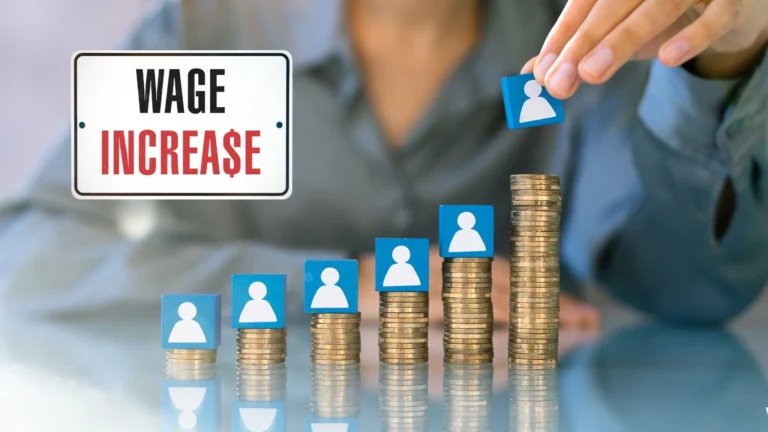
For more than a year, policymakers have pointed to one bright spot in an otherwise complicated economy: wages are rising. On paper, that’s true. Earnings have climbed across several sectors, especially in service-focused jobs that historically lagged behind. Yet if you ask most American families how they’re doing, the answer rarely aligns with the numbers. Many say they feel more financially strained, not less.
It’s a contradiction that’s become one of the defining economic puzzles of the post-pandemic decade. And it’s not hard to understand once you zoom in on what’s actually happening beneath those wage-growth headlines.
Nominal Wage Growth vs. Real-Life Price Pressure
Most wage reports track nominal growth and the raw increase before considering inflation. Families, of course, live in the real world, where inflation quietly rewrites the value of every dollar. According to the latest federal data, inflation has cooled from its peak, but the leveling-off has done nothing to reverse the price hikes already baked into essentials.
Wages rose, but essential costs rose faster and stayed high.
Housing, insurance, groceries, utilities, and transportation now consume a larger share of the median household budget than they did before 2020. Even a small bump in income can’t catch up with the compounding effect of four years of elevated prices.
A raise that looks healthy on a government chart often feels invisible by the time it reaches a family’s kitchen table.
Housing: The Pressure Point That Won’t Ease
The single largest weight on the typical family is housing whether renting or buying.
- Rents are up across major metros and small cities alike.
- Homeownership remains out of reach for millions, with high mortgage rates locking out first time buyers.
- Insurance premiums homeowners and auto have surged, adding hundreds to annual bills.
- Maintenance and utilities have increased too.
When housing absorbs 35-50% of income, wage gains don’t feel like progress; they feel like survival.
Inflation’s Shadow: Stickier Than Expected
Economists often describe inflation as cooling, but families don’t live in aggregates; they live in line items. And the line items that matter most aren’t cooling fast enough.
- Grocery prices didn’t fall; they plateaued at a higher baseline.
- Childcare costs continue rising.
- Medical bills and health insurance premiums have climbed steadily.
- Auto repairs and car insurance have hit the highest levels in decades.
In other words, even if inflation is “down,” the cost of living remains reset at a level that wages have not fully bridged.
Debt: The Silent Absorber of Wage Gains
Consumer debt has quietly filled the gap between what families earn and what life costs.
Credit card balances and interest rates are at record highs, and Buy Now, Pay Later services have become the default safety valve for millions. Every dollar that goes toward interest is a dollar that wage growth can’t help.
This dynamic creates a dangerous cycle: wage increases are absorbed not by improved living standards but by yesterday’s expenses.
Childcare and Healthcare: The Unavoidable Budget Busters
Two categories consistently outpacing wage growth are childcare and healthcare expenses that families cannot simply “cut back” on.
In many regions, childcare now rivals mortgage payments. Healthcare premiums can climb by hundreds of dollars year-over-year, even for employer sponsored plans. These are non-negotiable costs, and they eat into wage gains faster than any discretionary budget ever could.
Psychological Inflation: The Feeling That Money Doesn’t Go Far Enough
Economics doesn’t formally track “sentiment inflation,” but it exists.
After years of price volatility, families have adjusted to a new emotional baseline: one where financial stability feels more fragile. Even if paychecks technically stretch a bit further, the memory of rapid price changes and uncertain markets keeps people cautious.
In short, people don’t feel richer because their money doesn’t feel reliable.
Where Does This Leave the Middle Class?
The middle class, the group most sensitive to shifts in cost structures, is feeling the squeeze more acutely than at any point in recent memory. Wage growth is happening, but it’s being outpaced by structural, persistent, and often unavoidable expenses.
The data tells one story. Daily life tells another.
And until the core costs of American life housing, insurance, healthcare, childcare, and debt servicing stabilize or decline, wage growth will continue to feel like a statistic rather than actual relief.
The debate isn’t whether wages are rising; they are.
The question is whether the economic environment allows those rising wages to translate into a measurable improvement in household life.
Right now, the answer is increasingly clear: not yet.