

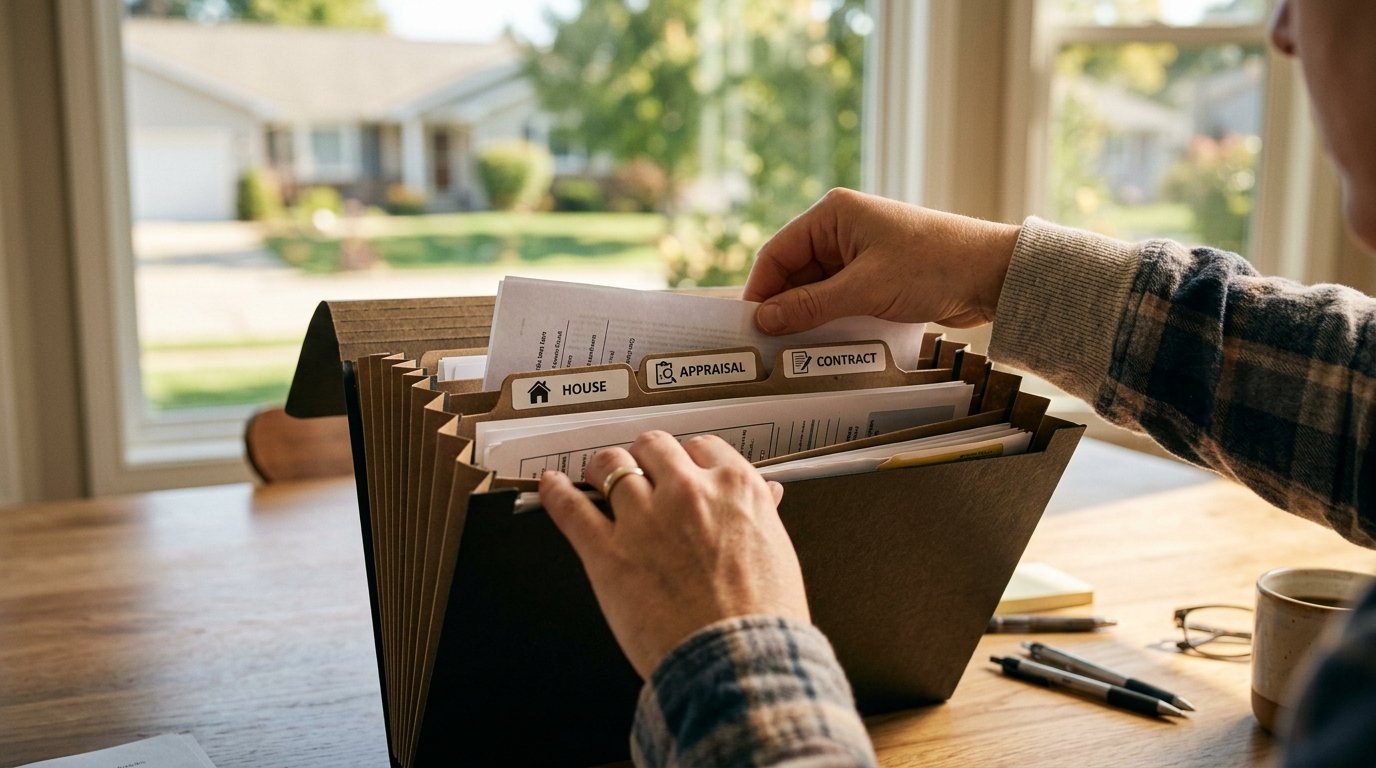
Buying homeowners insurance is easier when you have the right information ready before requesting quotes. Insurers need to understand the property they are being asked to protect, estimate how much it could cost to rebuild, evaluate potential risks, and determine which coverage options may be appropriate. Missing or inaccurate information can lead to follow-up questions, delayed quotes, or coverage that does not accurately reflect the home.
The good news is that homeowners do not necessarily need a thick folder of official paperwork to get started. In many cases, an insurance application can be completed using basic property information, mortgage details, previous insurance records and supporting documents such as inspection reports or receipts for recent renovations.
However, the exact requirements vary by insurer, state, property type, and underwriting rules. Some companies may request additional documentation before issuing a policy, while others can provide an initial quote using information supplied by the applicant. The National Association of Insurance Commissioners (NAIC) recommends gathering detailed information about the home, its construction, its systems and its protective features before shopping for coverage.
Here are eight types of documents and records homeowners should prepare before buying a policy.
1. Property Ownership Records and the Home’s Address
Why it matters: Establishing which property is being insured and confirming the applicant’s relationship to it.
Start with documents and records that confirm the home’s location and ownership details. Insurers need the correct property address and information about the person or people applying for coverage.
Useful records include:
- The property’s deed or other ownership documentation.
- The purchase agreement or closing statement, if the home was recently purchased.
- The property’s full street address, including the ZIP code.
- The year the home was purchased, and if known, the year it was built.
- The names of the owners who should be listed on the policy.
- Any relevant documentation concerning a trust or other ownership arrangement, if applicable.
A deed or closing document is not necessarily required by every insurance company. Some insurers can verify property information through public records or other databases. Nevertheless, having ownership records available can help resolve discrepancies, particularly when the property has recently changed hands.
The address deserves special attention. A small error in a street number, ZIP code, or property description can create confusion during underwriting or when the policy is issued. Applicants should confirm that the information on the quote matches the actual property being insured.
Homeowners should also distinguish between the property’s market value and its estimated rebuilding cost. The purchase price reflects the real estate transaction, including the land and market conditions. Dwelling coverage, by contrast, should generally be based on the estimated cost of rebuilding the insured structure after a covered loss.
What to do before applying: Keep a copy of the closing paperwork or ownership record nearby, but also write down the exact property address and year built. Do not assume the purchase price alone is enough to establish the correct dwelling coverage limit.
2. Mortgage Statements and Lender Information
Why it matters: Helping the insurer identify the mortgage company and meet any lender related insurance requirements.
Homeowners who finance their property should gather their current mortgage statement or other documentation identifying their lender. Most mortgage lenders require borrowers to maintain homeowners insurance, subject to the terms of the mortgage agreement.
The insurer may need the lender’s name and mailing address so it can list the appropriate mortgagee on the policy and send relevant notices or proof of coverage.
Prepare the following information where applicable:
- The mortgage lender’s full legal name.
- The lender’s mortgagee clause or insurance mailing address.
- The mortgage loan number, if requested.
- A recent mortgage statement showing the lender and property address.
- The closing or loan documents if the mortgage is new.
- Information about any second mortgage or home equity loan that needs to be disclosed.
A mortgage statement is often a convenient source of lender information, but the insurance company may have its own instructions for how the lender should be listed. Homeowners should ask their mortgage servicer for the correct mortgagee clause when necessary rather than guessing at the wording.
The distinction between the lender’s mailing address and the property’s physical address is important. They serve different purposes and should not be substituted for one another.
Homeowners who own their properties outright may not need mortgage documentation. They should still provide accurate ownership and property information, and they may want to review whether the absence of a mortgage changes how they choose coverage limits or manage insurance payments.
What to do before applying: Find the latest mortgage statement and confirm the lender’s insurance instructions. If you are purchasing a home, ask your mortgage professional whether proof of insurance must be submitted before closing and when the policy needs to become effective.
3. Property Details, Real Estate Listings and Building Information
Why it matters: Helping the insurer estimate rebuilding costs and assess the home’s characteristics.
An insurer needs more than the address to evaluate a home. The construction type, size, layout, age, materials, and condition of the property can affect the cost of repairing or rebuilding it and the risks associated with insuring it.
Useful documents and records include:
- A real estate listing with the home’s size and features.
- An appraisal report, if available.
- Building plans or architectural drawings, if available.
- Property assessment records.
- Records showing the number of floors, bedrooms, and bathrooms.
- Details about the exterior materials, roofing type, flooring and interior finishes.
- Information about detached garages, sheds, fences, pools and other structures.
A real estate listing can be a practical starting point because it may contain the square footage, construction year, room count and descriptions of upgrades. However, listings can be outdated or inaccurate. Homeowners should verify important details rather than copying every listing entry directly into an insurance application.
The construction materials matter, too. A home with a brick exterior, a home with wood siding, and a home with specialized architectural features may have different rebuilding costs and underwriting considerations.
Homeowners should also identify features that could affect liability or coverage, including swimming pools, trampolines, detached buildings, or certain home-based business activities. Whether a particular feature affects eligibility or price depends on the insurer’s rules.
According to the NAIC’s homeowners insurance shopping tool, insurers may ask about the home’s square footage, roof type and age, construction style, flooring, kitchen finishes, heating and electrical systems, and protective devices. An appraisal or real estate listing may help homeowners find some of this information.
What to do before applying: Save a copy of the listing or property fact sheet and verify the measurements and features against what is actually on the property. Flag any major differences, such as an added room or converted garage, for the insurer.
4. Roof Records, Renovation Receipts, Permits, and Inspection Reports
Why it matters: Supporting information about the home’s condition, maintenance, and recent improvements.
The roof and major building systems can influence an insurer’s assessment of risk. A recently replaced roof may be viewed differently from an older roof with signs of deterioration, although insurers apply different rules depending on location, materials, age and condition.
Homeowners should gather records showing the age and condition of important parts of the property.
These may include:
- Roof replacement invoices and warranties.
- Contractor receipts for major repairs.
- Building permits and final inspection approvals for permitted work.
- Reports from a home inspection.
- Documentation of plumbing, electrical, heating, or air conditioning upgrades.
- Receipts for water-damage prevention or other property improvements.
- Records of structural repairs, if relevant.
For example, a homeowner who replaced an aging roof two years ago may have an invoice that confirms the installation date, materials used, and contractor details. If an insurer asks for evidence of the roof’s age, that record may be more useful than an estimate based on the home’s original construction date.
Similarly, documentation of updated electrical wiring or plumbing may help clarify the condition of older systems. Renovation records can also help identify whether the current description of the property remains accurate.
However, homeowners should not assume that a new roof or upgraded system automatically qualifies them for a discount. The insurer may need to verify the work and discounts depend on the company’s underwriting and rating rules. Some insurers may also request photographs, a specialized roof inspection or another form of property inspection.
It is important to disclose major renovations accurately. An addition, finished basement, or substantial kitchen remodel can change the home’s rebuilding cost. If the insurer evaluates an outdated description of the property, the resulting coverage estimate may not reflect the home’s current condition.
What to do before applying: Organize renovation receipts by project and date. Keep permits and inspection approvals where applicable and ask the insurer which documents it accepts as proof of roof replacement or system upgrades.
5. Previous Homeowners Insurance Policy and Claims History
Why it matters: Helping the new insurer understand existing coverage, previous losses and the property’s insurance history.
If the home is already insured, keep a copy of the current or most recent homeowners insurance policy. The declarations page is particularly useful because it summarizes key information, including the insured property, policy period, coverage limits, premium and mortgage holder.
Useful records include:
- The current policy’s declarations page.
- The policy’s coverage summary and endorsements.
- The current premium and deductible amounts.
- The existing insurer’s name and contact details.
- Information about prior claims involving the property.
- Claim settlement letters or repair documentation, where relevant.
- The previous policy’s expiration or cancellation date.
Homeowners switching insurers can use their existing policy as a reference point when comparing quotes. It helps them see whether a new offer changes the dwelling limit, personal property coverage, liability protection, deductible, or treatment of particular risks.
A lower premium is not necessarily a better deal if the replacement policy includes a substantially higher deductible or less comprehensive protection. Comparing declarations pages and relevant endorsements can help reveal those differences.
Claims history is another important consideration. Insurers may ask about previous property losses, and they may obtain claims-history information through industry databases such as the Comprehensive Loss Underwriting Exchange (C.L.U.E.) or similar reports. The NAIC explains that claims history can influence underwriting and premiums.
Homeowners should answer questions about previous claims honestly and accurately. They should not assume that a claim is irrelevant simply because repairs have been completed or the prior insurer paid the settlement.
At the same time, applicants do not necessarily need to assemble every historical claim file before requesting an initial quote. The level of detail required depends on the insurer and the questions in the application.
What to do before applying: Locate the latest declarations page, note the policy’s expiration date, and prepare a factual summary of any relevant prior losses. If you are unsure about a claim’s date or status, review the original paperwork instead of relying on memory.
6. A Home Inventory, Receipts and Appraisals for Valuable Belongings
Why it matters: Helping homeowners estimate personal property coverage and identify items that may need special protection.
Homeowners insurance may cover personal belongings such as furniture, clothing, appliances, electronics and other possessions, subject to the policy’s terms, exclusions, limits and deductible.
A home inventory can help homeowners estimate the amount of personal property coverage they need. It also creates a record that may be useful if they later need to document a covered loss.
A useful inventory includes:
- A room by room list of belongings.
- Photographs or videos of important possessions.
- Purchase receipts for higher value items.
- Brand names, model numbers and serial numbers when available.
- Approximate purchase dates and prices.
- Appraisals or authenticity records for jewelry, art, antiques and collectibles.
- Receipts for recently purchased furniture, appliances or electronics.
The NAIC recommends recording belongings, preserving photographs or videos, keeping relevant receipts and appraisals and storing the inventory somewhere secure and accessible.
For example, a homeowner might own several laptops, a large television, expensive photography equipment and a collection of jewelry. A rough estimate of the total value of those belongings may be helpful, but an itemized inventory gives a clearer picture of what the household actually owns.
Valuable items deserve special attention. Standard policies may apply specific limits to categories such as jewelry, art or collectibles, even when the overall personal property limit is relatively high. Depending on the insurer and policy, a scheduled personal property endorsement or separate coverage may be appropriate.
Homeowners should also understand the difference between actual cash value and replacement cost coverage. Actual cash value generally accounts for depreciation, while replacement cost coverage generally aims to pay the cost of replacing covered property with items of similar kind and quality, subject to the policy’s terms and limits.
An inventory does not usually need to be complete before a homeowner can obtain an initial quote. However, preparing one can help prevent an arbitrary estimate from understating the value of the household’s possessions.
What to do before applying: Start with the most valuable items and work through the home room by room. Keep digital copies of photographs and receipts in a secure location separate from the property itself.
7. Home Security, Safety and Risk Reduction Records
Why it matters: Providing evidence of protective features that may affect underwriting or eligibility for discounts.
Insurers may ask whether the home has devices or features designed to reduce the likelihood or severity of certain losses. Depending on the property and insurer, these can include monitored alarms, smoke detectors, automatic sprinkler systems, deadbolt locks and water leak detection equipment.
Homeowners should prepare relevant details, such as:
- Alarm installation and monitoring records.
- Receipts for security systems.
- Documentation of smoke and carbon monoxide detectors.
- Records of fire suppression or sprinkler systems.
- Receipts for water leak sensors or automatic shutoff devices.
- Documentation of storm resistant improvements, where applicable.
- Information about other safety features requested by the insurer.
Not every safety feature requires formal paperwork. An insurer may simply ask whether a device is installed and functioning. In other cases, a company may request proof of installation, professional certification or confirmation that an alarm is actively monitored.
These details matter because a home’s risk profile is influenced by more than its age and construction. Security features and risk reduction measures may affect the insurer’s assessment and, when the company offers applicable discounts, the premium. The NAIC identifies protective devices among the factors insurers may consider when pricing homeowners coverage.
However, homeowners should not purchase expensive equipment solely on the assumption that it will produce an insurance discount. The potential savings depend on the insurer, the type of device, installation requirements and the property’s characteristics.
What to do before applying: Make a short list of the home’s safety features and gather receipts or monitoring documents for systems that may require verification. Ask each insurer which improvements, if any, qualify for a discount.
8. Applicant Identification and Contact Information
Why it matters: Completing the application and ensuring the insurer can communicate with the correct applicant.
Homeowners should also prepare the personal information requested by the insurer. Although this information is not specific to the building, it is part of the application process.
Depending on the company and state, the application may request:
- The applicant’s full legal name.
- Date of birth.
- Current mailing address.
- Phone number and email address.
- Information about other owners or residents, when relevant.
- Details about the property’s occupancy.
- The anticipated policy start date.
- Other information needed for underwriting or identity verification.
Some insurers may request a Social Security number or other identifying information as part of their process. Requirements vary, so applicants should use the insurer’s official website or a verified agent and provide sensitive information only through an appropriate, secure channel.
Occupancy information also matters. A home occupied by its owner may be evaluated differently from a property that is rented to tenants, used as a seasonal residence or left vacant for extended periods. The correct policy type depends on the property’s actual use and the insurer’s rules.
Homeowners should disclose whether the property will be their primary residence, a secondary home, or a rental property. They should also explain any unusual circumstances that the application asks about, such as ongoing construction or an extended vacancy.
Accurate information at the application stage can help reduce the risk of misunderstandings later. Applicants should not guess at answers simply to finish the form more quickly.
What to do before applying: Gather the required identification and contact details, confirm the property’s occupancy status, and review every answer before submitting the application.
Which Documents Should You Prepare First?
Not every document on this list will be required for every application. The following table separates the most useful starting records from documents that may be needed in specific circumstances.
| Document or record | Priority | Main purpose |
| Property address and ownership details | Essential starting information | Identifies the property and applicant |
| Mortgage lender information | If mortgaged | Helps correctly list the lender |
| Property details or real estate listing | Highly useful | Supports the property’s description and rebuilding estimate |
| Roof, renovation, and inspection records | When available or requested | Documents the home’s condition and improvements |
| Existing policy declarations page | If currently insured | Makes coverage comparisons easier |
| Claims information | As requested | Supports accurate underwriting answers |
| Home inventory and valuable-item records | Strongly recommended | Helps estimate personal property coverage |
| Security and safety documentation | If relevant | May support underwriting or discount eligibility |
| Applicant identification and contact details | As requested | Completes the application |
The most efficient approach is to begin with the basic information needed for a quote and then supply supporting documents when the insurer requests them. The NAIC’s homeowners insurance shopping tool provides a useful framework for gathering property details before comparing offers.
How to Organize Your Documents Before Requesting Quotes
Preparing documents is more useful when the information is organized in a way that makes it easy to compare insurers and respond to follow up questions.
Consider these five steps:
1. Create one digital folder. Store your property details, mortgage information, existing insurance documents, renovation records and home inventory together. Use clear filenames and keep backup copies in a secure location.
2. Separate confirmed facts from estimates. If you know the roof was replaced in 2022, record that date and keep the supporting invoice. If you only have an approximate roof age, label it as an estimate rather than presenting it as a verified fact.
3. Check for outdated information. Confirm that the property’s square footage, occupancy, renovation history, and mortgage details are current. An old listing may not reflect a new addition or other changes.
4. Request missing records when necessary. A mortgage servicer may be able to provide the correct mortgagee clause. A roofing contractor may have an invoice or warranty. Local building authorities may hold permit records for certain renovations.
5. Compare equivalent coverage. When you receive quotes, review more than the annual premium. Compare dwelling limits, personal property coverage, liability limits, deductibles, exclusions, endorsements and whether covered belongings are insured at actual cash value or replacement cost.
These steps can make the process more organized, but they do not guarantee that every insurer will offer coverage. Insurers apply their own eligibility standards and some properties may require additional inspection or underwriting review.
Common Mistakes to Avoid When Preparing Insurance Documents
Even homeowners who gather plenty of paperwork can overlook information that matters. Avoid these common mistakes before submitting an application.
Using the home’s purchase price as its rebuilding cost. The market value of a home includes land and reflects local real estate conditions. Rebuilding estimates focus on the cost of reconstructing the insured structure.
Assuming every document is mandatory. An insurer may be able to quote a policy without a deed, full home inventory or every renovation receipt. Ask what is actually required instead of delaying the process while trying to collect unnecessary paperwork.
Forgetting recent improvements. A finished basement, new addition, renovated kitchen, or replacement roof may affect the home’s description or rebuilding estimate.
Ignoring special belongings. High-value jewelry, art, antiques and collectibles may be subject to category limits. A household inventory can help identify whether additional protection is worth considering.
Failing to disclose previous claims accurately. Answer application questions carefully and use available records when you are uncertain about dates or details.
Comparing policies on price alone. Two quotes with similar premiums may offer different deductibles, limits, exclusions, or optional protections. Review the actual coverage terms before choosing.
Waiting until the last minute to arrange coverage. Home purchases often involve closing deadlines, and mortgage lenders may require proof of insurance before closing. Confirm the required effective date early enough to address any underwriting questions.
Final Thoughts
Getting homeowners insurance does not have to involve a complicated paperwork process. The most important starting points are accurate property details, mortgage information when applicable, a clear understanding of the home’s condition and any existing insurance records.
Supporting documents such as renovation invoices, inspection reports, home inventories, and security system receipts can make it easier to answer questions and evaluate coverage. Some may also help establish whether the home qualifies for particular underwriting considerations or discounts.
Homeowners should remember that documentation is only one part of buying the right policy. The goal is not simply to complete an application quickly or obtain the lowest available quote. It is to secure coverage that reflects the home’s rebuilding needs, protects personal belongings appropriately, and fits the household’s financial circumstances.
Before choosing a policy, review the proposed limits, deductibles, exclusions and endorsements. If anything is unclear, ask the insurer or licensed insurance professional to explain it in writing. A little preparation before applying can make it easier to compare policies confidently and reduce avoidable delays.