

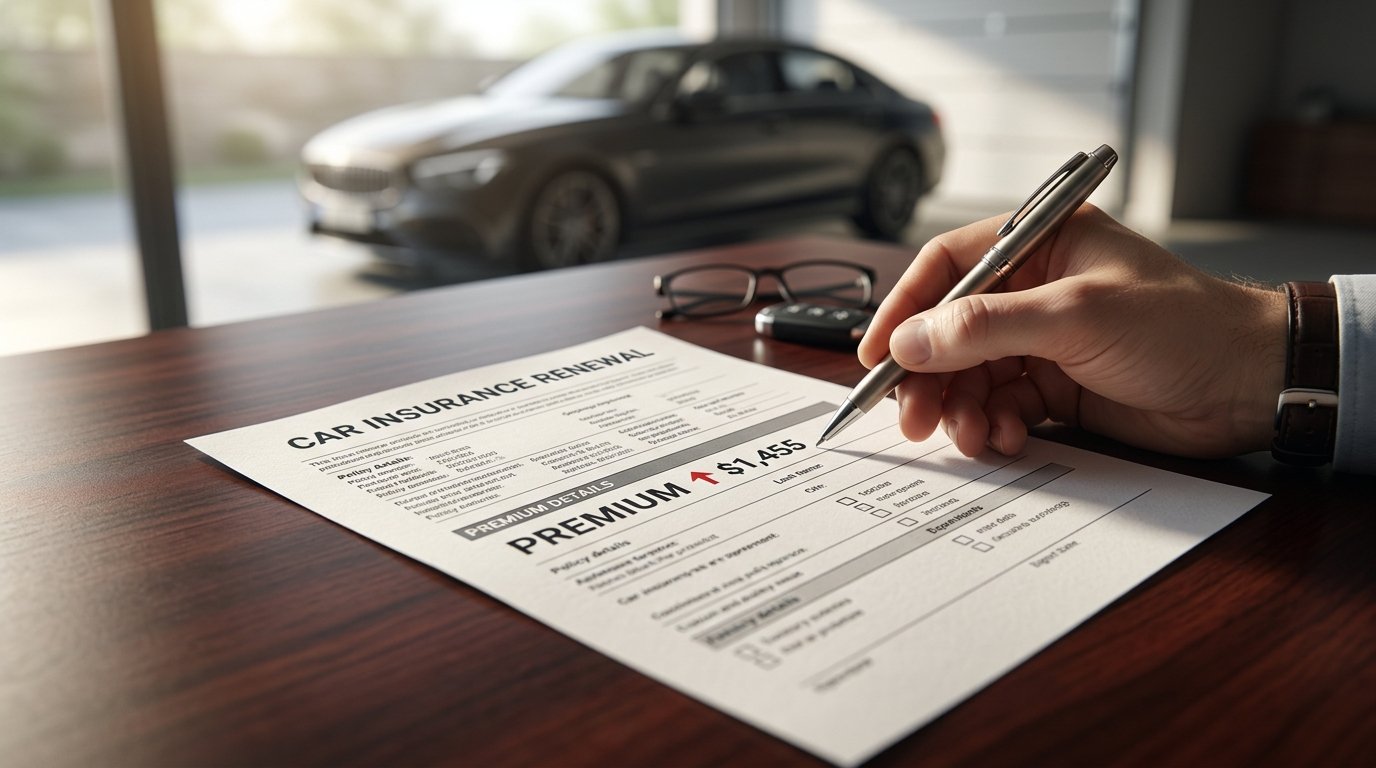
Receiving a higher car insurance bill at renewal can be frustrating, especially if you have not had an accident, received a traffic ticket or filed a claim during the previous policy term.
However, a clean driving record does not guarantee that your premium will remain unchanged. Auto insurers consider several factors when calculating rates, including your driving history, claims experience, location, vehicle, selected coverage and the expected cost of future claims. Changes in these factors or broader adjustments to an insurer’s rates can affect what you pay when your policy renews.
Your renewal premium may increase because of something that changed in your personal circumstances. It may also rise because repairing vehicles has become more expensive or because insurers are experiencing more costly claims in your area.
Understanding the reasons behind a renewal increase can help you decide whether to request a review, look for discounts, adjust your coverage or compare quotes from other insurers.
Here are six reasons your car insurance premium may rise at renewal and what you can do about each one.
1. Your Driving Record or Claims History Has Changed
Your driving record is one of the factors insurers may use to assess risk. A recent speeding ticket, at fault accident or other driving violation can affect your premium when the policy renews.
Insurers use underwriting and rating systems to estimate the likelihood and potential cost of future claims. Drivers with certain violations or accidents may be considered higher risk, which can lead to higher premiums. The effect depends on the insurer, the type of incident, the driver’s history and applicable state regulations.
How an accident can affect your renewal
Suppose you were involved in an at fault collision during your previous policy term. Your insurer may reassess your risk when calculating the renewal premium.
The increase, if any, can depend on several factors:
- Whether the accident was considered your fault.
- The severity of the accident and resulting claims.
- Your previous driving and claims history.
- Whether accident forgiveness or another applicable feature applies.
- Your insurer’s rating rules and state regulations.
Not every accident results in the same premium adjustment. Some insurers offer accident forgiveness to qualifying policyholders, but eligibility requirements and the treatment of future incidents vary.
What if you filed a claim without causing an accident?
A claim can prompt an insurer to review the policy, but the effect on the premium is not automatic or identical across companies.
For example, a comprehensive claim involving theft, hail or a fallen tree may be treated differently from an at fault collision. The insurer’s rules and state law help determine how the incident affects the renewal.
It is also important to distinguish an individual claim from broader claims trends. An insurer may raise rates across a group of customers because of rising claim costs, even when a particular driver has not filed a claim.
What you can do
Review your renewal documents and ask the insurer whether a driving incident or claim affected your premium. If the information appears incorrect, request a correction and provide supporting documentation.
You can also ask whether you qualify for a safe driver discount, accident forgiveness or another benefit that could affect the renewal price.
Maintaining a clean driving record can help you qualify for favorable pricing, although it cannot prevent every rate increase.
2. Vehicle Repairs, Medical Expenses and Claim Costs Have Increased
Your premium can rise even when your personal driving habits remain unchanged because insurers must account for the expected cost of paying claims.
If vehicles become more expensive to repair, medical treatment costs rise or accident claims become more costly, insurers may adjust rates to reflect those expenses.
The NAIC’s auto insurance data shows how claim costs have changed over time. In its February 2026 report covering data through 2023, the organization reported that the average incurred loss per collision claim increased from $6,113 in 2021 to $7,191 in 2022. The report also recorded a 14.42% increase in the national combined average premium per issued vehicle from 2022 to 2023. These are historical national figures, not a forecast or a measure of what an individual driver should pay in 2026.
Why modern vehicles can be expensive to repair
Today’s vehicles may contain advanced driver assistance systems, cameras, sensors, specialized glass and electronic components that require particular expertise to repair or recalibrate.
A relatively minor collision can therefore involve more than replacing a damaged bumper. Depending on the vehicle, repairs may also require work on sensors, wiring, cameras or other components.
Other expenses can contribute to claim costs, including:
- Higher prices for replacement parts.
- Increased labor costs at repair shops.
- Medical treatment and rehabilitation after crashes.
- Vehicle rental expenses while damaged cars are being repaired.
- Legal expenses associated with certain injury claims.
These costs can affect the wider insurance market. If an insurer expects future claims to cost more, it may adjust its rates even for drivers who have not made a claim themselves.
Why this matters at renewal
Imagine that your car is the same age, you drive the same distance each year and you have not been involved in an accident. Your insurer may still file or implement a rate adjustment that affects your policy.
That does not necessarily mean the insurer has identified a new problem with your individual driving record. The change may reflect the company’s updated assessment of expected claims costs for a particular group or area.
What you can do
You may not be able to control industry wide repair costs, but you can check whether your policy still fits your circumstances.
Compare quotes from other insurers using equivalent coverage limits and deductibles. Ask about available discounts and consider whether your current coverage is appropriate for your vehicle’s age and value.
Avoid reducing important coverage simply to offset a price increase. A lower premium may come with greater financial exposure after an accident.
3. Claims and Accident Risks in Your Area Have Changed
Where you live and keep your vehicle can affect your insurance premium. Insurers may consider local accident frequency, traffic density, theft rates, weather related losses and other location based factors when estimating risk.
The NAIC lists geographic location among the main factors that can influence auto insurance rates. It also notes that insurers use their own rating systems, meaning the effect of a particular factor can differ between companies.
More claims can affect local insurance pricing
Consider two drivers with similar vehicles and driving histories. One lives in an area with relatively light traffic, while the other lives in a densely populated neighborhood with frequent collisions and higher vehicle theft exposure.
Depending on the insurers’ rating rules and other circumstances, the second driver may face a higher premium because the insurer expects greater claim costs in that area.
Local conditions can change over time. More traffic, changing theft patterns, severe weather, or an increase in costly claims may influence how an insurer prices policies in a particular territory.
Severe weather can play a role
Hail, flooding, falling trees and other weather events can damage vehicles and lead to comprehensive claims.
If an area experiences substantial weather related losses, insurers may reassess their expected costs for vehicles kept there. Drivers may consequently see a change at renewal even if their own vehicles have not been damaged.
The effect depends on the type of coverage, local claim experience, the insurer’s rating approach and state requirements.
Moving can also change your premium
If you moved during the previous policy term, the new address may affect your rate. Even moving within the same city can change the territory used to calculate your premium.
For example, a driver who moves from a low traffic suburb to a busy urban neighborhood may receive a different quote because the insurer evaluates the new location differently.
What you can do
Check that the address listed on your policy is accurate. If your circumstances have changed, make sure the insurer has the correct information about where the vehicle is normally kept.
If you have not moved but your premium has increased, ask whether a territorial or broader rate adjustment contributed to the change.
You cannot control local accident rates, but you can compare insurers because companies may assess the same location differently.
4. Your Vehicle, Annual Mileage or Driving Habits Have Changed
Changes to the vehicle you drive or how you use it can affect the amount you pay for insurance.
Insurers may consider a vehicle’s make and model, repair costs, theft exposure, performance characteristics and other details. They may also evaluate how frequently the vehicle is driven and whether it is used for commuting, personal errands or certain business activities. Source: NAIC consumer auto insurance guide.
You purchased a different vehicle
Replacing an older sedan with a newer vehicle may increase your premium, depending on the model, value, repair costs and coverage selected.
A more expensive vehicle may cost more to repair or replace after a covered loss. Advanced technology and specialized components can also affect repair costs.
However, a newer vehicle does not automatically mean a higher premium. Safety features, theft-prevention systems and other characteristics may affect the quote in different ways.
Your annual mileage increased
Driving more miles generally means spending more time on the road and having greater exposure to potential accidents.
For example, a driver who begins commuting five days a week after previously working from home may see a change in the insurer’s assessment of vehicle use.
Some insurers offer low mileage pricing or usage based programs, but the eligibility rules and potential savings vary.
You changed how you use the car
Using a personal vehicle for delivery work, ridesharing or certain business activities can affect the type of insurance required.
A standard personal auto policy may restrict some commercial uses. Drivers should tell their insurer how the vehicle is used and confirm whether an endorsement or commercial policy is needed.
A driver was added to your policy
Adding a household member, such as a newly licensed teenager, may increase the premium because the insurer now needs to account for another driver and that person’s risk profile.
Other household changes can affect the policy too. Removing a driver, changing a vehicle, or altering the regular driver assignment may lead to a different premium.
What you can do
Review the vehicle and driver information on your renewal documents. Confirm that the following details are correct:
- Vehicle make, model and year.
- Primary location where the vehicle is kept.
- Annual mileage estimate.
- Commuting and business use.
- Household drivers.
- Available safety and anti theft features.
If you drive fewer miles than before, ask whether your insurer offers a low mileage discount or usage based insurance program.
Make sure all changes are reported accurately. Incorrect information can affect the premium and may create problems if you need to file a claim.
5. Your Coverage, Deductible or Discounts Have Changed
Sometimes a higher renewal bill reflects a change in the policy rather than an increase in the underlying rate.
Your premium may rise if you selected higher coverage limits, added a vehicle or driver, reduced your deductible or purchased an optional endorsement.
A discount that previously reduced the premium may also have expired or no longer apply.
The NAIC explains that auto insurance prices depend partly on the coverages and deductibles selected. Optional coverage changes and deductible adjustments can alter both the premium and the amount of financial risk retained by the policyholder. Source: NAIC auto insurance overview.
Your coverage limits increased
Suppose you increased your liability limits to obtain more protection against a potentially expensive accident. The change may increase your premium because the insurer is providing a higher level of coverage.
Although the additional cost may be reasonable for your needs, it is important to understand why the premium changed.
Your deductible decreased
A deductible is the amount you generally pay toward a covered claim before the insurer pays the eligible remainder, subject to policy terms.
If you reduced your collision deductible from $1,000 to $500, you may pay a higher premium in exchange for having less to pay out of pocket after a qualifying claim.
The same principle applies to certain comprehensive coverage arrangements, depending on the policy.
A discount expired
Insurers may offer discounts for safe driving, multiple vehicles, bundling, qualifying safety features or other factors.
However, discounts are subject to conditions and may not last indefinitely. A promotional discount might expire, a driver might no longer qualify for a particular program or a change to another policy could affect a bundle discount.
Payment related changes can also make a bill appear different. For example, a payment plan fee or a change in billing arrangements may affect the amount due even if the underlying insurance premium has not changed.
What you can do
Compare your current declarations page with the previous policy term. Look for changes to:
- Liability limits.
- Collision and comprehensive deductibles.
- Optional endorsements.
- Listed drivers and vehicles.
- Discounts and eligibility.
- Fees and payment arrangements.
Ask the insurer to explain each significant difference. If a discount appears to have been removed incorrectly, request a review.
You can also ask whether you qualify for new savings opportunities, including multi policy, multi vehicle, low mileage, safe driver or eligible vehicle safety discounts.
Before raising a deductible to lower the premium, make sure you could comfortably pay the higher amount after a claim.
6. Your Insurer Has Adjusted Its Rates or Rating Rules
Your renewal premium may rise because your insurer has changed its rates, even if your driving record, address, vehicle and coverage have stayed the same.
Insurance companies regularly evaluate the expected cost of future claims and use rating systems to determine premiums. Depending on state law and regulatory requirements, insurers may file or implement rate changes that affect particular customer groups, coverage types or geographic areas.
The NAIC explains that each company uses its own rating system and that expected claim frequency and costs are important components of auto insurance pricing. State regulations also influence how insurers can set rates. Source: NAIC consumer auto insurance guide.
Why would an insurer change rates for existing customers?
An insurer may adjust its pricing after evaluating factors such as:
- The frequency and severity of claims across its customer base.
- Vehicle repair and replacement expenses.
- Medical and legal costs associated with accidents.
- Local accident and theft trends.
- Changes in state insurance requirements.
- Updated underwriting and rating assumptions.
These changes do not necessarily mean that an individual driver has become less responsible.
For instance, a driver who has maintained a clean record for several years may still receive a renewal notice showing a higher premium if the insurer has changed rates for that driver’s territory or rating group.
Why different insurers may quote different prices
USAA, Farmers and other auto insurers do not necessarily evaluate risk in exactly the same way. Each company uses its own rating structure, subject to applicable laws and regulations.
As a result, one insurer may offer a more competitive price for a particular driver and vehicle, while another may offer a better price for a different profile.
That is why it is useful to compare quotes at renewal rather than assume that staying with the same company will always be the cheapest option.
What you can do
Read the renewal notice carefully and ask the insurer whether the increase reflects:
- A general or territory based rate adjustment.
- A change to your personal rating information.
- A policy or coverage change.
- The removal of a discount.
- A new fee or billing adjustment.
If the insurer confirms that a broader rate adjustment is responsible, you may have limited ability to change that company’s pricing. However, you can compare other insurers and review available discounts while maintaining appropriate protection.
If the increase appears unexplained or the insurer cannot resolve a billing or rating information error, contact your state’s department of insurance for guidance on the applicable rules and complaint process.
What to Do When Your Car Insurance Premium Rises at Renewal
Once you understand the possible reasons for an increase, take a few practical steps before deciding whether to renew.
1. Compare the renewal documents
Check the new premium against the previous policy term. Review coverage limits, deductibles, drivers, vehicles, discounts and fees.
A line by line comparison can help identify whether the increase came from a policy change or a broader rate adjustment.
2. Ask your insurer for an explanation
Contact your insurer or agent and ask which factors changed. If a ticket, claim, address or vehicle detail appears incorrect, request a review.
Do not assume the increase is a mistake, but do not ignore information that looks inaccurate.
3. Review discounts
Ask about safe driver savings, bundling, multiple vehicles, eligible safety devices, low mileage and other discounts offered in your state.
Not every insurer offers the same programs and eligibility conditions vary.
4. Compare quotes from other companies
Request quotes from several insurers using the same drivers, vehicle details, coverage limits, and deductibles.
Compare the total premium and the protection included. A cheaper quote may have a higher deductible, lower limits or exclusions that make it less suitable.
5. Review your coverage carefully
If your circumstances have changed, consider whether the coverage remains appropriate.
For example, some owners of older vehicles may decide that paying for collision coverage no longer makes financial sense. However, dropping coverage means accepting more of the risk of damage to the vehicle. Drivers with a loan or lease may also be required to maintain certain coverage.
Do not reduce liability protection simply to achieve a lower bill without considering the financial consequences of a serious accident.
6. Avoid a gap in coverage
If you decide to switch insurers, confirm that the new policy will be active before cancelling the old one. A lapse in coverage can create legal and financial problems and may affect future insurance pricing.
Final Thoughts
A higher car insurance premium at renewal does not always mean that you made a mistake or became a riskier driver.
Your premium may rise because of a ticket or claim, more expensive repairs and medical expenses, changing risks in your area, a different vehicle or driving pattern, changes to coverage or discounts, or an adjustment to your insurer’s rates.
The best response is to identify the reason before making changes. Review the renewal documents, ask your insurer for a clear explanation, check your discount eligibility and compare equivalent quotes from other companies.
Most importantly, evaluate the premium alongside the coverage. Saving money matters, but so does having adequate liability protection and being able to repair or replace your vehicle after a covered loss.
A renewal review gives you an opportunity to check both and make an informed decision about the next policy term.