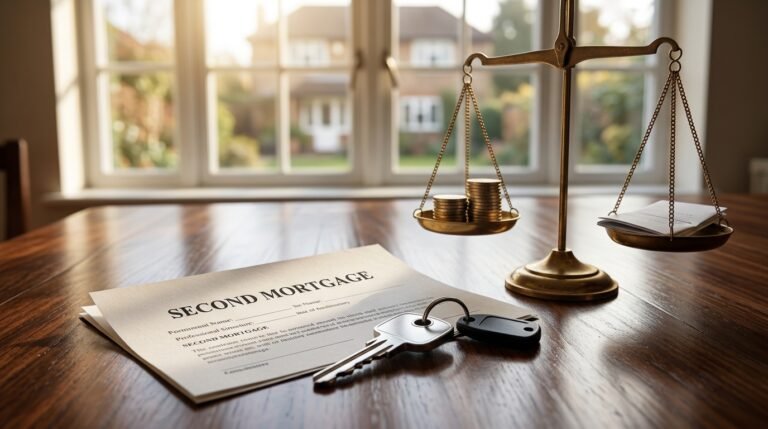
For homeowners who need access to cash, refinancing used to be one of the most obvious options.
A homeowner could replace an existing mortgage with a new, larger loan and receive the difference in cash. If mortgage rates were attractive, the strategy could potentially reduce borrowing costs while unlocking home equity.
Today’s market is different.
Millions of homeowners are sitting on mortgages that were originated or refinanced when interest rates were substantially lower. Replacing those loans with a new first mortgage can mean giving up an unusually favorable rate.
That has created a growing financial dilemma:
How can homeowners access their home equity without giving up the mortgage they already have?
For some, the answer is a second mortgage.
Home equity loans and Home Equity Lines of Credit (HELOCs) allow homeowners to borrow against accumulated equity while keeping their existing first mortgage in place. The appeal is particularly strong for borrowers whose current mortgage rate is much lower than the rate available on a new primary mortgage.
This does not mean second mortgages are automatically better than refinancing. They introduce additional debt, and HELOCs can carry variable rates. But in the current housing environment, the comparison is no longer simply about which loan has the lower interest rate.
It is about which financing structure preserves the homeowner’s existing financial advantages while solving the immediate need for capital.
The Mortgage Lock In Problem Changed the Equation
The most important reason homeowners are considering second mortgages is mortgage lock-in.
A homeowner who secured a fixed mortgage at a very low rate has an asset that is difficult to replace.
Consider a homeowner with:
- Home value: $600,000
- Existing mortgage: $280,000
- Existing mortgage rate: 3.25%
Now suppose the homeowner wants to access $75,000 of equity.
A cash-out refinance would require replacing the $280,000 mortgage with a new mortgage large enough to cover the existing balance plus the additional cash.
If the new rate is substantially higher, the homeowner isn’t simply borrowing $75,000 at today’s rates.
They are effectively repricing the entire mortgage balance.
That can make refinancing unattractive.
A Second Mortgage Takes a Different Approach
A second mortgage leaves the first mortgage intact.
The homeowner effectively has:
First mortgage + second mortgage
rather than:
One larger refinanced mortgage
This structure allows the homeowner to preserve the original mortgage terms while borrowing against the remaining equity.
There are two major forms:
Home Equity Loan
The homeowner receives a lump sum and typically makes fixed payments over a defined period.
HELOC
The homeowner receives a revolving credit line and can generally borrow as needed during the draw period.
Each has different advantages and risks.
Why Preserving a Low First Mortgage Rate Matters
The value of an existing mortgage can be significant.
Imagine a homeowner has a $300,000 mortgage at 3%.
Replacing that balance with a much higher-rate mortgage can substantially increase interest costs.
Even if the homeowner only needs $50,000 in additional capital, a cash out refinance can affect the entire $300,000 balance.
A second mortgage isolates the new borrowing.
The original $300,000 continues under its existing terms.
The additional $50,000 carries the new loan’s interest rate.
This distinction is increasingly important in today’s market.
HELOCs Offer Flexibility That Refinancing May Not
Another reason homeowners are turning toward second mortgages is flexibility.
With a cash out refinance, the homeowner typically receives the cash upfront.
A HELOC works differently.
The homeowner establishes a credit line and can generally draw funds when needed.
For example, suppose a homeowner has access to a $100,000 HELOC but only needs $30,000 initially.
They may not need to borrow the remaining $70,000.
That means the borrower isn’t necessarily paying interest on the entire available line.
This can make a HELOC attractive for projects or expenses where the total cost is uncertain.
Renovations Are a Major Use Case
Home improvements remain one of the clearest examples of why second mortgages can make sense.
A renovation may cost:
- $20,000
- $50,000
- $100,000
depending on the project.
A homeowner may not know the final cost when the work begins.
A HELOC provides flexibility to draw funds progressively.
That can be useful for:
- Kitchen remodeling
- Bathroom renovations
- Roof replacement
- Home additions
- Energy improvements
- Major repairs
However, homeowners should not assume every renovation will increase the property’s value enough to justify the borrowing cost.
Debt Consolidation Is Another Major Driver
High-interest consumer debt can create significant financial pressure.
Credit cards, in particular, can carry much higher interest rates than home secured borrowing.
A homeowner with substantial equity might consider using a home equity loan or HELOC to consolidate expensive debt.
The potential benefit is straightforward:
Replace expensive revolving debt with potentially lower-cost secured debt.
But there is a major difference between the two.
Credit card debt is generally unsecured.
A home equity loan or HELOC is secured by the home.
If a homeowner uses home equity to pay off credit cards and then accumulates new credit card balances, the household could end up with both forms of debt.
Debt consolidation works best when accompanied by changes in spending and repayment behavior.
Why Cash Out Refinancing Can Be More Expensive Than It Appears
The biggest misconception surrounding cash out refinancing is that the homeowner is simply choosing between two interest rates.
The real comparison is more complicated.
Suppose:
Existing mortgage
$300,000 at 3.25%
Cash needed
$60,000
A homeowner might refinance into:
$360,000 at a significantly higher rate.
The homeowner has accessed the desired $60,000.
But the higher rate now applies to the entire $360,000 mortgage.
With a second mortgage, the original $300,000 could remain at 3.25%, while the additional $60,000 is financed separately.
That structure may be more expensive in some circumstances and more attractive in others.
The right comparison requires looking at the total cost, repayment period, fees and household cash flow.
Second Mortgages Are Not Automatically Cheaper
This distinction is important.
A second mortgage can be financially attractive without being cheap.
HELOCs often have variable interest rates.
Home equity loans can carry higher rates than first mortgages.
Borrowers may also face:
- Closing costs
- Appraisal fees
- Origination charges
- Annual fees
- Early repayment considerations
The relevant question is therefore not:
“Which loan has the lowest advertised rate?”
It is:
“Which option produces the best overall financial outcome for my situation?”
Variable HELOC Rates Create a Different Risk
HELOC borrowers need to understand that flexibility can come with rate uncertainty.
A variable rate HELOC can become more expensive if benchmark interest rates rise.
That can affect:
- Monthly payments
- Total interest costs
- Debt repayment timelines
A borrower who uses a HELOC because their household budget is already tight should be especially cautious.
The ability to draw money today does not guarantee that future payments will remain comfortable.
The Difference Between a Home Equity Loan and a HELOC
| Feature | Home Equity Loan | HELOC |
| Funding | Lump sum | Revolving credit line |
| Rate | Often fixed | Commonly variable |
| Payments | Predictable | Can change |
| Flexibility | Lower | Higher |
| Best suited for | Known expenses | Variable or ongoing expenses |
| Interest exposure | More predictable | More uncertain |
Neither product is universally better.
The appropriate choice depends on the homeowner’s purpose, risk tolerance and repayment ability.
Why Second Mortgages Can Be Attractive for Homeowners With High Equity
Home prices have appreciated significantly in many parts of the country over the past several years.
As mortgage balances decline and property values increase, homeowners can accumulate substantial equity.
This creates a potential financing resource.
But homeowners who are locked in low first mortgage rates may not want to disturb those loans.
A second mortgage essentially allows them to separate old debt from new debt.
That can be an important strategic advantage.
The Psychological Appeal of Keeping the Original Mortgage
There is also a behavioral component.
Homeowners who have a highly favorable mortgage rate often feel protective of it.
They may view the loan almost like a financial asset.
That can influence decisions about:
- Moving
- Refinancing
- Renovating
- Borrowing
The homeowner isn’t necessarily avoiding debt.
They are trying to avoid replacing a favorable financial arrangement.
That distinction helps explain why second mortgages have become more relevant.
Second Mortgages Can Support Financial Flexibility
Homeowners sometimes face situations where their wealth is concentrated almost entirely in their property.
They may have:
- Significant home equity
- Limited liquid savings
- A low rate mortgage
- A temporary need for capital
A second mortgage can potentially convert part of that illiquid wealth into usable funds without requiring the homeowner to sell.
This can increase financial flexibility.
But it also reduces the amount of equity protecting the homeowner.
Borrowing Against Equity Changes the Household Balance Sheet
Suppose a homeowner has:
- Home value: $600,000
- Mortgage balance: $250,000
Equity is approximately:
$350,000
Now the homeowner takes a $75,000 second mortgage.
Debt increases to:
$325,000
Equity, assuming the property value remains unchanged, effectively falls to:
$275,000
The homeowner has more liquidity.
But they also have more debt.
This is why home equity borrowing should be viewed as a transfer:
Less home equity → more accessible cash.
It is not the creation of new wealth.
The Risk Becomes Greater If Home Prices Fall
A second mortgage can make a homeowner more exposed to declining property values.
Suppose the homeowner’s combined mortgage debt is $325,000.
If the property falls from $600,000 to $500,000, the equity cushion shrinks considerably.
The homeowner still owes the same amount.
But the asset securing the debt is worth less.
This can affect future refinancing or selling options.
Second Mortgages Can Also Affect Future Borrowing
Adding another mortgage changes the household’s debt profile.
Future lenders may consider:
- Total debt
- Monthly payments
- Debt to income ratio
- Loan to value ratio
- Credit history
This means a second mortgage can affect the ability to obtain other financing later.
Homeowners should consider their future financial plans before taking on additional secured debt.
Why Timing Matters
The decision to use a second mortgage is highly dependent on timing.
A homeowner may be better positioned to borrow when:
- Income is stable
- Credit is strong
- Home equity is substantial
- Debt levels are manageable
- Interest rates are favorable
Waiting until finances deteriorate could make borrowing more difficult.
At the same time, borrowing too early simply because equity is available can create unnecessary debt.
The objective is not to borrow at the maximum possible level.
It is to borrow when the financial purpose justifies the obligation.
The “Access Now” Mentality Can Create Problems
Some homeowners view available credit as an opportunity that should be used.
That can lead to unnecessary borrowing.
A $100,000 HELOC does not mean a homeowner should spend $100,000.
It simply means the lender has approved a potential borrowing capacity under specific conditions.
Using credit responsibly means distinguishing between:
available
and
necessary.
When Refinancing May Still Be the Better Option
Second mortgages aren’t always preferable.
Refinancing may make sense when:
- The homeowner’s current mortgage rate isn’t particularly attractive.
- The borrower wants to change the loan term.
- The new mortgage rate is competitive.
- The homeowner needs substantial cash.
- The costs of a second mortgage would be excessive.
For example, someone with an older mortgage at a relatively high rate may benefit from refinancing the entire loan rather than adding another layer of debt.
The decision depends on the complete financial picture.
A Simple Framework for Comparing the Options
Homeowners can compare refinancing and second mortgages across five areas.
1. Existing Mortgage Rate
How valuable is the current loan?
2. Amount Needed
Is the homeowner looking for $30,000 or $300,000?
3. Interest Rate
Is the second mortgage fixed or variable?
4. Fees
What will the borrower pay upfront?
5. Time Horizon
How long will the homeowner keep the property and the debt?
These factors can produce very different results from one homeowner to another.
The Bigger Trend: Preserving Existing Mortgages While Accessing Equity
The growing interest in second mortgages reflects a broader change in homeowner behavior.
Consumers are increasingly separating two financial decisions:
How do I preserve my existing mortgage?
and
How do I access additional capital?
In previous rate environments, refinancing could solve both problems simultaneously.
Today, homeowners may prefer to handle them separately.
That is an important shift in the mortgage market.
What This Means for the Housing Market
The popularity of second mortgages can have broader implications.
If homeowners can access equity without selling or refinancing, they may be more willing to remain in their current properties.
That can contribute to:
- Lower housing turnover
- Fewer existing homes entering the market
- More renovation activity
- Greater household leverage
In other words, home equity lending can influence not only individual finances but also housing market behavior.
What Homeowners Should Ask Before Taking a Second Mortgage
Before borrowing against home equity, homeowners should ask:
- Why do I need the money?
- Is the expense temporary or recurring?
- What will the total borrowing cost be?
- Is the interest rate fixed or variable?
- Could I afford the payment if rates rise?
- How much equity will remain?
- What happens if home prices decline?
- Am I solving a financial problem or postponing it?
- Will this borrowing interfere with future financial goals?
These questions can prevent a useful financial tool from becoming a long term burden.
The growing preference for second mortgages over refinancing is not simply about consumers wanting more debt.
It reflects a fundamental change in the economics of homeownership.
Millions of homeowners have mortgages that are significantly more attractive than the rates available on new first mortgages. Replacing those loans through a cash out refinance can mean giving up a valuable financial advantage.
Second mortgages offer another path.
A HELOC or home equity loan can allow homeowners to access some of their accumulated equity while leaving the original mortgage intact. For homeowners with strong equity and a clearly defined financial need, that flexibility can be valuable.
But the strategy comes with important risks.
Second mortgages increase leverage. HELOCs can expose borrowers to variable rates. Home-price declines can reduce equity cushions. And borrowing against the home to cover recurring financial shortfalls can turn an asset into a growing liability.
The smartest way to view a second mortgage is therefore not as a replacement for refinancing or as an easy source of cash.
It is a separate financial tool with a specific purpose.
For homeowners with an unusually favorable first mortgage, that distinction may become increasingly important. Preserving a low rate mortgage while accessing only the amount of equity actually needed can sometimes offer a more targeted solution than refinancing the entire home loan but only when the additional debt fits comfortably within the household’s long term financial plan.
In another related article, The Hidden Cost of Waiting for Mortgage Rates to Fall